

Under Seattle’s current code, most residential lots can have up to two accessory dwelling units in any combination of attached and detached, with no requirement for the owner to live on site and no off-street parking requirement. An ADU can be up to 1,000 square feet, or up to 1,200 square feet if it has three or more bedrooms, and it can be as tall as a house allowed in the same zone.
Those rules are much more generous than they were a few years ago, and they changed twice in the last eighteen months. This guide explains what applies now, what changed, and which details on your lot still decide what you can build. If you are new to the terminology, our explainer on ADU vs. DADU covers the difference between attached and detached units.
What Changed in 2025 and 2026
Seattle rewrote its ADU rules to comply with two state laws: HB 1337, which sets minimum ADU standards for Washington cities, and HB 1110, which requires cities to allow more homes on residential lots. The first set of changes took effect on June 30, 2025. A permanent rewrite of the Neighborhood Residential zones, adopted as part of the One Seattle Plan, took effect on January 21, 2026.
The practical result: a backyard plan that did not work under the old code may work now. Before mid-2025, a lot could have at most one detached unit, DADU height depended on lot width, and small lots faced extra limits. If a designer, neighbor or older article told you your lot was too small or too narrow, it is worth checking again under the current rules.
How Many ADUs Are Allowed on One Seattle Lot?
The code allows no more than two ADUs per lot, and they may be attached, detached or stacked. That opens three common layouts.
Two Units Inside or Attached to the House
A basement apartment and a second unit above a garage, for example. This keeps the backyard open and often reuses existing structure.
One Attached Unit and One Backyard Cottage
The most familiar combination: a basement or in-house unit plus a DADU behind the house.
Two Detached Units
Allowed since June 2025. The two detached units can be separate buildings or share one structure, such as a two-story building with a unit on each floor.
One point is easy to miss. In Neighborhood Residential zones, ADUs count toward the number of homes allowed on the lot, as well as toward floor area ratio and lot coverage. If you also plan to add middle housing such as a duplex or townhouses, the ADUs share the same overall allowance.
Is Owner Occupancy Required in Seattle?
No. Seattle removed its owner-occupancy requirement in 2019, and state law now prohibits cities from requiring it. You can rent both the main house and the ADUs, or live in an ADU and rent the house.
Some older Seattle properties still carry a recorded owner-occupancy covenant from when the rule existed. The city provides a release process for these covenants, so check your title documents if your property already has an ADU.
Size Limits for Attached and Detached ADUs
The same size limits apply whether the ADU is attached or detached:
A studio, one-bedroom or two-bedroom ADU: a 1,000-square-foot ceiling.
An ADU with three or more bedrooms: a maximum of 1,200 square feet.
Certain areas are excluded from the calculation, including up to 250 square feet of an attached garage and stories that are fully underground. Because ADU floor area also counts toward the lot’s overall floor area ratio under the permanent code, a large main house can leave less room for an ADU on a small lot. This is where an early layout study pays for itself.
How Tall Can a Backyard Cottage Be?
In Neighborhood Residential zones, an ADU is now allowed the same height as a principal home in that zone, rather than a lower accessory-building limit. The base height in these zones is 32 feet, with additional allowances for pitched roofs. The code also allows extra height in some situations tied to tree retention and green features.
The old rule, which tied DADU height to lot width and kept most cottages to a single tall story or a story and a half, no longer applies. Two-story DADUs, and DADUs with a unit stacked over a garage, are now realistic on many lots. Height is still measured from grade, so sloped lots need careful design.
Setbacks, Alley Lots and Spacing Between Buildings
A detached ADU can sit in the rear part of the lot as long as it stays at least 5 feet from any lot line that does not border an alley.
The Alley Advantage
Where the rear lot line abuts an alley, a DADU needs no setback from that line. Alley lots therefore gain usable space, and the alley often makes construction access and utility routing easier as well.
Space Between the House and the ADU
The code sets a general minimum separation between buildings on the lot. Fire and building code rules also apply to walls and openings close to other structures, so the final spacing is usually set during design rather than read from a single number.
Lot Size and Lot Coverage
The current code does not set a separate minimum lot size just for adding an ADU to an existing lot. What limits small lots in practice is lot coverage, which in Neighborhood Residential zones is generally 50 percent of the lot, and floor area ratio, both of which include ADUs.
On a compact lot with a large existing house, these two numbers usually decide whether a detached unit fits, how big it can be, or whether an attached unit is the better route.
Parking Requirements
Seattle does not require off-street parking for ADUs. You do not need to add a parking space to build one, and ADUs do not trigger street improvement requirements. Keeping or removing an existing driveway is a design choice rather than a code requirement in most cases, but confirm it during permitting if your existing parking is part of an older approval.
Trees Can Shape the Site Plan
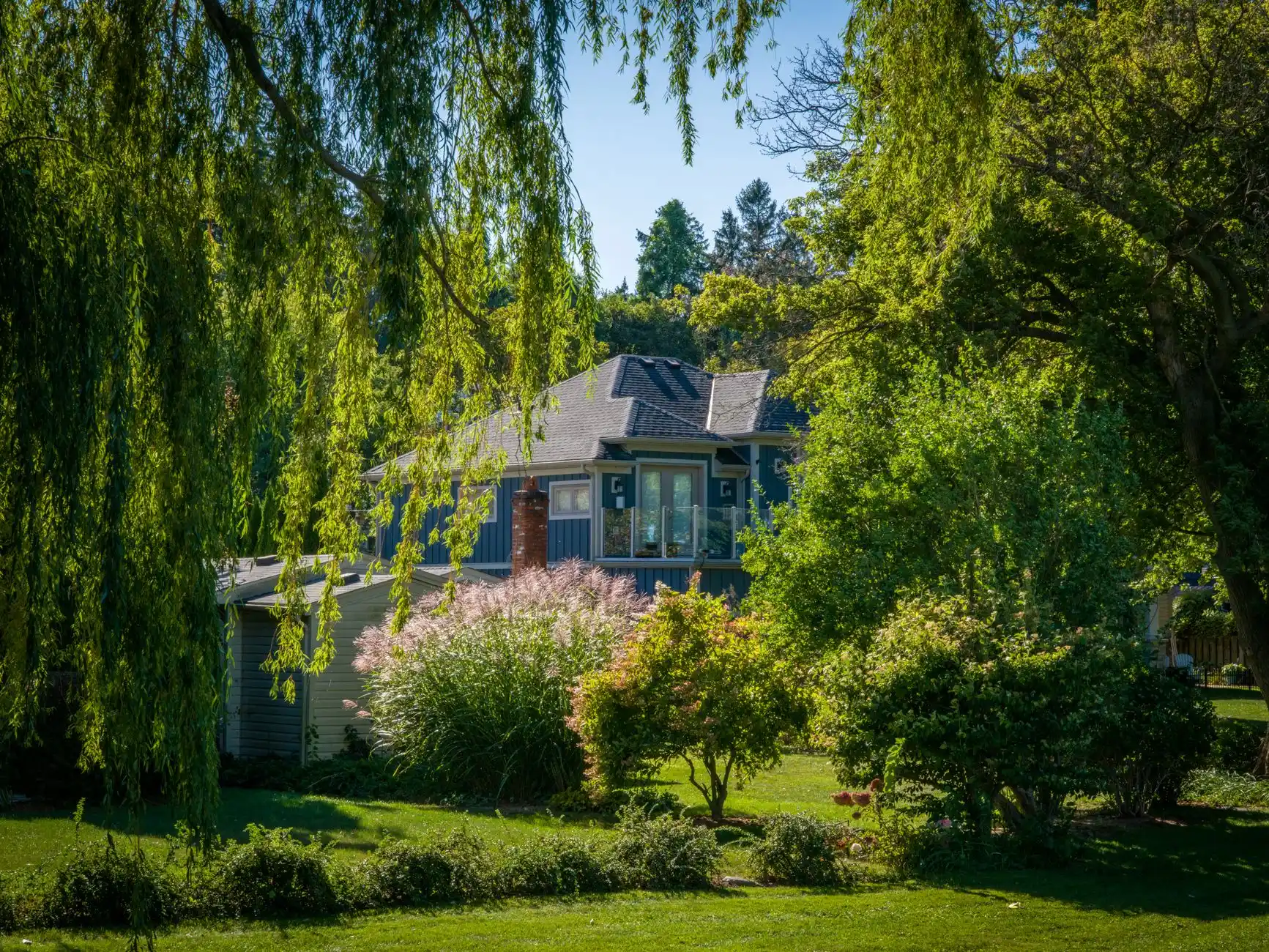
Seattle’s tree protection code, updated in 2023, sorts trees into tiers by size and type. Large trees, with a trunk diameter of 24 inches or more measured at chest height, and tree groves fall into a tier that generally cannot be removed except in specific situations. Heritage trees are protected more strictly. Smaller trees can usually be removed during development but may need to be replaced.
In practice, a large tree in the backyard can decide where a cottage goes and how big its footprint can be. Locate significant trees early, before you commit to a layout.
Can You Sell or Rent an ADU in Seattle?
Selling an ADU as a Condominium
Seattle’s code does not prevent an ADU from being sold as a condominium unit. Setting up a condominium requires legal work, separate documentation and lender acceptance, so it is a project of its own rather than something that happens automatically.
Short-Term Rentals
ADUs can be used as short-term rentals, but Seattle licenses short-term rental operators and generally limits how many units one operator can run. If an Airbnb-style rental is part of your plan, review the city’s current short-term rental rules before you design around it.
Permits and Pre-Approved DADU Plans
ADUs in Seattle are permitted through the Seattle Department of Construction and Inspections (SDCI) as construction permits. Legalizing an existing unpermitted unit uses a separate permit to establish the use.
Seattle also runs a pre-approved DADU plan program through its ADUniverse website. Plans that have already passed review can move through permitting much faster than custom designs, and the city has announced additional pre-approved plans for ADUs and middle housing. A custom design still makes sense when the lot, slope or owner’s goals call for it. Our overview of permitting in Seattle and surrounding areas covers general permit timing and fees.
How to Check What Fits on Your Lot
The code answers what is allowed in general. Your lot answers what is possible: its width, slope, existing house, trees, sewer location and alley access. A free lot feasibility report for your address is the fastest way to see how these Seattle rules play out on your specific parcel. To see how United Signature takes a project from that first check through design and construction, visit the ADU construction page.
FAQ
Can I convert my detached garage into a DADU in Seattle?
Often, yes. State law protects conversions of existing accessory buildings, so an older garage that sits too close to the lot line is not automatically disqualified. The converted space still has to meet the building, energy and fire codes that apply to any home, which usually means new insulation, windows and sometimes a new foundation.
Does a garage count toward the ADU size limit?
Up to 250 square feet of an attached garage is excluded from the ADU’s gross floor area under Seattle’s current rules. Larger garage areas and other spaces can count, so confirm the calculation during design.
Do ADUs reduce how many other homes I can build on the lot?
In Neighborhood Residential zones, yes. ADUs count toward the lot’s total number of allowed units, so a plan that combines ADUs with middle housing needs to stay within the overall allowance.
Does Seattle charge impact fees on ADUs?
Seattle has not charged traditional impact fees. New sewer connections in King County carry a sewer capacity charge, and utility connection costs apply, so budget for those separately.
What is ADUniverse?
ADUniverse is the City of Seattle’s ADU website. It explains the rules, lets you look up basic information about your lot, and hosts the gallery of pre-approved DADU plans.