

A successful bathroom remodel starts with three decisions: what must change, what can stay, and how much disruption and cost you can absorb. If you set scope, layout, and product choices early, you cut change orders, shorten lead times, and make contractor pricing more accurate.
What to decide before remodeling a bathroom
Decide first whether this is a cosmetic update or a full gut. That single choice affects budget, permits, timeline, and whether you should involve a Design-Build team from the start.
List non-negotiables in order: better shower, more storage, easier cleaning, aging-in-place features, or resale appeal. Then set a realistic budget range, including a contingency for hidden water damage or subfloor repair. If you are comparing scopes and pricing, reviewing recent Bathroom Remodeling projects helps clarify what fits your space and budget.
How layout changes affect plumbing and cost
Moving fixtures is the fastest way to raise cost. Keeping the toilet, shower drain, and vanity plumbing close to their current locations usually saves thousands and reduces schedule risk.
Drain lines need slope, venting has to work, and older homes may need code upgrades once walls are opened. A simple replace-in-place remodel may stay on the lower end of pricing, while moving a toilet or converting a tub to a curbless shower often pushes labor up because flooring, framing, and plumbing all change together.
Shower, tub, vanity, and storage planning
Plan around daily use, not wish lists. If no one takes baths, a larger shower and better storage may deliver more value than keeping a tub in a tight room.
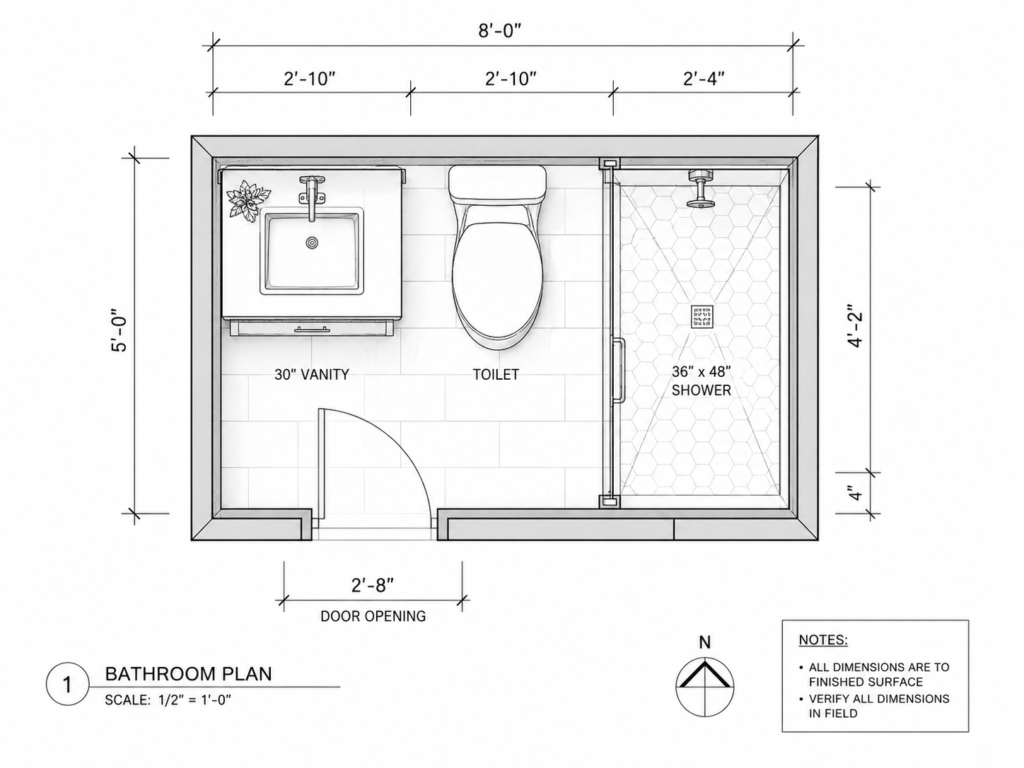
For vanities, prioritize usable drawer storage over oversized sinks or decorative legs. In small bathrooms, recessed medicine cabinets, shower niches, and tall linen storage often add more function than increasing footprint. During a bathroom remodel, check door swings and clearance so drawers, shower glass, and the toilet area do not conflict.
Material choices that impact durability and maintenance
Choose materials based on moisture, cleaning effort, and slip resistance. The best-looking option is a poor choice if it stains easily or needs constant sealing.
Porcelain tile is a practical default for floors and shower walls because it is durable and low maintenance. Quartz works well for vanity tops because it resists staining better than many natural stones. Use grout colors and tile sizes that hide normal wear, and avoid highly polished floor tile where slipping is a concern.
Lighting, ventilation, and moisture control basics
Good light and ventilation are not upgrades; they are baseline requirements. A dim bathroom or weak exhaust fan makes even an expensive remodel feel unfinished.
Layer vanity lighting with ceiling light so faces are evenly lit. Vent the fan to the exterior, not the attic, and size it properly for the room. Ask for moisture-resistant drywall or backer board in wet zones and make sure waterproofing is specified behind tile, not just on the finish surface.
When a bathroom remodel should be part of a larger renovation
Bundle the bathroom into a larger project when walls, plumbing lines, electrical service, or flooring in adjacent rooms are already being changed. That can reduce duplicated labor and avoid redoing finished work later.
If several rooms need coordinated updates, a Whole Home Remodel may be more efficient than remodeling one bathroom at a time. It is also the right time to review scheduling and Financing options if scope grows beyond the original plan.
How to avoid delays during selection and ordering
Make selections before demolition begins. Late decisions on tile, plumbing trim, glass, or vanities are a common reason a bathroom sits unfinished.
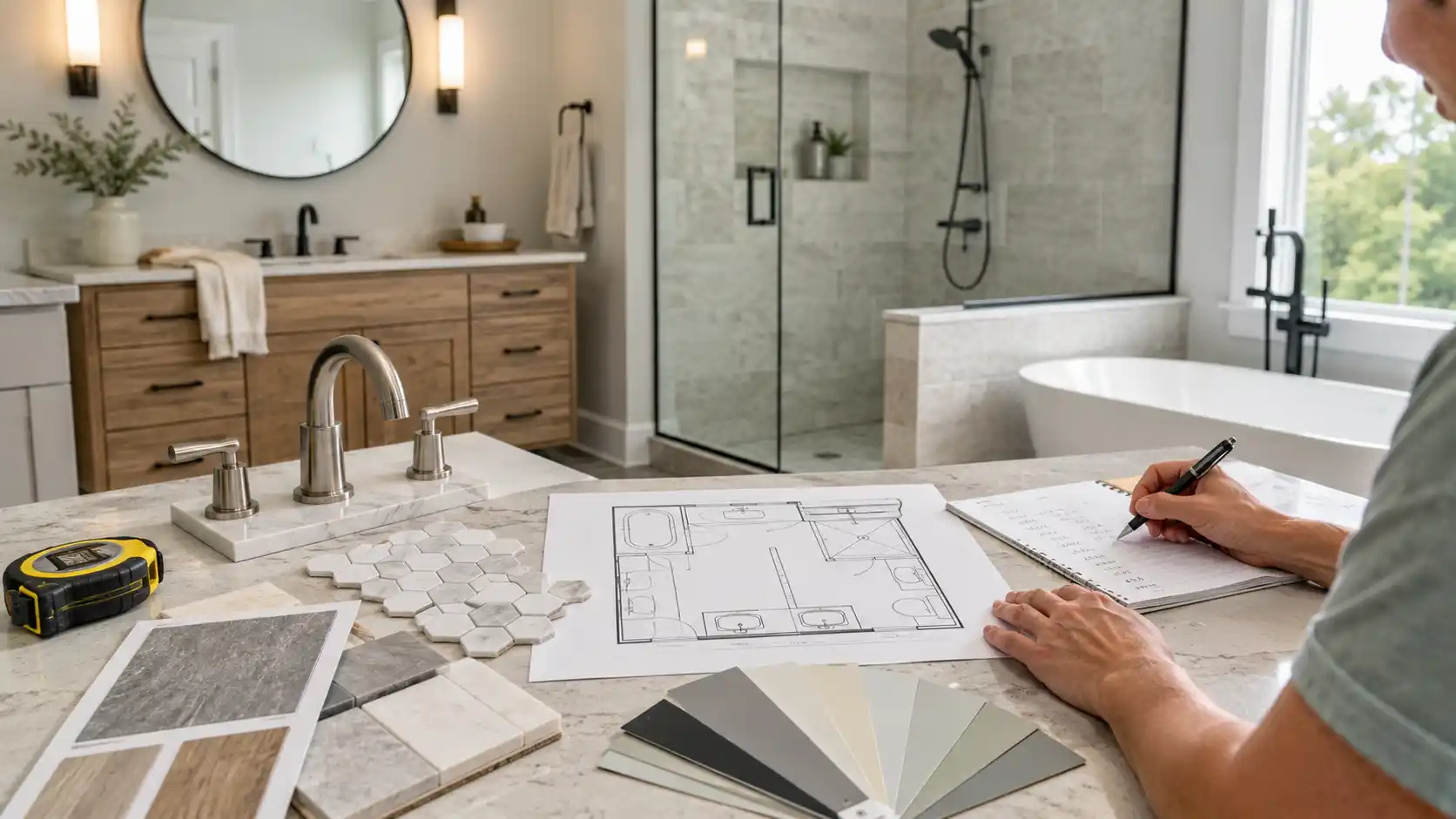
Approve all fixtures, finishes, and dimensions on one final selection sheet. Confirm lead times, inspect special-order items on arrival, and verify that rough-in valves match the trim kit being ordered. A well-planned bathroom remodel moves faster because materials and measurements are locked before work opens the walls.
FAQ
What should I decide before starting a bathroom remodel?
Decide whether the project is a cosmetic update or a full gut, list your top priorities, set a realistic budget with contingency, and lock in layout and product selections early.
How much does changing the bathroom layout affect remodel cost?
Layout changes can raise cost quickly because moving toilets, drains, or vanities often requires added plumbing, framing, flooring, and possible code upgrades, while keeping fixtures near existing locations usually saves thousands.
Should I keep a tub or replace it with a shower in a bathroom remodel?
Choose based on daily use: if no one takes baths, replacing a tub with a larger shower and better storage may add more function, but keeping the existing layout usually helps control cost.
What materials are best for a durable, low-maintenance bathroom remodel?
Porcelain tile is a strong low-maintenance choice for floors and shower walls, quartz works well for vanity tops, and it helps to choose slip-resistant floors, practical grout colors, and materials that do not need frequent sealing.
What lighting and ventilation does a bathroom remodel need?
A bathroom remodel should include layered vanity and ceiling lighting, a properly sized exhaust fan vented to the exterior, and moisture-resistant wall materials with waterproofing behind tile in wet areas.
How can I avoid delays when planning a bathroom remodel?
Make all finish and fixture selections before demolition, confirm dimensions and lead times, inspect special-order items when they arrive, and verify rough-in valves match the trim so work is not delayed waiting on materials or corrections.