

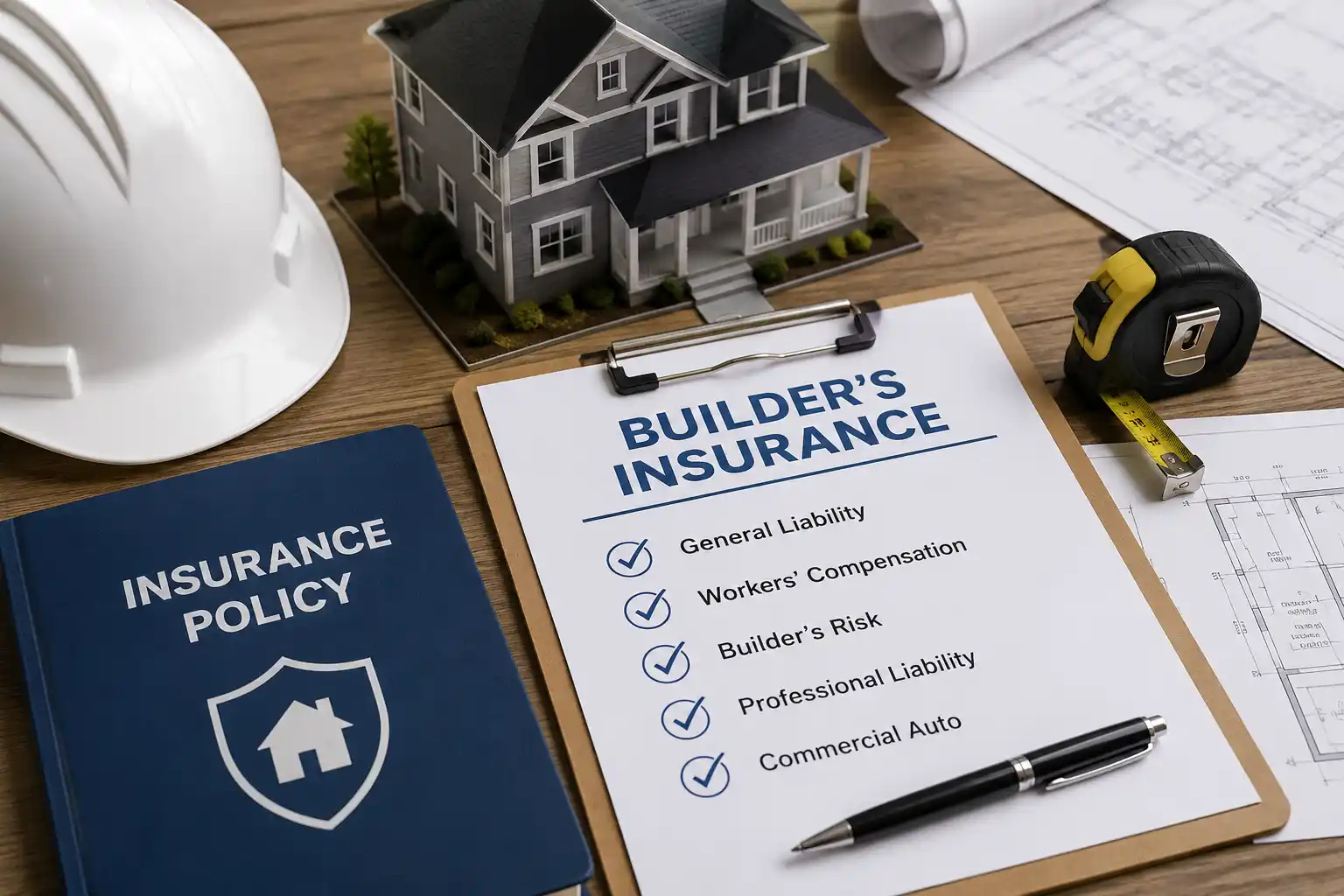
Before you sign, confirm the builder carries active custom home builder insurance coverage that protects against property damage, jobsite injuries, and unfinished-work risk. The minimum practical check is this: ask for certificates of insurance, verify the policies with the carrier, and make sure subcontractors are covered too.
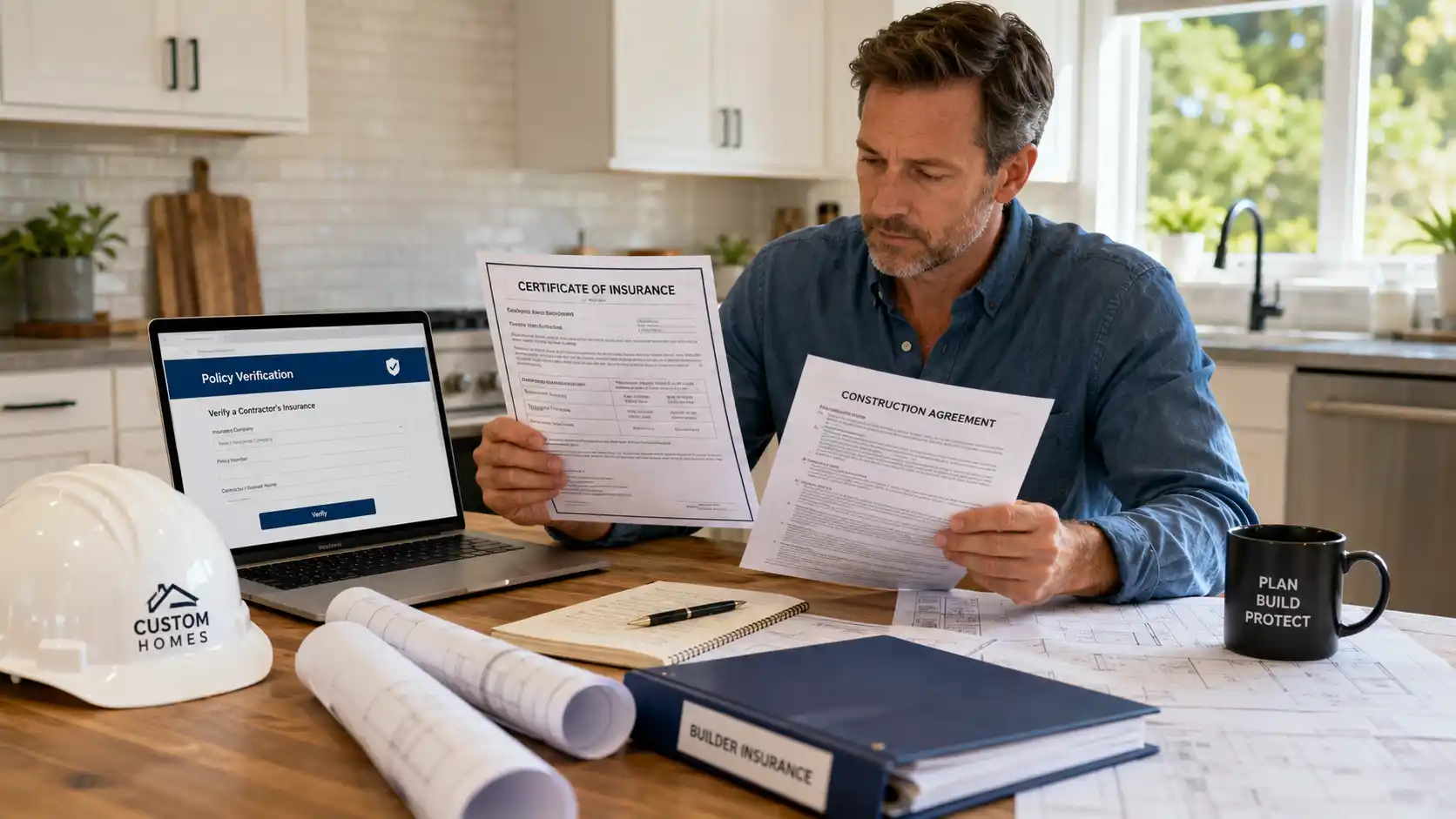
Why builder insurance matters
Builder insurance matters because you can end up paying for losses caused by the builder’s operations if coverage is missing or excluded. A serious injury, fire, or neighboring property damage claim can delay the project and trigger disputes over who pays.
For homeowners, insurance is not just the builder’s issue. It is a project protection tool that supports permits, lender requirements, and smoother claims handling if something goes wrong.
General liability coverage explained
General liability covers third-party bodily injury and property damage caused by the builder’s work. In plain terms, if construction activity damages a neighbor’s fence or a visitor is hurt on site, this is the policy that should respond.
Ask for policy limits, active dates, and whether your project address is covered. Good custom home builder insurance coverage should also match the scope of work, not just the company name on a generic certificate.
Insurance does not usually cover poor workmanship by itself; it more often covers resulting damage. That is why you should also review Custom home construction standards and the builder’s quality controls.
Workers’ compensation and subcontractor coverage
Workers’ compensation pays medical costs and lost wages for employees injured on the job. If a builder or subcontractor lacks it, the homeowner can be pulled into claims, especially if coverage status is unclear.
Do not assume every trade is automatically covered under the builder’s policy. Require written confirmation that subcontractors carry their own workers’ compensation and liability insurance, or that they are properly included under the builder’s coverage. This should be part of your Builder process and accountability review before work starts.
Bonding and risk protection
A bond is different from insurance: it protects the project if the contractor fails to meet contractual obligations. The most relevant examples are license bonds and, on some projects, performance or payment bonds.
If your project is large or lender-monitored, ask whether bonding is available or required. A payment bond can reduce lien risk from unpaid subs or suppliers, while a performance bond adds protection if the builder defaults.
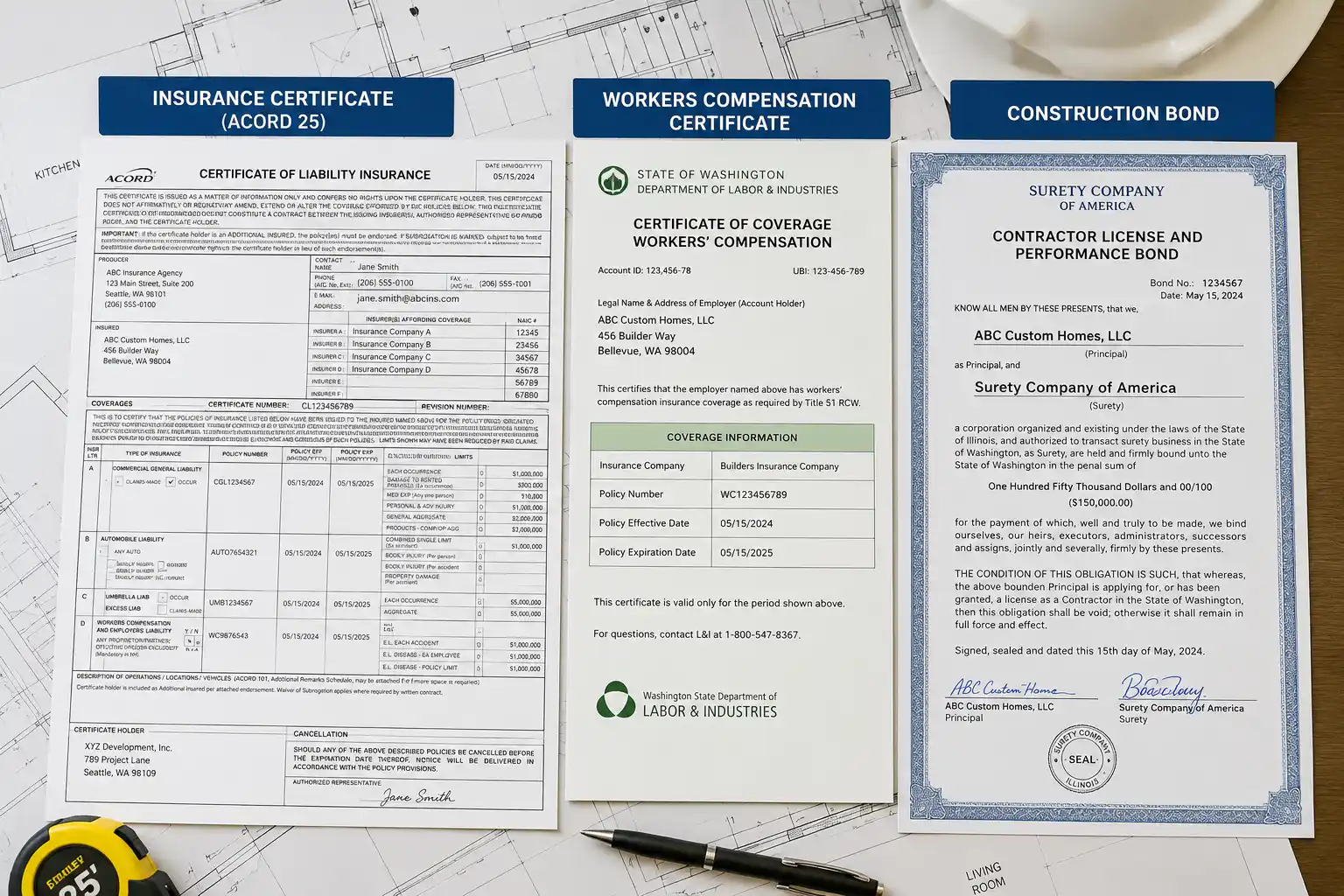
What homeowners should request before signing
Request proof, not promises. Get current certificates for general liability and workers’ compensation, the carrier name, policy number, effective dates, and contact information for verification.
- Verify the certificate directly with the insurance agent or carrier.
- Check that the builder’s legal business name matches the contract.
- Ask how subcontractor insurance is tracked and updated.
- Review references and Client confidence and reviews.
Insurance red flags
Red flags include expired certificates, vague answers, mismatched business names, and refusal to let you verify coverage. Another warning sign is a builder who says “my subs handle their own insurance” but cannot produce documentation.
Also watch for unusually low bids that come with thin paperwork. Missing coverage often shows up first as a contract shortcut, then later as your problem.
How coverage protects the project
Proper coverage protects schedule, budget, and dispute resolution. It gives a funded path for claims instead of forcing the homeowner and builder to argue over every loss out of pocket.
Strong custom home builder insurance coverage also helps keep the project moving after an incident because there is a formal claims process. If you want documentation reviewed before signing, Contact United Signature.
FAQ
What insurance should a custom home builder carry?
At minimum, a custom home builder should carry active general liability and workers’ compensation coverage, with clear proof that subcontractors are also insured or properly included under the builder’s policies.
Does general liability insurance cover damage during construction?
Yes, general liability usually covers third-party bodily injury and property damage caused by construction activity, such as damage to a neighbor’s property or injury to a visitor, but it typically does not cover poor workmanship by itself.
Do custom home builders need workers’ compensation for employees and subcontractors?
Yes, builders should have workers’ compensation for employees, and homeowners should also confirm that subcontractors carry their own workers’ compensation and liability coverage or are included under the builder’s policy.
What bonds or additional risk protection should homeowners ask about?
Homeowners should ask about license bonds and, for larger or lender-monitored projects, performance and payment bonds, which can help protect against contractor default, unpaid subs, and lien risk.
What proof of insurance should homeowners request before signing a contract?
Request current certificates of insurance for general liability and workers’ compensation, including the carrier name, policy number, effective dates, the builder’s legal business name, and contact information so you can verify coverage directly.
What are common insurance red flags when hiring a custom home builder?
Common red flags include expired certificates, vague or inconsistent answers, mismatched business names, refusal to allow verification, missing subcontractor documentation, and unusually low bids supported by thin insurance paperwork.