

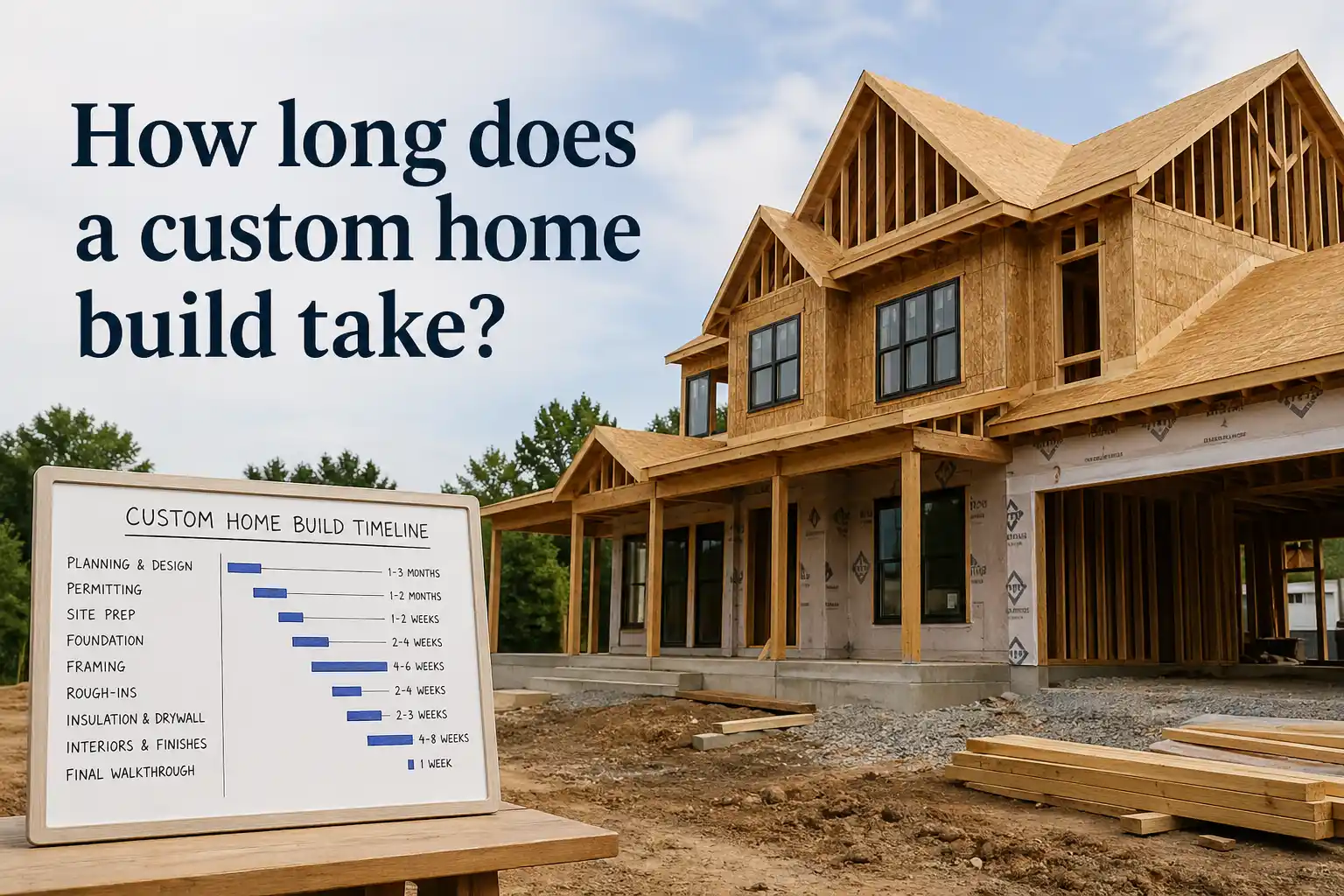
If you are asking how long does a custom home build take, the honest answer is that most projects take about 10 to 18 months from early planning to move-in. The exact timeline depends on the home’s size, complexity, location, permitting process, site conditions, weather, and how quickly decisions are made during design and construction. A streamlined team and clear planning can keep the project on track, while changes and approvals can extend it.
Unlike production homes, a custom build is created around your lot, lifestyle, and design goals. That means more flexibility, but it also means more moving parts. Understanding each phase of the schedule helps set realistic expectations and reduces surprises along the way.
For a closer look at the full Custom home building process, it helps to break the timeline into stages, from concept and drawings to inspections and the final walkthrough.
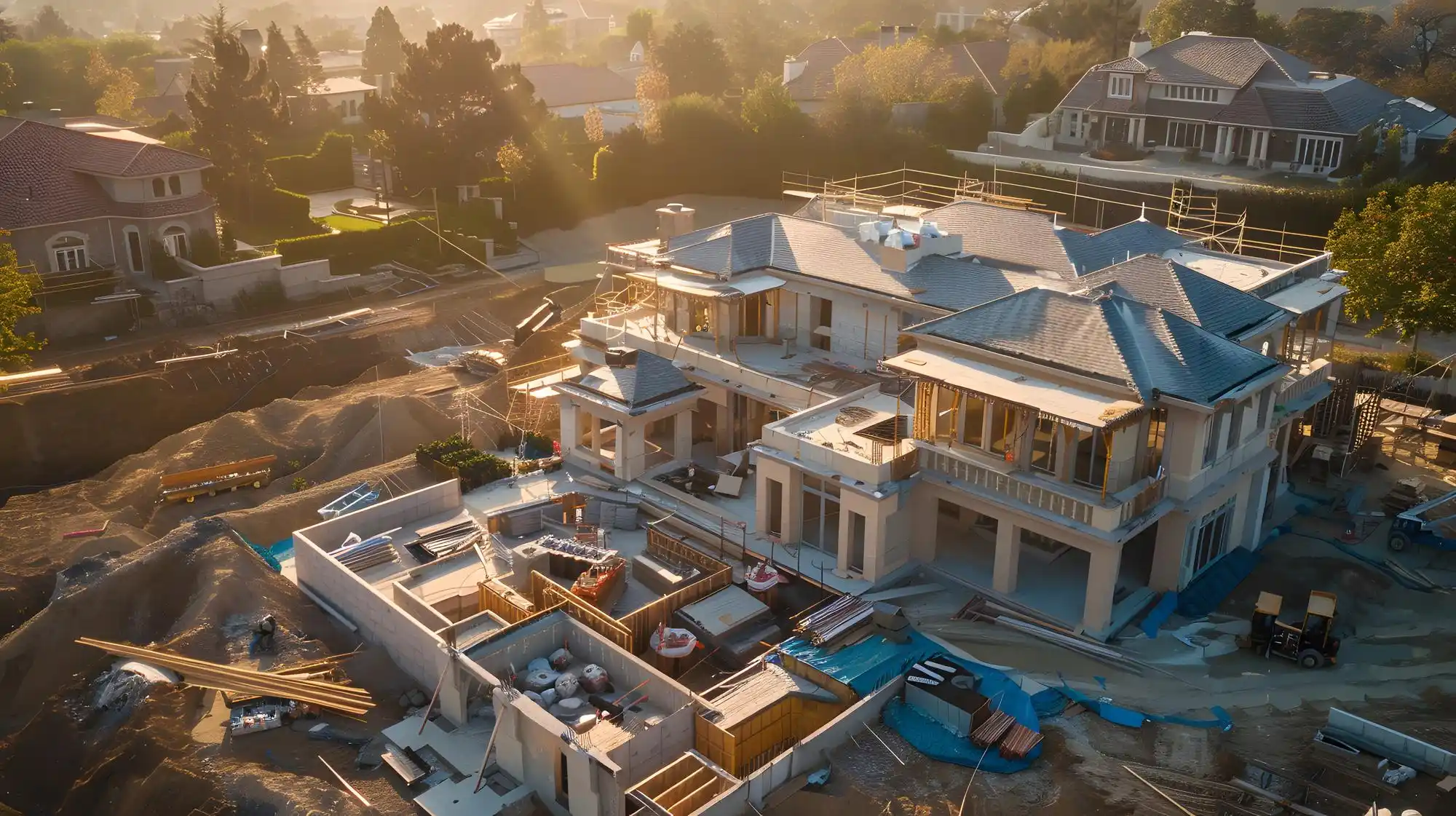
Typical custom home timeline from planning to move-in
When homeowners ask how long does a custom home build take, a practical estimate is usually:
- Planning and design: 2 to 5 months
- Permits and approvals: 1 to 4 months
- Site work and foundation: 1 to 2 months
- Framing and major systems: 2 to 4 months
- Interior finishes and completion: 2 to 5 months
In total, many custom homes fall within a 10- to 18-month window. Simpler homes on straightforward lots can move faster. Large estates, highly customized floor plans, hillside lots, coastal zones, or projects with extensive engineering may take longer.
One of the best ways to avoid schedule drift is early Design-build timeline planning. Bringing design and construction together from the start can improve budgeting, coordination, and decision-making.

Design and pre-construction phase
The design and pre-construction stage often takes 2 to 5 months, and sometimes longer for highly detailed homes. This phase includes discovering your goals, defining the scope, creating the floor plan, developing elevations, selecting preliminary materials, and establishing a working budget.
This is also when your builder evaluates feasibility. They may review lot access, utility connections, topography, drainage, setbacks, and potential construction challenges before final plans are completed. Good pre-construction work saves time later because it reduces redesigns, change orders, and field conflicts.
If you are still comparing options, reviewing available Custom home services can help clarify what level of support you need for design, estimating, selections, and construction management.
Selections can influence the timeline early. Windows with long lead times, specialty steel, custom cabinetry, imported tile, and unique finishes should be identified as soon as possible. The more decisions made before construction begins, the smoother the build tends to be.
Permits, engineering, and approvals
Permitting is one of the biggest variables in answering how long does a custom home build take. In some jurisdictions, permits may be issued within a few weeks. In others, plan review, corrections, engineering requirements, zoning checks, HOA approvals, and utility coordination can take several months.
Typical items in this phase include:
- Architectural plan review
- Structural engineering
- Energy code compliance
- Civil engineering or drainage plans
- Survey and site documentation
- Septic or sewer approvals
- Grading or environmental review
- HOA or design board approval, if required
Homes on difficult sites often need added engineering for retaining walls, slope stability, stormwater management, or foundation design. None of this is unusual, but it does affect the schedule. An experienced team can often anticipate likely review comments and prepare documents more completely the first time.

Site preparation and foundation work
Once permits are in hand, site work can begin. This stage usually takes 1 to 2 months, depending on access, weather, and lot conditions. Activities may include clearing, demolition, excavation, grading, temporary utilities, erosion control, and preparing for the foundation.
Foundation work itself may involve footings, stem walls, slab preparation, waterproofing, drainage systems, and backfill. If the lot has poor soil, rock excavation, a high water table, or steep slopes, this phase can take longer and cost more than initially expected.
Weather also matters here. Heavy rain can delay excavation, concrete pours, and curing. In colder climates, frozen ground and winter conditions may slow progress or require added protection measures.
Framing, systems, and inspections
This is the phase when the home starts to look real. Framing, roofing, windows, exterior sheathing, and weatherproofing typically happen first, followed by rough mechanical, electrical, and plumbing work. For many custom homes, this stage takes 2 to 4 months.
Multiple inspections are required throughout this part of the build. Framing may need approval before insulation begins. Rough plumbing, rough electrical, HVAC, and sometimes fire safety or energy inspections must also be completed before walls are closed up.
Coordination is essential because many trades overlap. If one subcontractor falls behind, others may need to be rescheduled. Material lead times can also affect progress, especially for specialty windows, custom steel, switchgear, or HVAC equipment.
For homeowners weighing different project types, the schedule for a ground-up custom home is usually longer than a remodel or expansion. Comparing a full build with a Home additions timeline can provide useful perspective on scope and complexity.
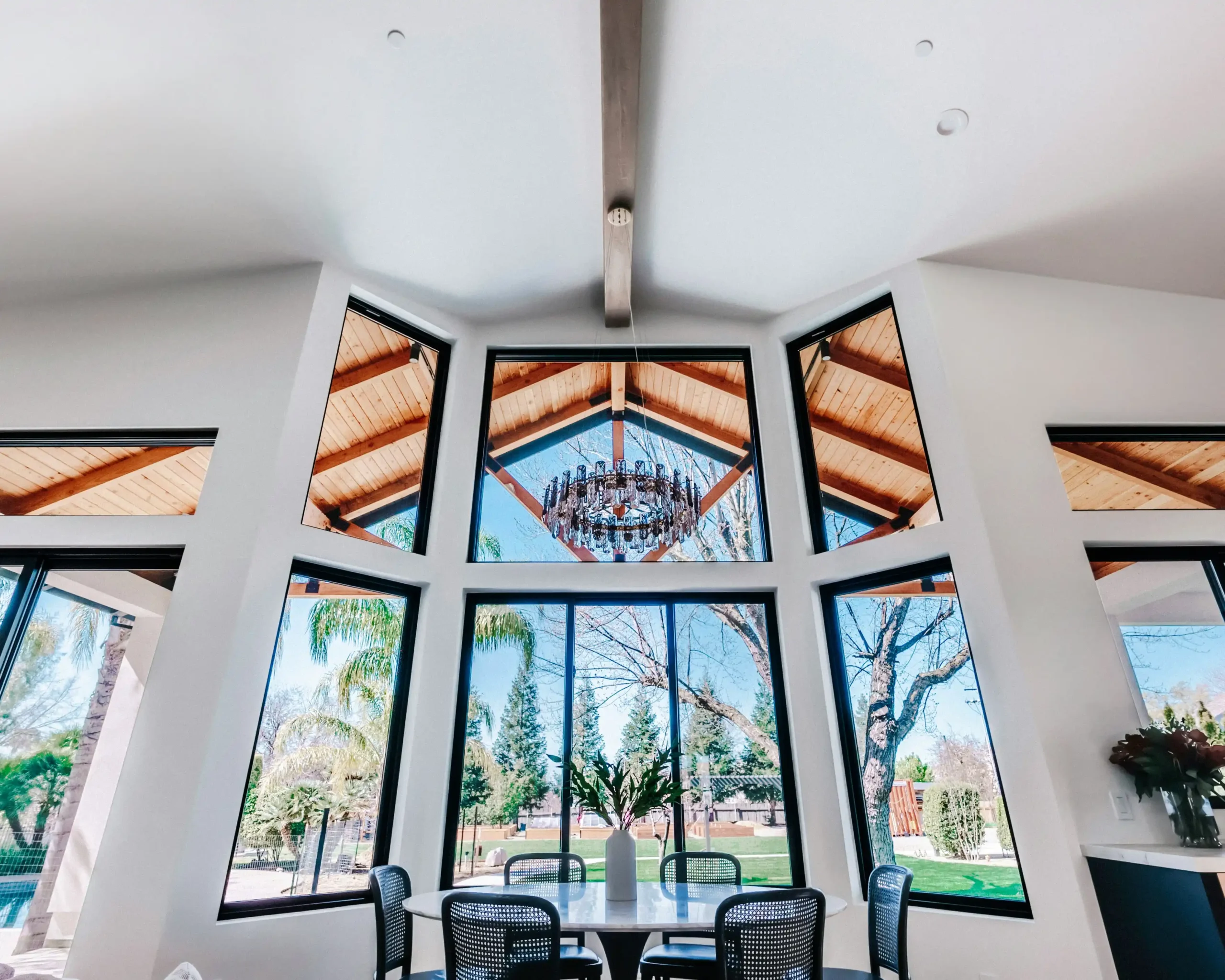
Interior finishes and final walkthrough
Interior finishes often take 2 to 5 months and are one of the most detail-heavy parts of the project. This phase includes insulation, drywall, interior trim, cabinetry, tile, flooring, painting, lighting, plumbing fixtures, appliances, and finish carpentry.
Because so many visual details come together here, decision-making becomes even more important. Late changes to cabinet layouts, tile patterns, lighting locations, or built-ins can affect both timeline and budget. Custom millwork and specialty finishes may also require extra fabrication time.
Near the end, the builder completes punch-list items, performs quality checks, schedules final inspections, and prepares for the certificate of occupancy or equivalent approval. The final walkthrough gives homeowners a chance to review systems, finishes, appliance operation, maintenance items, and any remaining corrections.
This is also when landscaping, driveways, gates, and exterior details may be wrapping up, depending on season and scope.
What can delay a custom home build
If you want the clearest answer to how long does a custom home build take, it helps to understand what commonly causes delays. Some issues are avoidable, while others are simply part of building.
- Permit review delays: Backlogged agencies or incomplete submissions can add weeks or months.
- Client changes during construction: Layout revisions or finish changes often require rework and resequencing.
- Material lead times: Custom windows, cabinets, stone, and specialty fixtures may arrive later than expected.
- Weather: Rain, snow, high winds, or extreme temperatures can slow site and exterior work.
- Site surprises: Unstable soil, hidden utilities, drainage issues, or rock excavation can change the schedule.
- Subcontractor availability: Trade scheduling can shift during busy construction seasons.
- Inspection timing: Missed or delayed inspections can pause progress between phases.
The best way to reduce delays is proactive planning, fast decision-making, and consistent communication with your builder. Choosing materials early, reviewing plans thoroughly, and setting realistic expectations all help protect the timeline.
FAQ
How long does it take to build a custom home from start to finish?
Most custom homes take about 10 to 18 months from early planning through move-in. Simpler homes on straightforward lots may finish faster, while larger or more customized projects often take longer.
What phases are included in a typical custom home building timeline?
A typical timeline includes planning and design, permits and approvals, site work and foundation, framing and major systems, then interior finishes, final inspections, and the walkthrough.
What factors can delay a custom home build?
Common delays include slow permit review, client changes during construction, long material lead times, bad weather, site issues like poor soil or rock, subcontractor scheduling conflicts, and inspection delays.
How long do permits and approvals usually take for a custom home?
Permits and approvals usually take about 1 to 4 months, but timing varies by jurisdiction, plan complexity, engineering needs, zoning or HOA review, and utility coordination.
How long do foundation, framing, and interior finishes usually take?
Foundation and site work typically take 1 to 2 months, framing and major systems usually take 2 to 4 months, and interior finishes often take 2 to 5 months.