

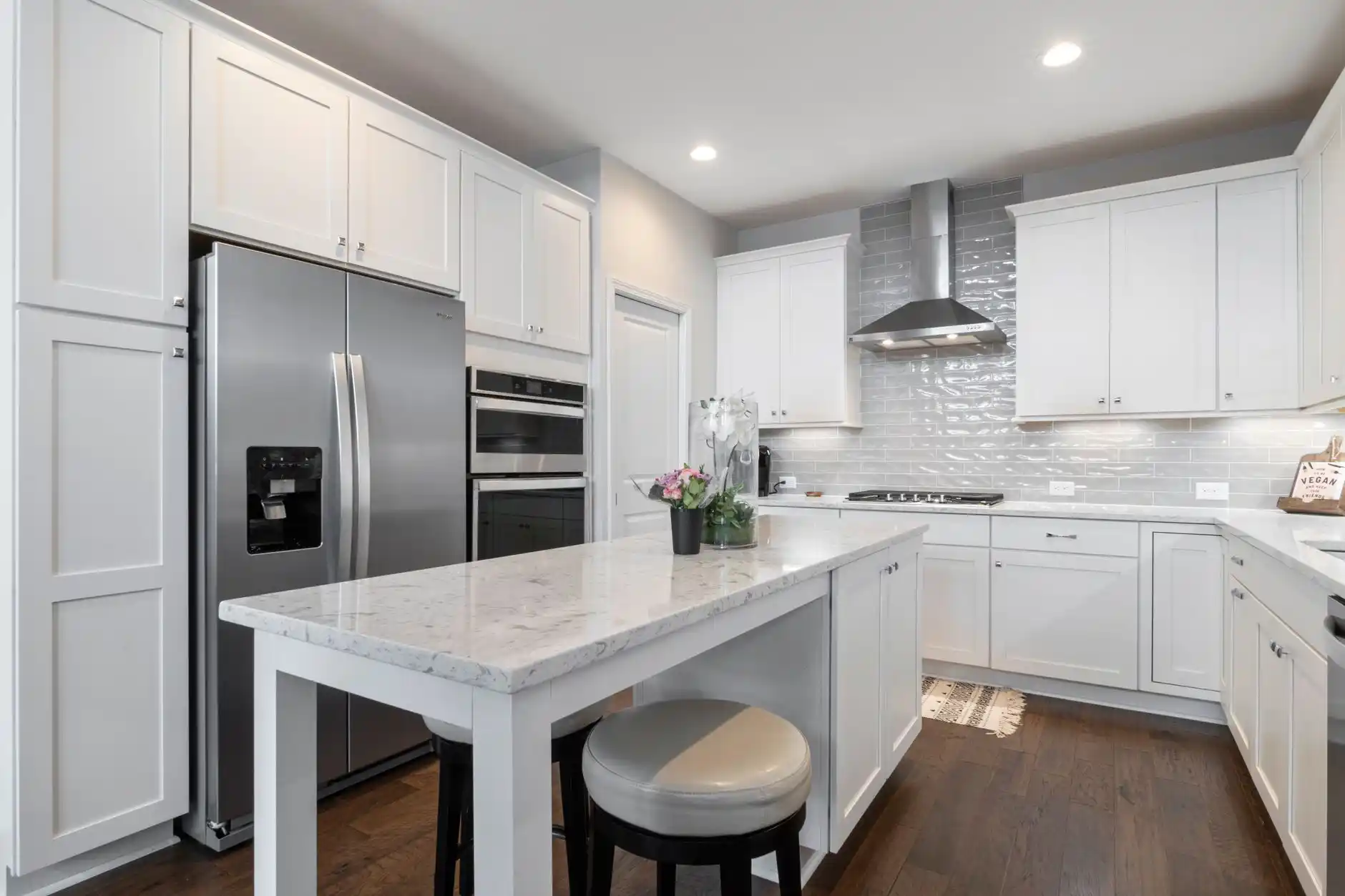
A range hood is not just an appliance hanging over the cooktop.
It is an air-moving system.
The hood, blower, duct size, duct route, exterior termination, make-up air requirements where applicable, cooking appliance, and room all work together.
A powerful hood connected to a poor duct can perform badly.
A beautifully hidden hood that is too high or too narrow may capture cooking plume poorly.
A quiet hood in a showroom may sound completely different when installed with restrictive ductwork.
That is why kitchen ventilation should be designed before cabinets and ceilings are finalized.
Seattle mechanical permits specifically include kitchen hood exhaust systems within regulated mechanical work.
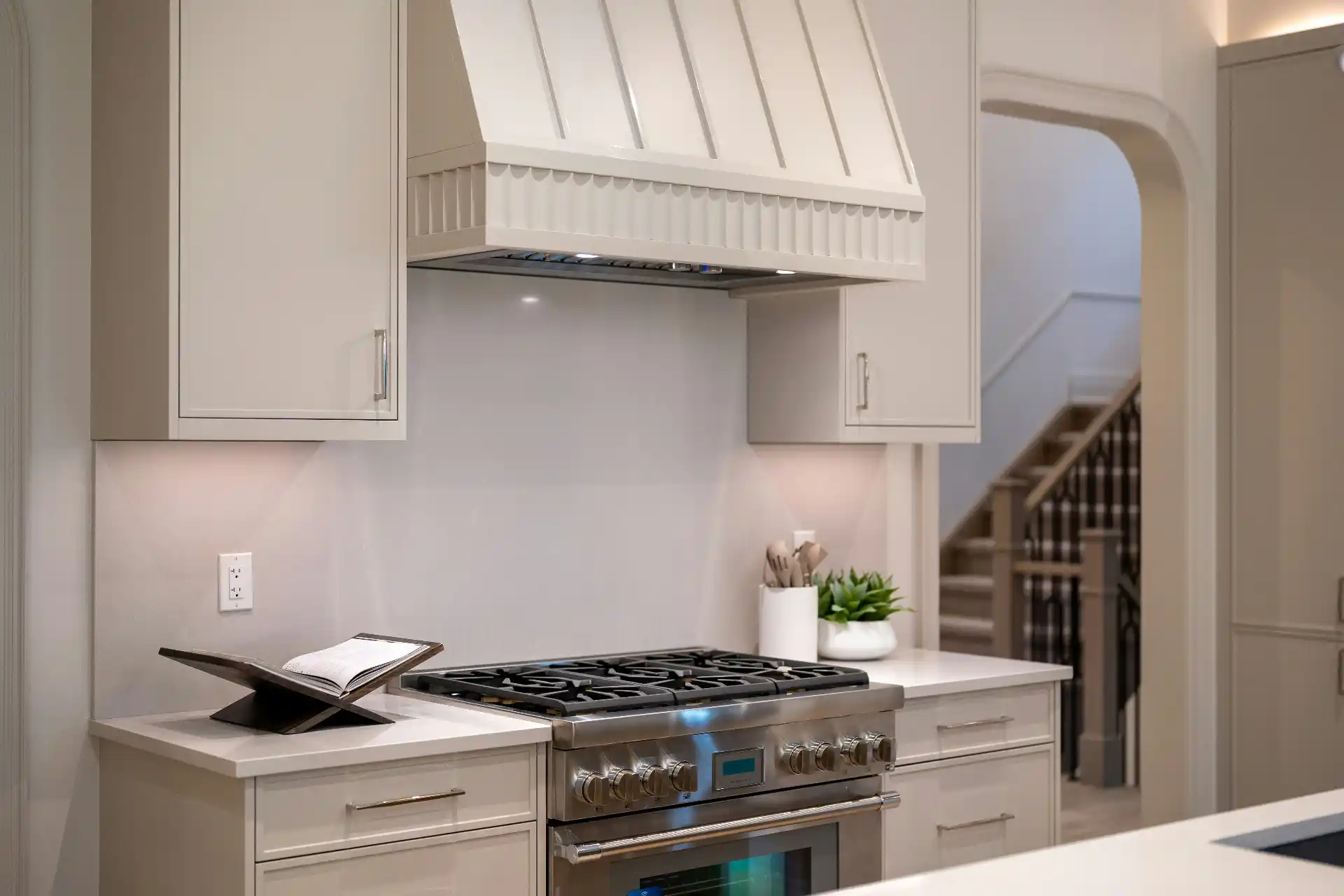
Start With the Cooking Appliance
The hood should match the actual range or cooktop.
Consider:
– appliance width;
– fuel;
– burner output;
– cooking style;
– manufacturer requirements;
– and installation type.
A homeowner who frequently sears, fries, or uses multiple burners at high output may need more capture and airflow than someone whose cooking is relatively light.
Gas cooking also creates combustion byproducts in addition to normal cooking moisture and particles.
The appliance manufacturer may specify minimum or recommended ventilation.
Use that information during design.
CFM Is Not the Only Performance Number
CFM means cubic feet per minute.
It measures airflow volume.
Higher CFM can move more air.
That does not automatically mean better real-world capture.
A hood also needs:
– adequate width;
– proper mounting height;
– good capture area;
– appropriate duct;
– and enough replacement air.
A very high-CFM blower on a narrow decorative hood can still allow cooking plume to escape around the edges.
Design capture first.
Then airflow.
Duct Size Matters
A blower needs a duct sized for the airflow and manufacturer requirements.
Reducing duct diameter below the hood’s recommended size can increase resistance and noise.
It can reduce actual airflow.
Transitions, elbows, and long routes also add resistance.
Do not allow a cabinet detail to force an undersized duct.
The duct is a building system.
Cabinetry should be designed around it.
Short and Direct Is Usually Better
A short duct with few turns generally performs better than a long path with several elbows.
The ideal range location often allows a direct route to the exterior.
That is one reason kitchen relocation and ventilation should be studied together.
If the new range moves to an interior wall, the hood duct may need to cross:
– joists;
– beams;
– cabinets;
– attic space;
– or another floor.
Review How Much Does It Cost to Move a Kitchen to Another Room? before treating ventilation as an afterthought in a relocated kitchen.
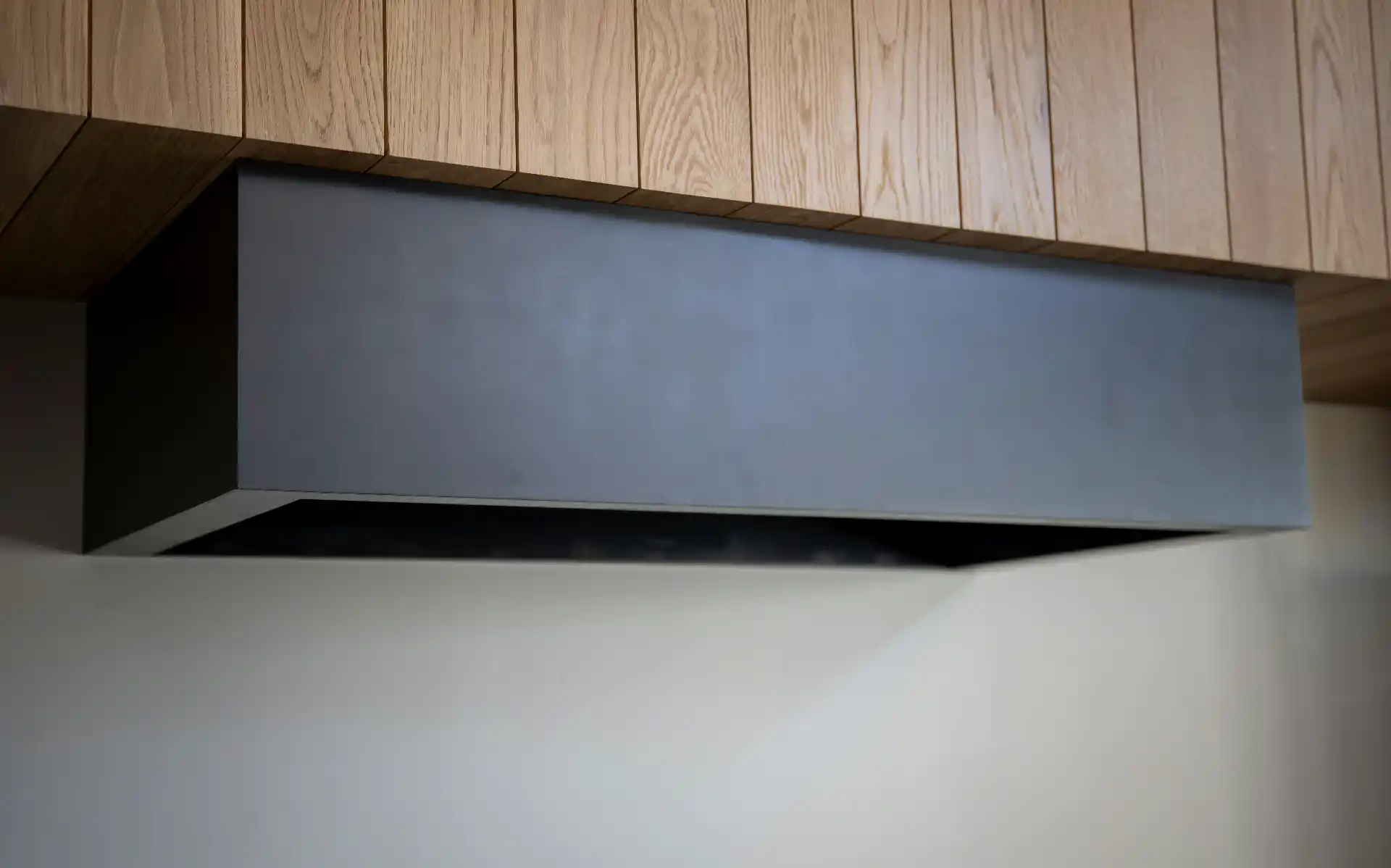
Vent to the Exterior
A true exhaust hood removes air from the building.
The duct should terminate outdoors through an approved exterior termination.
Do not route kitchen exhaust into:
– attic;
– crawlspace;
– wall cavity;
– or other concealed building space.
That would simply relocate grease and moisture into the structure.
Recirculating hoods filter air and return it to the room.
They can be useful where exterior ducting is impractical, but they do not provide the same removal of moisture and contaminants as exterior exhaust.
If exterior venting is feasible, it is generally the stronger remodeling solution.
Make-Up Air
High-capacity exhaust can depressurize a house.
When air is exhausted, replacement air must enter somehow.
Depending on hood airflow, building tightness, combustion equipment, and applicable code, a make-up-air system may be required.
Exact thresholds and solutions should be verified under the currently adopted Seattle Mechanical Code and the selected hood.
Do not publish or design from an old internet rule such as “anything over exactly X CFM always needs the same make-up-air system.”
Codes, exceptions, and appliance conditions matter.
This is why the mechanical contractor should be involved before hood selection is final.
Noise: Sones and Duct Design
Hood noise depends on:
– blower;
– speed;
– duct resistance;
– mounting;
– vibration;
– and location of the motor.
A hood that is too loud tends not to be used.
That defeats the point of good ventilation.
Remote or inline blowers can move some noise away from the kitchen in appropriate systems.
Larger properly designed duct can also reduce velocity-related noise compared with a restrictive undersized route.
Compare sound ratings, but remember the installed duct affects experience.
Hood Width
A hood that is wider than the cooking surface can improve capture.
The exact sizing should follow appliance and hood manufacturer guidance and the kitchen design.
A large commercial-looking range beneath a minimal narrow hood may look clean but perform poorly.
Capture should be treated as a functional requirement.
The cabinetry and hood surround can then be designed around the correct insert.
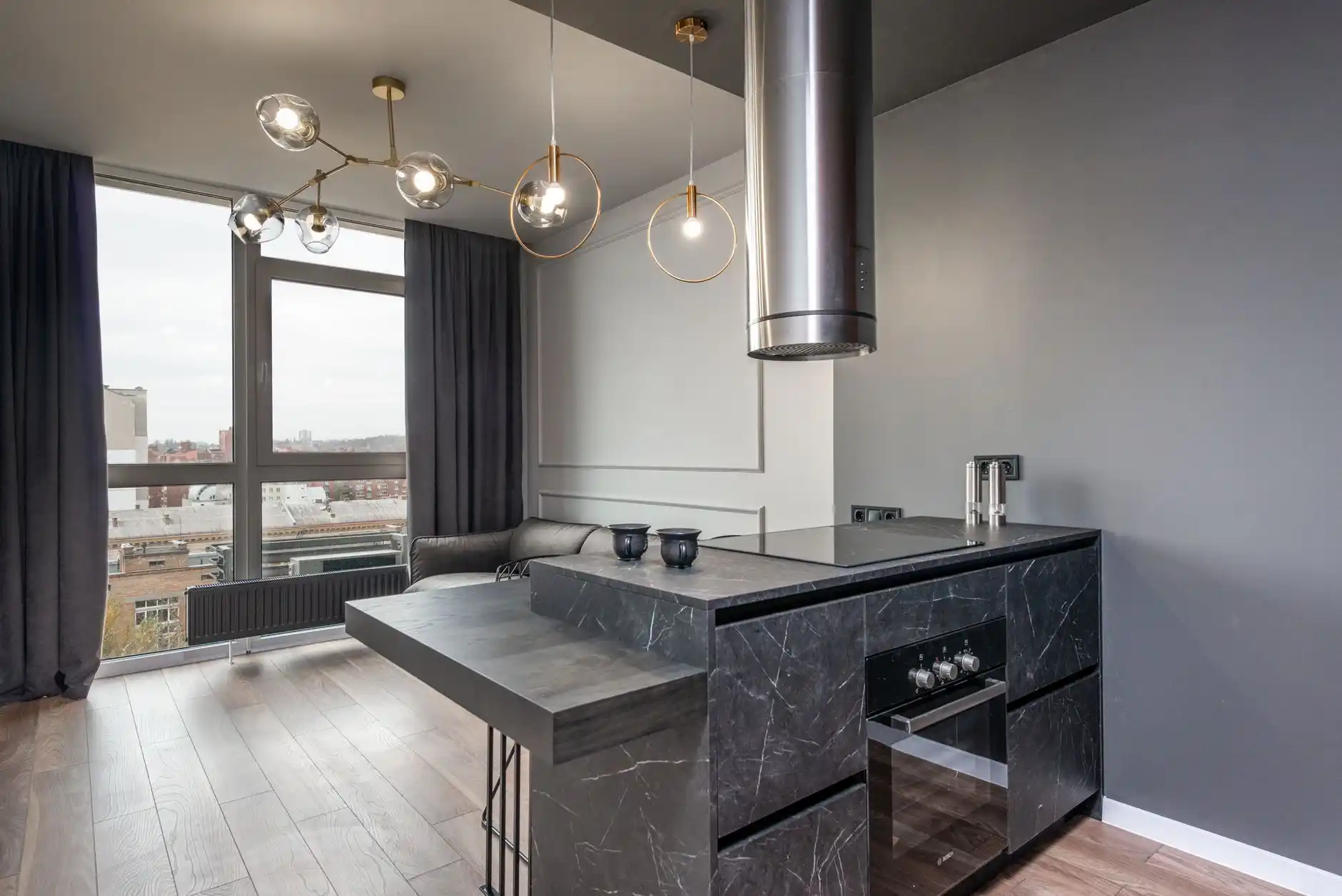
Wall Hood vs Island Hood
Island ventilation is harder because the hood is open on all sides.
There are no adjacent walls to help contain the cooking plume.
The hood often becomes a major visual object in the room.
Duct routing can also be difficult because it must go through the ceiling.
Before placing a range in an island, compare whether a wall location provides better ventilation and safer circulation.
The Kitchen Island Size Guide should be part of that decision.
Downdraft Ventilation
Downdraft systems pull air downward near the cooking surface.
They can preserve open sightlines.
Performance depends on appliance type, cooking conditions, duct route, and system design.
They should not be selected solely because the homeowner does not want to see a hood.
Compare actual manufacturer performance and installation requirements.
A wall hood may still be the more effective solution for high-output cooking.
Induction vs Gas and Ventilation
Ventilation is useful with either cooking technology.
The previous article Induction vs Gas Cooktop for a Kitchen Remodel explains the appliance-side differences.
Even with induction, cooking generates:
– steam;
– grease aerosols;
– smoke;
– and odors.
Gas adds combustion products.
The hood should be designed for cooking behavior, not just fuel.
Cabinet Integration
Many remodeled kitchens use a hood insert hidden inside a custom wood or plaster surround.
This can look excellent.
It also means the cabinet designer needs:
– insert dimensions;
– duct connection location;
– service clearances;
– mounting requirements;
– and blower information.
Do not fabricate the hood cabinet before the actual insert is specified.
A few inches of mismatch can force cabinet modification.
Mechanical Permits in Seattle
Seattle’s mechanical permit process covers new mechanical equipment including kitchen hood exhaust systems.
The exact permit requirement depends on project and scope.
Use the Seattle Remodel Permit Checklist to coordinate mechanical work with electrical, plumbing, and structural permits.
A kitchen remodel can therefore have an approved construction permit while still needing separate trade permits.
How to Plan a Range Hood Correctly
Use this order:
1. Select or narrow the cooking appliance.
2. Determine hood type and capture size.
3. Review manufacturer airflow recommendations.
4. Plan duct diameter.
5. Find the shortest practical exterior route.
6. Identify structural conflicts.
7. Evaluate make-up air under current code.
8. Coordinate blower and noise strategy.
9. Design cabinetry around the actual hood equipment.
10. Obtain required mechanical permit and inspection.
This sequence is much less expensive than cutting open completed cabinets and ceilings because the duct was never designed.
FAQ
What CFM range hood do I need?
It depends on cooking appliance, hood size, cooking style, duct, room, and manufacturer guidance. Higher CFM is not automatically better.
Should a range hood vent outside?
Exterior exhaust is generally the strongest ventilation approach when feasible because it removes cooking air from the building.
Can I reduce a hood duct to fit inside a cabinet?
Only if permitted by the hood manufacturer and system design. Undersizing duct can reduce performance and increase noise.
Do I need make-up air for a powerful hood?
Possibly. The current Seattle Mechanical Code and project conditions should be reviewed for the selected airflow and building.
Does an induction cooktop need ventilation?
Yes. Cooking still produces moisture, grease, smoke, and odors even without combustion.