

Successful pre-listing renovations Seattle homeowners undertake are rarely the largest or most expensive projects. They are the targeted repairs and visual improvements that make a property feel cared for, photograph well, and give buyers fewer reasons to hesitate. Seattle’s older housing stock, wet climate, neighborhood-by-neighborhood price differences, and permitting rules make a strategic approach especially important.
The objective is not to remodel a home according to the seller’s personal taste. It is to improve market readiness while preserving enough sale proceeds to justify the work. That usually means addressing defects first, refreshing highly visible surfaces second, and treating major renovations cautiously unless comparable sales clearly support them. Sellers should coordinate decisions with a qualified contractor and an experienced Main Realtor before setting the scope.
Why pre-listing renovations should be strategic
Strategic renovation means choosing work according to its likely effect on buyer confidence, presentation, marketability, and net sale proceeds. It is different from general remodeling, which may prioritize the owner’s long-term comfort or design preferences. With pre-listing renovations Seattle sellers have a limited window in which every dollar and week should serve the sale.
For example, a seller might spend $8,000 painting a 1,700-square-foot house, repairing damaged trim, and replacing dated light fixtures. Those updates could improve nearly every listing photograph. Spending the same $8,000 on premium tile in one small bathroom may have less impact because buyers still see worn paint and poor lighting elsewhere.
The central trade-off is market appeal versus cost recovery. A $40,000 kitchen remodel may create a more attractive kitchen, but it does not automatically add $40,000 to the sale price. It also introduces design decisions, permit questions, contractor risk, and weeks of delay. By comparison, painted cabinets, new hardware, a simple backsplash, updated lighting, and professional cleaning might cost $4,000 to $12,000 and capture much of the visual benefit.
A common pitfall is assuming every visible update produces a dollar-for-dollar return. Renovations influence buyer perception, but sale price also depends on location, lot, school assignment, floor plan, interest rates, inventory, and competing listings. Work should therefore be evaluated through nearby comparable sales rather than national return-on-investment averages.
Use a three-part decision test
- Will the work remove a likely objection? Active leaks, stained ceilings, damaged flooring, and missing handrails frequently create concern beyond their actual repair cost.
- Will buyers notice it online or during the first five minutes? Exterior condition, paint color, flooring, lighting, kitchens, and bathrooms tend to have high visibility.
- Can it be completed reliably before photography? A theoretically valuable project can become harmful if it delays listing or remains unfinished during showings.
The obvious next question is how much to spend. There is no universal percentage, but a practical starting budget often falls between roughly 0.5% and 2% of the anticipated sale price for cleaning, repairs, paint, landscaping, and light cosmetic updates. A $900,000 home might therefore receive a preliminary preparation budget of $4,500 to $18,000. Larger spending should be supported by contractor estimates and evidence from comparable properties.
How to choose updates based on buyer expectations
Buyer expectations are the baseline condition, style, and functionality people anticipate at a particular price point and location. The appropriate scope for pre-listing renovations Seattle varies greatly between a modest 1940s house in North Seattle, a Capitol Hill condominium, and a renovated view property in Queen Anne.
Start by examining three to six recently sold homes and the strongest current competitors within the same micro-market. Compare price, square footage, age, parking, views, outdoor space, kitchen condition, bathroom condition, energy features, and days on market. Listing photographs are useful, but an agent who toured the properties may know whether workmanship looked better online than it did in person.
Consider a 1925 bungalow expected to list near $850,000. Buyers may appreciate original fir floors, built-ins, and period trim while accepting a compact floor plan. Painting intact millwork gray merely to look contemporary could erase character. In contrast, buyers considering a newer townhome at the same price may expect clean modern finishes, reliable appliances, minimal deferred maintenance, and flexible work-from-home space.
The trade-off is between broad neutrality and neighborhood character. Warm white walls, simple hardware, and consistent flooring appeal to many buyers, but making every property look identical can weaken the features that distinguish it. Preserve valuable details such as leaded-glass windows, Craftsman millwork, exposed beams, or quality mid-century cabinetry when they are in serviceable condition.
- Entry-level and first-time-buyer homes: Prioritize functional repairs, manageable utility costs, clean surfaces, and confidence that immediate work will be limited.
- Move-up homes: Buyers may expect cohesive finishes, useful storage, updated primary spaces, and finished outdoor areas.
- Luxury properties: Inconsistent quality becomes more conspicuous. Repair work, appliances, hardware, lighting, and landscaping generally need to match the home’s positioning.
- Condominiums: Flooring, paint, lighting, storage, and appliance presentation often matter more than exterior projects, which may be controlled by the homeowners association.
A frequent mistake is copying a popular design trend without considering price tier or architectural context. Highly veined countertops, dramatic black fixtures, and open shelving may attract some buyers while dating quickly or highlighting unrelated finishes that remain unchanged.
What should a seller do when nearby listings are split between renovated and original homes? Calculate both likely positioning strategies. Selling in clean, repaired, but mostly original condition may produce a lower price with less cost and delay. Renovating may support a higher price but carry execution risk. Estimate net proceeds for both scenarios, including carrying costs, staging, contractor contingencies, and the possibility that the market changes during construction. A structured service such as Prep N Sell can help organize the work around sale priorities rather than isolated design choices.

Repairs that can remove objections during showings
Objection-removing repairs address defects that make buyers question safety, water intrusion, system reliability, or the overall standard of maintenance. For many pre-listing renovations Seattle properties, this category matters more than decorative upgrading because Seattle rain and older construction can magnify concerns about roofs, foundations, drainage, and moisture.
Begin with an exterior-to-interior review. Look at roof penetrations, gutters, downspouts, siding transitions, decks, windows, foundation walls, crawl spaces, attics, plumbing fixtures, electrical components, heating equipment, and interior signs of moisture. A pre-listing inspection may cost roughly $400 to $800 depending on size and complexity, while specialized sewer scopes, chimney inspections, or structural evaluations are separate.
High-priority repair categories
- Active water problems: Repair leaking plumbing, failed caulk, blocked gutters, disconnected downspouts, roof leaks, and obvious drainage defects. Correct the source before repainting a stain.
- Electrical safety: Address exposed wiring, loose receptacles, missing covers, nonfunctioning fixtures, or other concerns identified by a licensed electrician. Do not represent an entire system as “updated” because a few outlets were replaced.
- Trip and fall hazards: Secure stair rails, repair loose decking, correct lifted walkway sections where practical, and replace broken steps.
- Heating and ventilation: Service equipment when appropriate, install clean filters, confirm bathroom fans operate, and provide records. Heat pumps can be attractive, but adding one immediately before sale requires careful cost and permit analysis.
- Doors and windows: Adjust doors that will not latch, replace torn screens, lubricate hardware, and repair visibly failed components.
- Minor plumbing defects: Slow drains, running toilets, leaking shutoff valves, and dripping faucets are inexpensive relative to the doubt they create.
As a concrete example, a $600 gutter and downspout correction plus a $1,200 crawl-space cleanup may be more valuable to buyer confidence than a $1,800 designer vanity. The vanity is visible, but standing water or damp insulation can affect inspections, financing discussions, and negotiations.
The trade-off is whether to repair proactively or disclose and price accordingly. Repairing makes the home easier to present, but some large defects—such as a roof near the end of its useful life—may cost $15,000 to $30,000 or more. A seller might instead obtain a written estimate, disclose known conditions, and account for them in pricing. The right choice depends on available cash, buyer expectations, lender concerns, and the reliability of the proposed solution.
A dangerous pitfall is concealing evidence rather than correcting or disclosing the underlying issue. Fresh paint over a recurring ceiling stain may increase legal and negotiation risk. Keep invoices, photographs, warranties, permits, and contractor reports so buyers can understand what was found and how it was addressed.
Should sellers order every possible inspection? Usually not. Start with the property’s age, condition, and known risk factors. A 100-year-old home with a large tree between the house and sewer connection may justify a sewer scope, while a masonry chimney that has not been evaluated in decades may warrant a specialist. Consult the listing broker and appropriate licensed professionals rather than relying on visual assumptions.
Cosmetic improvements that help listing photos
Cosmetic improvements change visual presentation without substantially altering the structure or major systems. They are particularly effective because most buyers encounter a home first through small online images. In pre-listing renovations Seattle, brightening interiors can also counteract overcast daylight and shaded lots.
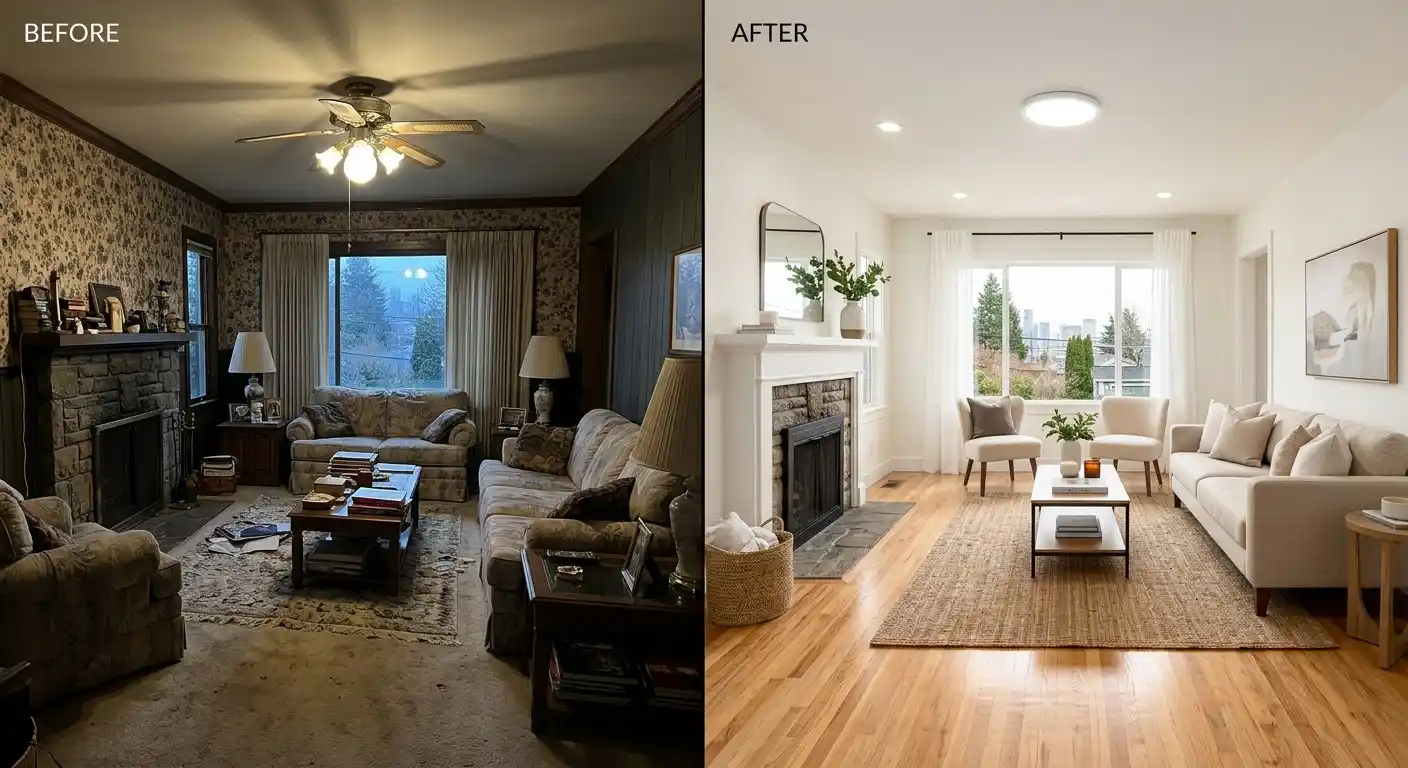
Interior painting often provides the broadest visual effect. Typical professional pricing can range from approximately $3 to $7 per square foot of painted area or several thousand dollars for a modest house, depending on preparation, ceiling height, trim, repairs, and the number of colors. Warm whites and light neutral tones generally photograph well, but sample colors on multiple walls because Seattle’s gray daylight can reveal blue, green, or yellow undertones.
Other productive cosmetic projects include:
- Deep cleaning kitchens, baths, windows, baseboards, vents, and light fixtures.
- Refinishing hardwood floors or using professional cleaning and touch-up where full refinishing is unnecessary.
- Replacing heavily worn carpet with a consistent neutral product, often around $4 to $9 per square foot installed depending on material and conditions.
- Updating mismatched cabinet pulls, switch plates, faucets, and simple light fixtures.
- Removing heavy curtains, reducing furniture, and replacing weak or inconsistent bulbs.
- Refreshing grout and caulk instead of replacing serviceable tile.
- Creating an obvious use for awkward spaces, such as staging a 6-by-8-foot alcove as a compact office.
For example, a $10,000 package might include $5,500 of paint, $1,000 of lighting and hardware, $1,500 of floor repair, and $2,000 of cleaning, window washing, and staging support. This distributed approach can improve the continuity of an entire home. By comparison, placing the full budget into new kitchen counters may leave every other room visually dated.
The trade-off is durability versus short-term presentation. Replacing carpet offers a cleaner result but costs more and can reveal subfloor issues. Professional cleaning costs less, but it will not correct permanent discoloration or wrinkles. Similarly, cabinet painting can transform a kitchen, yet poor preparation can cause visible brush marks and peeling. Sometimes clean original wood is preferable to a rushed coating.
The most common pitfall is improving one surface so much that adjacent elements suddenly look worse. A brilliant white wall can emphasize yellowed outlets, chipped trim, or stained carpet. Plan cosmetic work as a coordinated palette rather than a series of unrelated purchases. Sellers looking for coherent palettes and realistic transformations can review Inspiration before finalizing materials.
What comes after cosmetic work? Complete repairs and painting before deep cleaning, then stage and photograph. Use bulbs with consistent color temperature—often around 2700K to 3000K for warm residential spaces—and replace dead bulbs before the photographer arrives. Open blinds, remove countertop clutter, hide cords, and test every light.

Curb appeal upgrades that make a stronger first impression
Curb appeal is the visual and physical experience from the street to the front door. It influences listing thumbnails, drive-by impressions, and the emotional tone of a showing. For pre-listing renovations Seattle, exterior presentation must account for moss, mud, dense vegetation, wet walkways, and seasonal light.
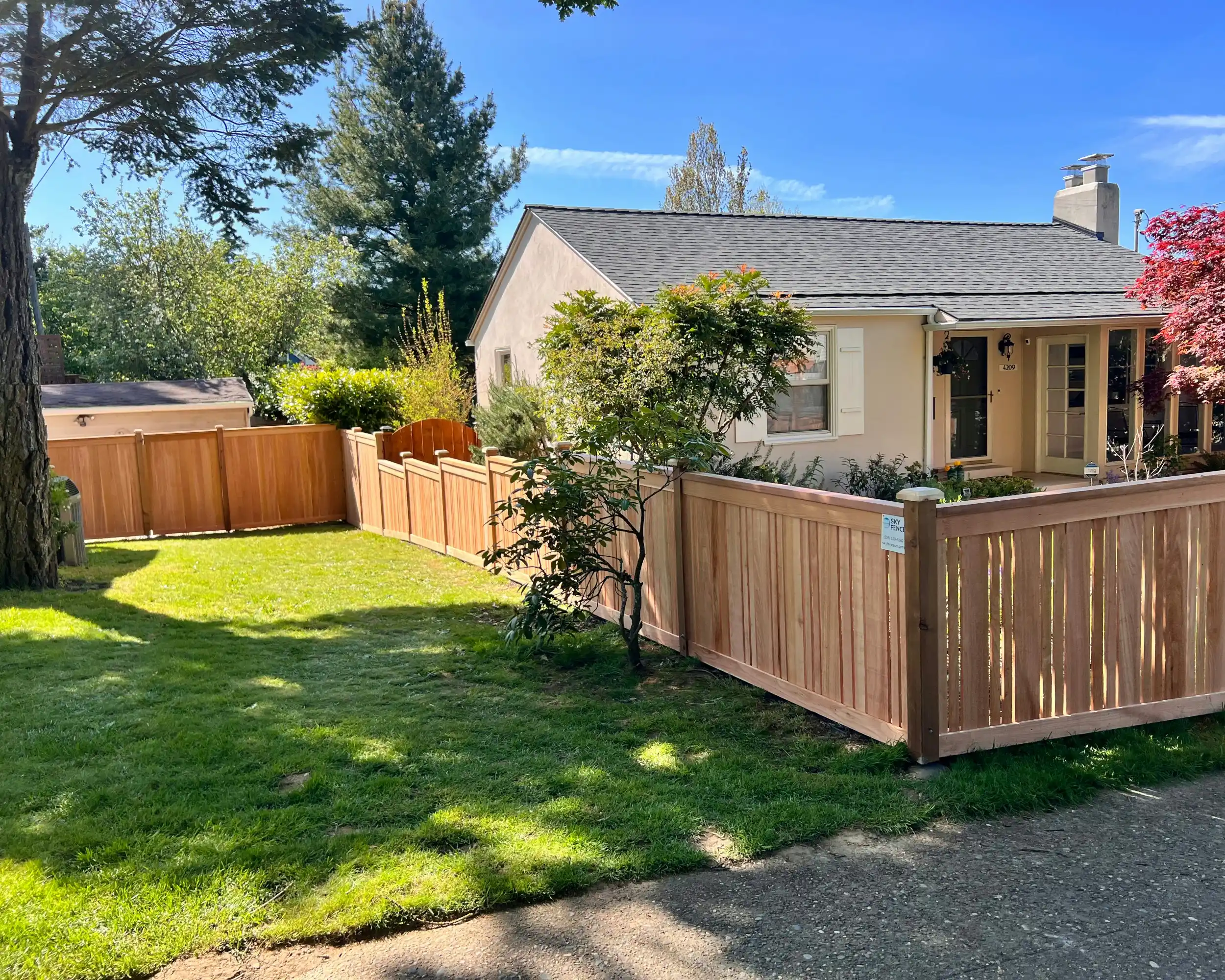
Start with maintenance rather than decoration. Clean the roof using a method appropriate to the roofing material, clear gutters, wash siding carefully, clean windows, edge paths, prune plants away from the structure, remove dead growth, and spread fresh mulch. Avoid aggressive pressure washing that can damage shingles, force water behind siding, or etch wood.
A practical $2,500 exterior refresh might allocate $500 to window and gutter cleaning, $700 to pruning and debris removal, $500 to mulch and simple plantings, $400 to touch-up paint, and $400 to an entry light, house numbers, and door hardware. Pricing varies with access, lot size, disposal needs, and plant condition.
Priorities commonly include:
- Front approach: Make the path obvious, clean, stable, and unobstructed.
- Entry: Repair peeling trim, clean or paint the door, update worn hardware, and install a clean doormat.
- Vegetation: Preserve mature landscaping while opening sightlines to windows and architectural features.
- Hardscape: Remove moss and organic buildup using appropriate treatment and safe procedures.
- Outdoor living: Arrange a deck, balcony, or patio so buyers can understand its function.
- Drainage: Keep soil and mulch below siding and direct downspouts appropriately.
The major trade-off is mature greenery versus openness. Seattle buyers often value privacy and established gardens, but overgrown shrubs can darken rooms, hide the house, hold moisture against siding, and make the lot appear smaller. Selective pruning is generally better than stripping the landscape bare.
A common mistake is planting large quantities immediately before listing without considering season, watering, or scale. Wilting annuals and fresh mud can look worse than a clean, restrained landscape. Use a limited palette and focus color near the entry. During dry summer periods, establish a watering plan so new plants survive through closing.
Should the exterior be fully repainted? If failure is widespread, full preparation and painting may be justified and can cost roughly $8,000 to $20,000 or more for a Seattle house, depending on size, access, lead-safe procedures, and siding condition. If paint is generally sound, selective repairs and coordinated touch-ups may be faster and more economical. Contractors should evaluate whether touch-ups will blend acceptably.
Seattle permit and disclosure considerations for renovation work
Permit review determines whether proposed work requires authorization, inspections, or related documentation from the appropriate jurisdiction. Disclosure involves informing buyers about known conditions and relevant work. These issues should be built into pre-listing renovations Seattle planning rather than examined after construction is complete.
Within Seattle city limits, the Seattle Department of Construction and Inspections is a primary source for current requirements. Rules, fee schedules, and processing times can change, so sellers should verify the project rather than relying on a contractor’s casual statement that a permit is unnecessary. Electrical work may involve the state or city authority applicable to the address and project.
Painting, replacing cabinet hardware, and many like-for-like finish changes generally do not receive the same treatment as structural alterations. Projects involving structural walls, additions, significant plumbing or electrical changes, new windows in altered openings, decks, mechanical systems, or changes of use may require permits. Landmark status, environmentally critical areas, shoreline rules, tree protections, condominium governing documents, and neighborhood-specific constraints can add review.
For example, replacing a faucet with a similar fixture is fundamentally different from relocating a kitchen sink across the room and modifying supply, drain, electrical, and wall systems. The first may be routine maintenance; the second can involve multiple trades and approvals. Similarly, replacing deck boards is not the same as rebuilding or enlarging the deck structure.
The trade-off is speed versus documentation and compliance. Skipping required permits may appear to save time, but it can create buyer concern, appraisal questions, insurance complications, retrospective correction costs, or closing delays. Proper permitting can take longer, yet approved plans and final inspection records may strengthen confidence in substantial work.
A serious pitfall is assuming that old unpermitted work becomes irrelevant because the current owner did not perform it. Sellers should discuss known conditions with their broker and, where appropriate, SDCI, an attorney, an architect, or a qualified contractor. Do not call a basement room a legal bedroom solely because it contains a bed; egress, ceiling height, heat, smoke and carbon-monoxide protection, and permitting history may matter.
Washington sellers commonly encounter the statutory seller disclosure statement often called Form 17, although exemptions and transaction-specific rules exist. Disclosure obligations are a legal matter, and truthful responses should not be replaced by marketing language. Known leaks, drainage problems, additions, remodeling, title issues, and system conditions may require attention depending on the form and facts.
What records should accompany renovation work? Keep contracts, scope changes, invoices, product information, warranties, permit numbers, inspection approvals, engineering documents, before-and-after photographs, and paid receipts. A centralized documentation process such as DEPP can make it easier to organize project information for listing preparation. When uncertain about disclosure language or legal consequences, seek advice from a Washington real estate attorney rather than guessing.

How to plan work around listing timing
Listing-timing planning means sequencing decisions, contractors, materials, cleaning, staging, photography, and market launch so the property is complete before buyers see it. Even well-selected pre-listing renovations Seattle can lose value if unfinished work appears in photographs or forces the home to miss its intended launch date.
Begin with the target listing date and work backward. A modest preparation plan often requires four to eight weeks; permitted or custom work may require several months. Add a contingency of at least 10% to 20% to the construction budget and one to two extra weeks to the schedule where possible.
A sample six-week schedule
- Week 1: Agent walkthrough, condition review, comparable-sales analysis, budget approval, contractor estimates, and permit research.
- Week 2: Order fixtures and materials; complete demolition only after scope and approvals are settled.
- Weeks 2–3: Perform exterior, electrical, plumbing, carpentry, and moisture-related repairs.
- Weeks 3–4: Complete wall preparation, painting, flooring, cabinetry, and fixture installation.
- Week 5: Finish landscaping, window washing, deep cleaning, hauling, and minor corrections.
- Week 6: Stage, complete a final punch-list walkthrough, photograph, prepare marketing, and launch.
Sequence matters. Repair leaks before drywall, complete dusty work before painting, paint before floor refinishing where the contractor recommends it, and finish all construction before deep cleaning. Landscaping can run in parallel, but exterior access should not interfere with deliveries or debris removal.
The timing trade-off is between launching quickly and presenting a finished product. Listing one week earlier may be valuable in a rapidly changing market, but launching with missing hardware, construction dust, or an unfinished bathroom can reduce buyer confidence. Conversely, delaying two months for a discretionary backsplash may expose the seller to carrying costs and different market conditions.
For example, an additional month could mean $3,500 to $7,000 in mortgage interest, taxes, utilities, insurance, storage, and temporary housing, depending on the seller’s circumstances. A proposed renovation should produce enough likely benefit to justify both its direct price and its time cost.
A common pitfall is ordering materials before checking availability, dimensions, and return policies. Custom windows, specialty tile, or backordered appliances can derail a schedule. For pre-listing work, in-stock products from dependable suppliers are often preferable to distinctive items with eight- to twelve-week lead times.
If the schedule begins slipping, ask which tasks are essential to safety and buyer confidence, which improve photographs, and which can be removed without leaving an incomplete appearance. Never abandon a partially demolished room if a simpler finished alternative is available. Reduce scope cleanly instead.
A practical closing principle
Before listing, conduct a final walkthrough during daylight and again with every light on. Open doors, run faucets, test fans, check touch-up paint, remove contractor labels, confirm the property is clean, and make sure permits and receipts are organized. Review the home from the buyer’s perspective rather than the contractor’s: buyers see the whole experience, not an individual trade’s completed task.
The best pre-listing renovations Seattle strategy is therefore disciplined rather than extravagant. Repair defects that create doubt, make visible rooms and outdoor areas feel coherent, comply with permit and disclosure requirements, and protect the launch date. When a project does not remove an objection, improve presentation, or support market positioning, preserving the seller’s cash may be the better renovation decision.
FAQ
Which pre-listing renovations offer the best return in Seattle?
The best returns usually come from fixing defects, painting, deep cleaning, improving lighting, refreshing floors, replacing worn hardware, and completing modest kitchen or bathroom touch-ups. Use nearby comparable sales to confirm what buyers expect before undertaking a major remodel.
What repairs should I prioritize before listing my Seattle home?
Prioritize active leaks, drainage and moisture issues, electrical hazards, loose railings or decking, plumbing defects, malfunctioning ventilation or heating, and doors or windows that do not operate properly. Correct underlying problems rather than covering visible evidence.
Which cosmetic updates make the biggest difference in listing photos?
Fresh neutral paint, clean or refinished flooring, consistent lighting, spotless windows, refreshed grout and caulk, updated hardware, and reduced furnishings generally have the greatest photographic impact. Brightening dark rooms is especially useful during Seattle’s overcast seasons.
What curb appeal improvements help a Seattle home sell?
Trim overgrown landscaping, remove moss and debris, clean gutters and walkways, repair damaged steps or railings, touch up peeling paint, wash exterior surfaces appropriately, and improve entry lighting. A clean front door and simple seasonal planting can also strengthen the first impression.
Do pre-listing renovations in Seattle require permits?
Some work does. Structural changes and many electrical, plumbing, mechanical, roofing, window, or layout alterations may require permits, while painting and other minor cosmetic work often do not. Confirm requirements with the Seattle Department of Construction and Inspections and qualified contractors before starting.
What renovation work must sellers disclose to Seattle buyers?
Sellers should disclose known material defects, water intrusion, repairs, alterations, and relevant permit history as required by Washington law. Keep permits, invoices, warranties, inspection reports, and photographs, and never conceal an unresolved problem with cosmetic work.
How far in advance should I start renovations before listing?
Begin planning at least six to twelve weeks before photography, and earlier for permitted or contractor-intensive projects. Allow time for inspections, estimates, material delays, repairs, paint, cleaning, staging, and a contingency buffer so unfinished work does not postpone the listing.