

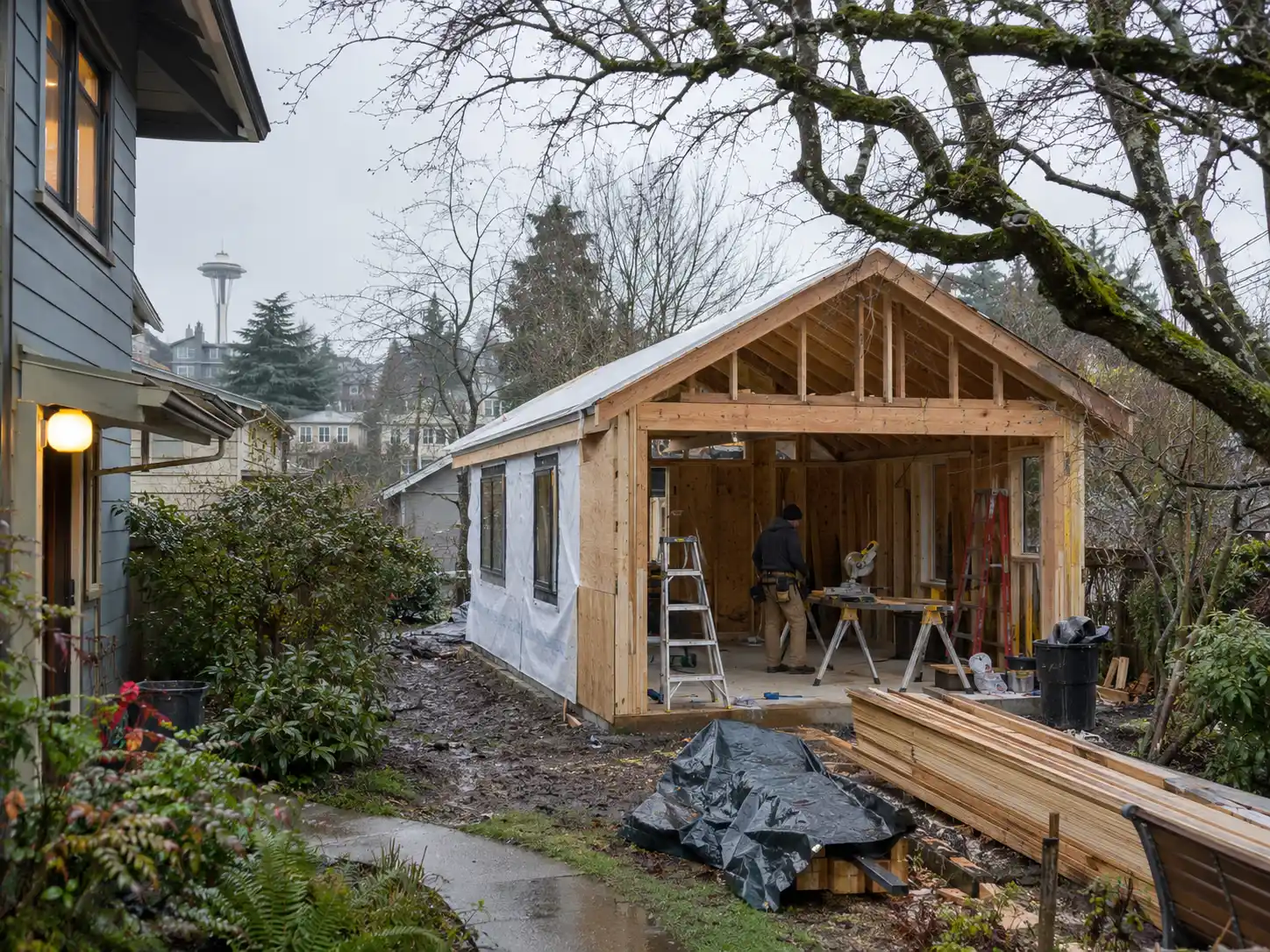
An ADU can be built through a Seattle winter, but the season changes the early stages far more than the later ones. Rain and saturated soil, not snow, are the main obstacles: they slow excavation and foundations, bring stricter erosion control rules from October through April, and make keeping lumber dry a daily task until the roof and windows are on.
Once the building is closed in and heated, interior work carries on much as it would in July. So the question is less whether to build in winter than how to sequence the work, protect the site and plan for a few lost days. This guide covers what changes, what the city expects and how a builder schedules around it.
Rain and Saturated Ground, Not Snow, Set the Winter Pace
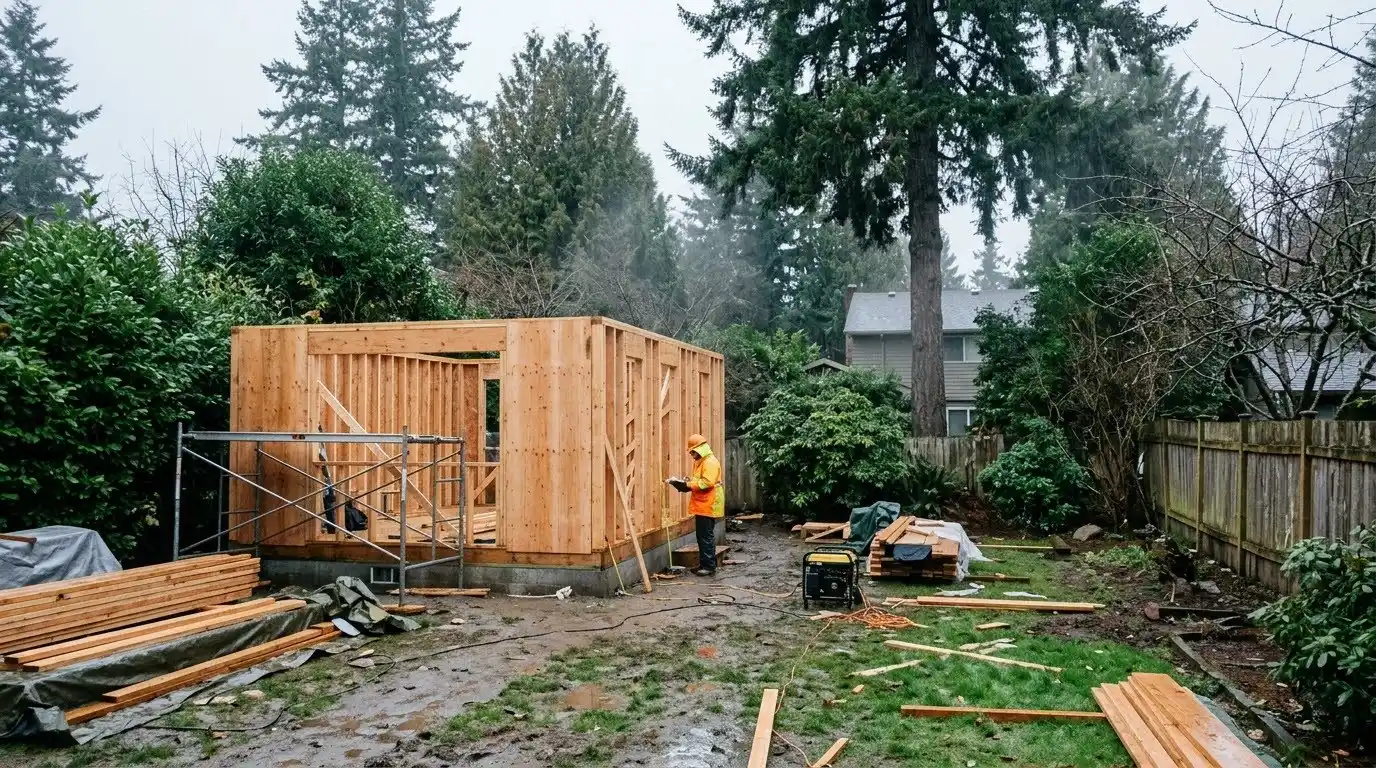
Seattle winters are long, gray and wet, with only occasional freezes and snow. For a construction site, that means the ground stays soft for weeks, trenches collect water, and every exposed pile of soil can wash toward the street with the next storm.
Cold matters at specific moments, mainly during concrete work and in protecting water lines. Rain matters every day the soil is open, which is why the first half of a winter project needs the most planning.
Seattle’s Wet-Season Erosion Rules
Every project in Seattle must keep sediment and muddy water on the site, whether or not it goes through a full drainage review. The city’s standard stormwater notes set out what that means in practice, and some of the requirements tighten during the wet season, which the notes define as October 1 through April 30.
Two Days of Exposed Soil Instead of Seven
During the wet season, any disturbed soil that will not be worked for two consecutive days must be stabilized right away with an approved measure such as straw, mulch or plastic sheeting. In the dry season the window is seven days. Erosion controls must also be installed before construction starts, so silt fencing, inlet protection and a rock entrance are typically the first things that appear on a winter site.
Hillside Lots and the Grading Season
On lots in landslide-prone areas, such as steep slopes and known or potential slide areas, the Seattle Department of Construction and Inspections restricts grading from November 1 through March 31. Work in that window requires a grading season extension, which involves an application, a construction schedule, a site plan showing stormwater controls and a letter from a geotechnical engineer. The city can also limit rainy-season grading on other sites through permit conditions, so read the conditions on your own permit rather than assuming a flat lot is exempt.
Digging Footings in Wet Soil
Excavation is where winter costs the most time. Footing trenches fill with water and need pumping, and soil that would be firm in August can turn soft once it is soaked or churned by equipment. Foundations cannot be placed on mud: soft material is dug out and replaced with compacted crushed rock or another suitable base until the bearing surface is sound, and the city inspector checks it before concrete goes in.
Utility trenches for the side sewer, water and power face the same problems, and an open trench across a lawn turns into a channel for runoff. Crews in winter generally open only what they can close the same day or soon after. The type of foundation also affects how much digging is involved, as our overview of slab, crawlspace and pin pier foundations explains, and systems that need less excavation can be easier to schedule in wet months where the engineer approves them.
Pouring Concrete When It Is Cold or Raining
Concrete gains strength more slowly in the cold and can be damaged if it freezes before it cures. During cold spells, crews may use insulated blankets, warmed enclosures or mix adjustments from the supplier, and they leave forms in place longer. Concrete is never placed on frozen ground or into standing water.
Heavy rain is the more frequent problem. It can wash the surface of a freshly finished slab, so crews watch the forecast, keep plastic and tarps ready and reschedule a pour rather than gamble on a storm. One or two moved pours are normal on a winter project and should be built into the schedule.
Getting the Building Dried In
The goal of the winter framing phase is simple: get a roof and walls between the weather and the interior as fast as possible. Builders frame, sheathe and install roofing underlayment quickly, then add windows, doors and the weather-resistive barrier on the walls. Temporary covers protect the subfloor in the meantime.
Until that point, every rainy day adds water to the structure. After it, the trades that follow, including plumbing, electrical and mechanical rough-ins, can work in any weather.
Keeping Framing and Insulation Dry
Framing lumber can get wet during construction without harm, but it must dry before the walls are closed. Insulating or hanging drywall over damp framing traps moisture, which can lead to mold, nail pops and cracked finishes. Crews check framing with a moisture meter and wait until readings show the wood has dried before calling for the insulation inspection.
Drying is faster with heat and airflow. Electric heaters and dehumidifiers are the usual tools, because fuel-burning space heaters release water vapor into the building while they warm it. Insulation itself is stored dry and installed only once the shell is weathertight.
Short Days, Temporary Heat and Interior Finishes
Around the winter solstice, Seattle has well under nine hours of daylight, and much of it is overcast. Crews start and stop with the light, which trims productive hours on exterior work, so temporary lighting and well-planned daily tasks help keep the pace.
Inside, drywall compound, paint, flooring adhesives and some sealants need moderate temperatures to cure properly, so the interior is kept heated during finishes. Once permanent power is connected, the unit’s own heating system can take over from temporary heat, and the timing of utility connections becomes part of the winter plan.
Mud, Neighbors and the Rest of the Yard
A wet site spreads mud easily. A rock construction entrance, a cleaned sidewalk and a defined path for wheelbarrows protect the street and the rest of the yard. Lawn along the access route will usually need repair after a winter build, and sheets of plywood or ground protection mats limit the damage.
Neighbors notice runoff, mud on the street and pumps running in the evening more in winter than at any other time. Keeping erosion controls maintained after each storm is both a code obligation and the best way to avoid complaints.
Planning a Schedule Around the Rainy Months
The classic sequence, which our realistic ADU timeline also describes, is to design and permit during the cooler months and start site work in spring. That remains the easiest path when the calendar allows it.
When a permit is issued in late fall, starting anyway can still make sense. A dry spell is often enough to get excavation and the foundation done, and once the shell is closed the remaining months of interior work are largely weather-proof. A winter start can also put the finished unit ahead of a summer move-in or the next rental season.
Practical habits help either way: schedule the foundation pour with a flexible date, order windows early so the drying-in step is not waiting on a delivery, keep stabilization materials on site and build a few weather days into the contract schedule. United Signature plans this sequencing as part of its ADU design and construction service, and if you are deciding when to begin, a free lot review for your property shows early whether slope or critical areas could bring winter grading limits into play.
FAQ
Does a flat Seattle lot need a grading season extension to dig in winter?
Usually not, because the November-to-March restriction targets landslide-prone areas. However, the city can limit rainy-season grading on other sites through permit conditions, and the wet-season erosion control rules still apply to every project.
Can a foundation be poured when temperatures are near freezing?
Yes, with cold-weather precautions such as insulated blankets, heated enclosures or adjusted mixes, and never on frozen ground. If a hard freeze is forecast during the first days of curing, the pour is often moved.
Will framing that got rained on cause mold later?
Not if it dries before it is enclosed. The risk comes from closing walls over damp wood, which is why moisture readings are checked before insulation goes in.
Does building through the winter add cost?
It can add items such as extra erosion control, pumping, temporary heat, weather protection and occasional lost days. How much depends on the site and the timing, and a builder can explain which of these apply to your project when the schedule is set.
What happens on the site during a snow day or cold snap?
Exterior work typically pauses, exposed water lines and fresh concrete are protected, and erosion controls are checked once conditions allow. If the shell is closed and heated, interior trades can often keep working.