

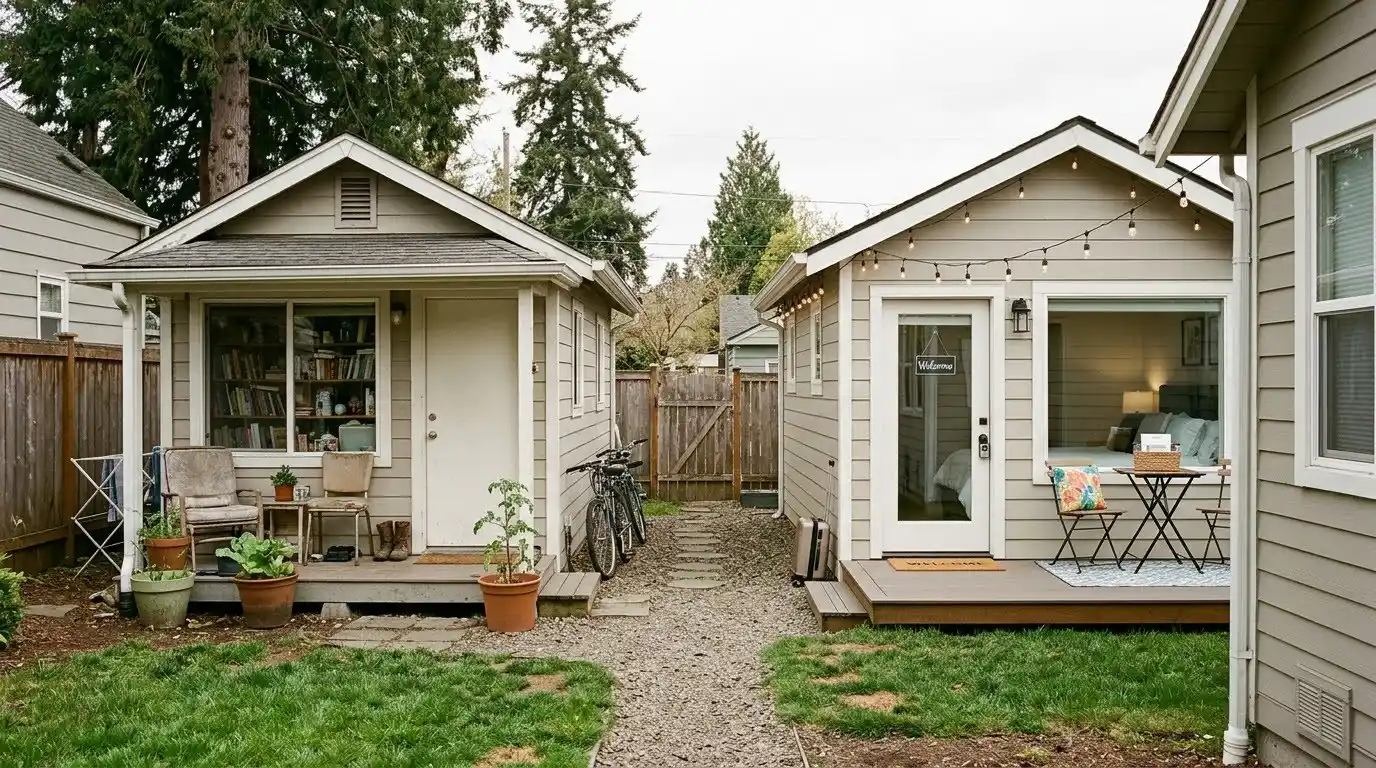
A short-term rental ADU can bring in more gross revenue than a long-term lease, but gross revenue is the wrong scoreboard. Once cleaning, furnishing, platform fees, nightly-stay taxes, empty nights, extra wear and your own hours are subtracted, the gap often narrows, and in slow seasons or weaker locations it can reverse.
This article compares the economics of the two strategies and offers a simple way to run the numbers for your own unit. The licensing and tax rules for nightly stays are covered in our guide to Seattle’s short-term rental requirements for ADUs, and choosing a monthly figure for a lease is explained in our method for pricing a long-term ADU rental.
Why Net Income Beats Nightly Rate as a Yardstick
A high nightly rate invites a quick multiplication by thirty that looks far better than a month’s rent. That shortcut assumes every night is booked and nothing needs cleaning or replacing.
A fair comparison looks at a full year: what each approach is likely to bring in, minus every cost it creates, weighed against the hours it consumes. The option with the higher annual net per hour of effort is the one that truly earns more.
Occupancy: Nights Sold Versus Months Leased
A long-term unit is either leased or vacant, and vacancy usually happens only between tenants. With a good tenant who renews, the unit may go years without an empty month.
A short-term unit sells each night separately. Weekends fill before weeknights, holidays and summer events fill before February, and a few unbooked nights between stays are normal even in a strong market. Your realistic occupancy, not the best month on a competitor’s calendar, should drive the estimate.
Seasonality in the Puget Sound Market
Visitor demand in the region rises in late spring and summer, when tourism, cruise travel and outdoor events peak, and softens through the wet, dark months. A unit near hospitals, universities or major employers may see steadier demand from work travel, while one in a quiet residential pocket depends more heavily on the summer. Build your estimate season by season rather than from a single annual average.
Turnover, Cleaning and Laundry
Every short-term checkout triggers a clean, a linen change, a restock of supplies and a quick inspection for damage. Whether you pay a cleaner or do it yourself, that cost repeats with every stay, which is why short stays are less profitable than long ones even at the same nightly rate.
A long-term tenancy turns over far less often, but each turnover is a larger job: a deep clean, touch-up paint, small repairs, new photos, showings and screening, plus a gap without rent while the unit is between tenants.
Furnishing, Supplies and Replacement Cycles
A nightly rental has to be fully equipped before the first guest arrives: furniture, mattresses, kitchenware, several sets of linens and towels, decor, Wi-Fi and often streaming services. Heavy use shortens the life of all of it, so replacement becomes a recurring cost rather than a one-time purchase.
Most long-term ADUs are rented unfurnished, with the owner supplying appliances and window coverings. Tenants bring their own furniture and care for it, and the owner’s replacement list is short.
Platform Fees, Management and Your Own Hours
Booking platforms take a service fee from each stay, and guests expect quick replies, smooth check-ins and attention to reviews, on weekends and evenings as often as during the day.
Professional management is available for both strategies, but short-term managers handle far more transactions and typically charge accordingly. If you manage the unit yourself, put a value on the hours spent answering guests, coordinating cleaners and restocking supplies.
Licensing, Taxes and Utilities
Nightly rentals carry licensing, registration and tax obligations that a monthly lease does not, and those rules are set by the city and the state rather than by the platform. Factor in the time and fees involved, and check which taxes your platform collects for you.
Long-term rentals have their own obligations under landlord-tenant law and local rental registration, but the paperwork is lighter and less frequent. Utilities differ too: a short-term host pays for all power, water, internet and garbage, while a long-term tenant can hold some accounts directly. Income tax treatment can also differ between the two, so ask a tax professional.
Wear, Insurance and the Fine Print in Your Loan
More arrivals mean more scuffed walls, worn flooring and tired furniture. A short-term host sees the unit after every stay and can fix problems early; a long-term landlord may not see inside for months, but one careful tenant typically causes less total wear than a year of rotating guests.
A standard homeowner’s policy may not cover paying guests, so short-term hosting usually requires a different policy or an endorsement, and a long-term rental calls for landlord coverage. Price both before comparing. Review your mortgage, home equity line and any HOA documents too, since some restrict short-term use or require notice when the property’s use changes. If the ADU is being financed against expected rent, ask the lender how it treats each type of income.
Flexibility and How Easily You Can Change Course
Short-term hosting lets you block dates for visiting family or your own use, raise rates for peak weekends and stop when you choose, but it also exposes you to rule changes.
A long-term lease trades flexibility for steadiness. Seattle’s tenant protections generally require a recognized reason to end a tenancy, and the expiration of a lease term is not one on its own, so a long-term tenant is best treated as a commitment rather than a placeholder until summer. Confirm current rules before signing a lease you might want to end.
A Worksheet for Comparing the Two
Use the same twelve months for both columns and work in words or rough figures of your own.
Long-term column: start with the rent your comparables support and multiply by the months you expect the unit to be leased, leaving room for one turnover gap.
Subtract landlord costs: utilities you include, repairs, landlord insurance, any management fee, and the cleaning, paint and advertising each turnover requires.
Short-term column: estimate an average nightly rate for each season and multiply by the nights you realistically expect to sell in that season.
Subtract platform fees, cleaning per stay, linens and supplies, all utilities and internet, hosting insurance, licensing, and any taxes the platform does not remit.
Spread the furnishing budget over its expected useful life and subtract that yearly share.
Put an hourly value on your own time for each column and subtract it.
Stress-test both results: lower the short-term occupancy to a slow year and add an extra vacant month to the long-term column, then see which option still holds up.
If the construction budget is still taking shape, our breakdown of what drives ADU cost in Seattle helps you set the other side of the ledger.
Which Owners Tend to Come Out Ahead With Each Approach
Short-term rentals tend to reward owners who live on site or nearby, have a unit close to demand drivers such as transit, attractions or hospitals, enjoy hosting and want the option to use the space themselves. Long-term rentals tend to reward owners who want predictable income to match a loan payment, live farther away or prefer a low-touch arrangement.
Whichever way you lean, weigh the strategy against the broader trade-offs in our builder’s list of ADU pros and cons, and see our article on planning an ADU for rental income for design and management basics. When you are ready to choose a layout that can serve either kind of renter, browse United Signature’s ADU and DADU designs.
FAQ
Is a furnished stay of a month or more a good compromise between the two?
For many owners, yes. Fewer turnovers keep cleaning and management manageable, furnished units can command a premium, and demand from traveling nurses and relocating workers is steadier than tourist demand. These stays are regular tenancies, so landlord-tenant rules apply.
Can I host guests in summer and rent to a tenant for the rest of the year?
It is harder than it sounds in Seattle. Because the end of a lease is not by itself a reason to require a tenant to leave, owners cannot count on getting the unit back each spring. Owners who want seasonal flexibility usually keep the unit as a nightly rental year-round or use it for family in the slow months.
Do nightly guests wear out an ADU faster than a long-term tenant?
Usually, because many more people use the kitchen, bath and flooring over a year. Frequent inspections help a host catch damage early, and durable finishes chosen during construction reduce the replacement cycle.
How much of my week does a short-term rental ADU take to run myself?
It varies with occupancy and stay length, but expect regular guest messaging, cleaner coordination, restocking and occasional urgent fixes, including on weekends. Owners who find that load too heavy either hire a manager or switch to a lease.
What happens to my short-term income if the city tightens its rules?
The income can drop or stop with little notice. Treat any nightly-rental plan as one that might need to convert to a long-term lease, and make sure the long-term numbers still work for your financing.