

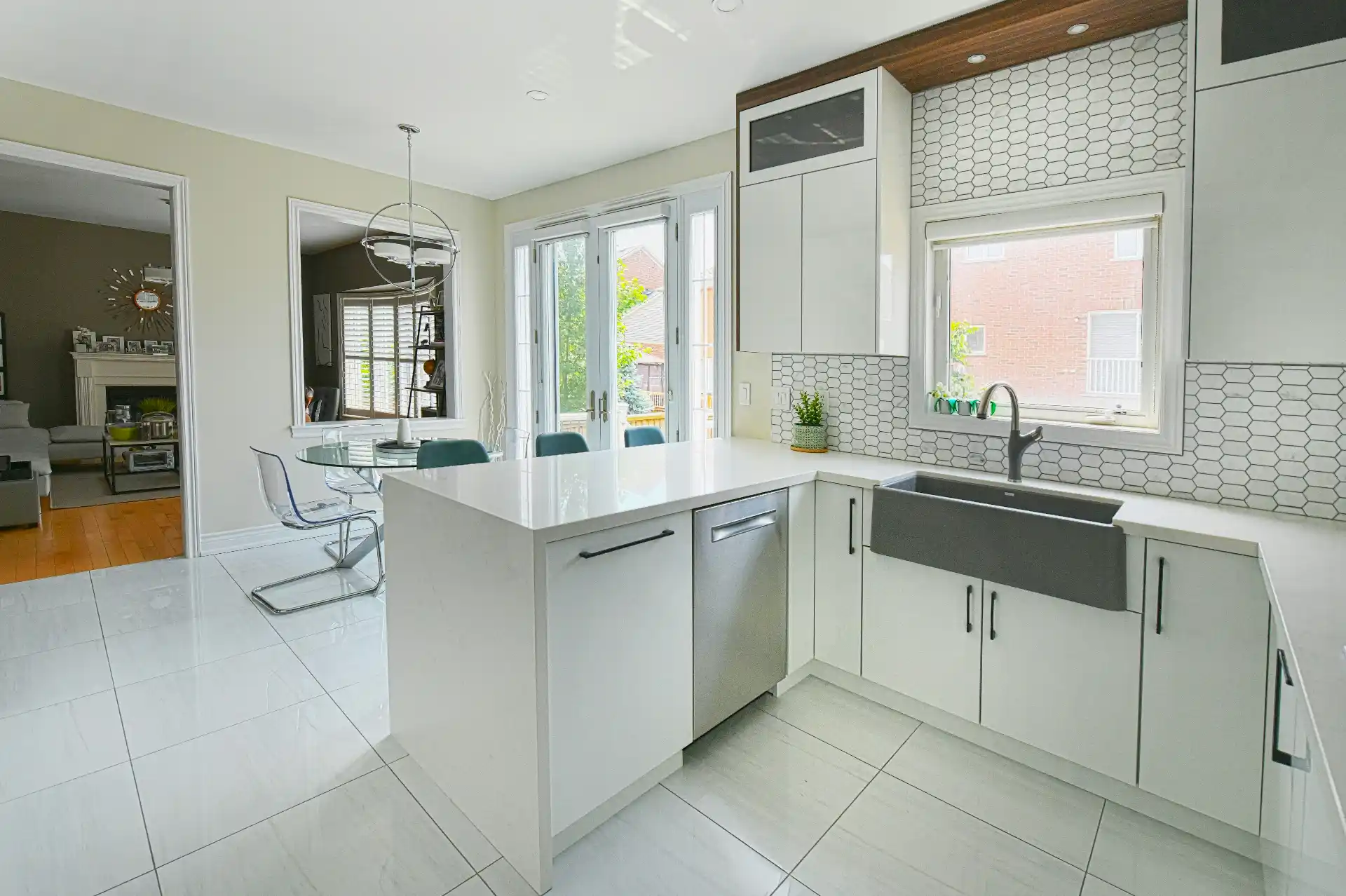
Quartz and quartzite sound almost identical.
They are very different countertop materials.
Quartzite is natural stone.
It forms geologically from sandstone under heat and pressure and is quarried in slabs.
Quartz countertops are engineered surfaces made from mineral content combined with binders, pigments, and manufacturing processes.
That difference affects appearance, maintenance, fabrication, heat sensitivity, slab variation, and how homeowners should shop.
Neither material is automatically better.
The best choice depends on how the kitchen is used and what kind of appearance the homeowner wants.
Quartzite Is Natural Stone
Every quartzite slab is unique.
Natural veining, color variation, fissures, mineral deposits, and pattern movement are part of the material.
That makes quartzite attractive to homeowners who want the individuality of stone.
It also means selecting the exact slab matters.
A small sample cannot fully represent a dramatic slab.
For large islands, book-matched areas, or visible seams, the fabricator should plan the slab layout before cutting.
The Natural Stone Institute provides consumer guidance on natural-stone care and fabrication expectations.
Quartz Is Engineered
Quartz surfaces are manufactured for greater visual consistency.
Depending on product, slabs may imitate:
– marble;
– concrete;
– solid colors;
– or natural stone patterns.
The homeowner typically has more predictability from sample to installed surface than with natural quartzite.
This can be useful when the kitchen requires several slabs and consistent color is important.
Manufactured consistency does not mean every slab is identical.
Lots and patterns can still vary.
Review the specific manufacturer’s recommendations.
Appearance: Natural Variation vs Predictability
Quartzite often provides depth and pattern movement that is difficult to reproduce exactly in an engineered surface.
Quartz provides controlled pattern and easier repeatability.
Choose quartzite when the slab itself is a central design feature.
Choose quartz when predictable appearance and lower variation are priorities.
For either material, coordinate countertop pattern with cabinet color, backsplash, flooring, and lighting.
A dramatic countertop can be the focal point.
It does not need to compete with every other finish in the room.
Maintenance
Natural Stone Institute guidance recommends cleaning natural stone with a neutral cleaner, stone soap, or mild dishwashing detergent and warm water.
Some natural stones benefit from sealing depending on absorption and application.
Quartzite should therefore be discussed with the fabricator and stone supplier as a natural material.
Quartz maintenance depends on manufacturer recommendations.
It generally does not require the same penetrating-sealer approach as porous natural stone because the engineered material contains resin binders.
However, homeowners should still avoid assuming the surface is indestructible.
Heat, chemicals, impact, and abrasive cleaning can affect countertop materials differently.
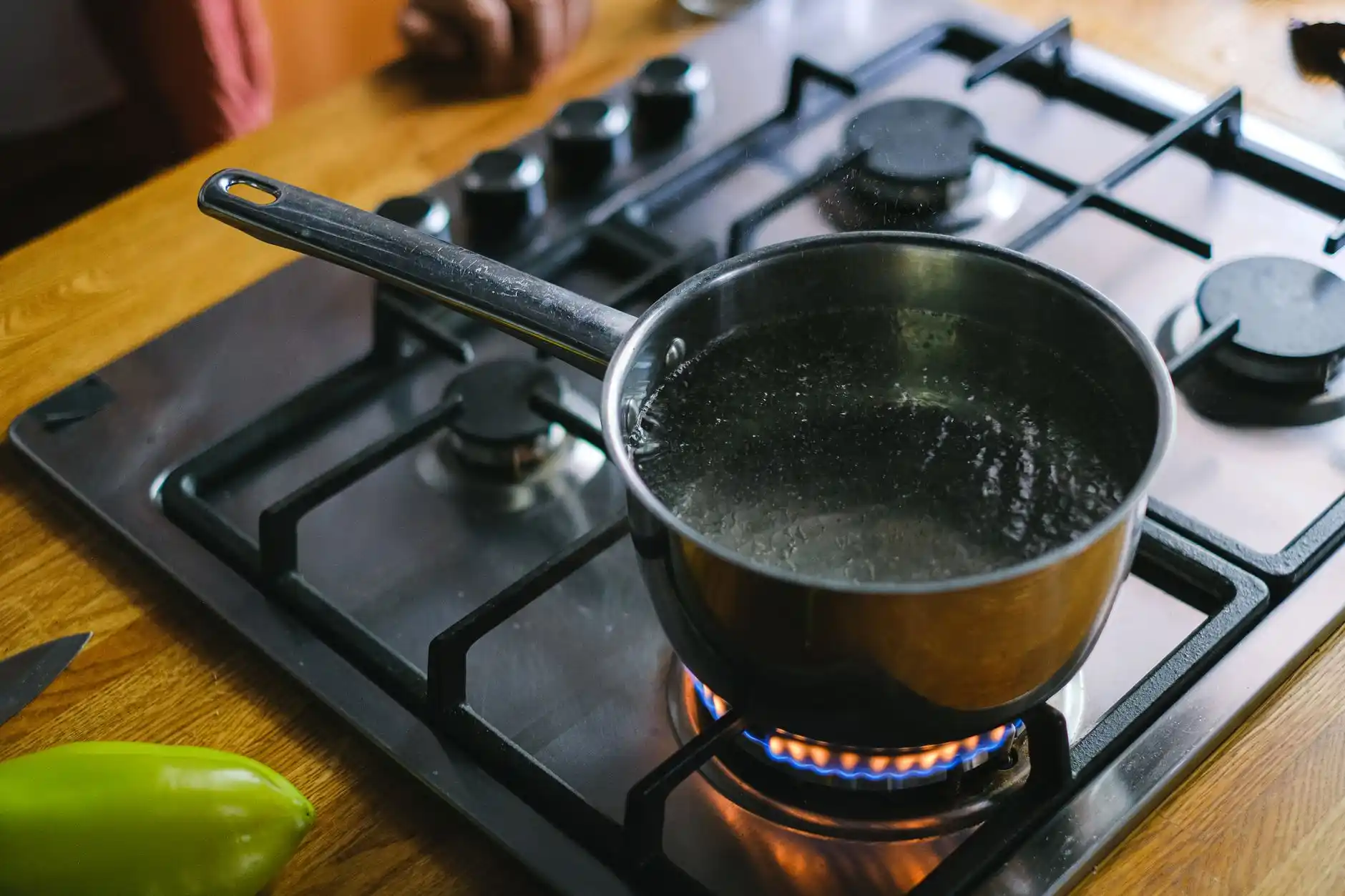
Heat Resistance
Quartzite is natural stone and generally tolerates heat better than resin-bound quartz surfaces.
Quartz countertops contain binders that can be damaged by excessive heat.
That is why manufacturers commonly recommend using trivets or heat protection.
Even with natural stone, placing extremely hot cookware directly on a countertop is unnecessary risk.
Use trivets.
The cost is negligible compared with repairing a damaged surface.
Staining
Both materials can perform well in kitchens when properly selected and cared for.
Natural quartzite can vary in porosity.
Some slabs may need sealing.
Engineered quartz is generally resistant to household staining, but products are not immune to all chemicals or prolonged exposure.
The practical rule is simple:
Wipe spills promptly.
Follow the manufacturer or stone supplier’s care guidance.
Do not select a countertop based on a viral stain test without understanding the exact product.
Hardness and Scratching
Quartzite is known as a hard natural stone.
That makes it suitable for countertop use.
But “hard” does not mean scratch-proof.
Quartz can also be durable in normal kitchen use.
Cutting boards should be used on both.
A countertop is a finished surface, not a substitute for a cutting board.
Fabrication and Edge Details
Quartzite can be more demanding to fabricate because natural slabs vary and can contain fissures or complex veining.
Edge profiles, sink cutouts, seam locations, and reinforcement require skilled stone fabrication.
Quartz is generally more predictable to fabricate, but large patterns still need thoughtful seam layout.
For both materials, fabrication quality matters as much as material selection.
A poorly placed seam can undermine an expensive countertop.
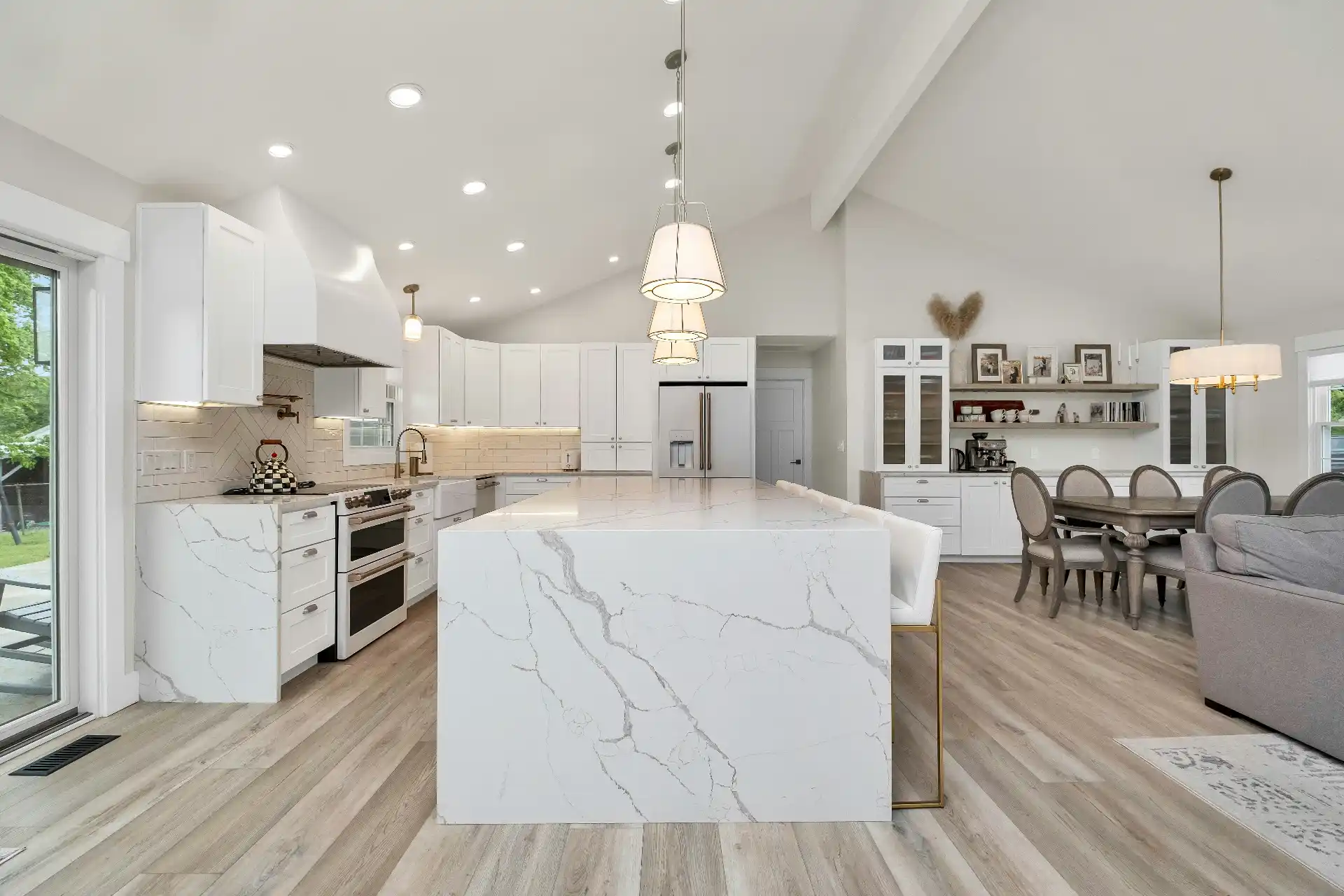
Large Kitchen Islands
Large islands often drive the countertop decision.
Questions include:
– Can the island fit within one slab?
– Will a seam be required?
– Is the slab wide enough for overhang and edge fabrication?
– How will pattern direction look?
– Does the island need structural support?
– Can the slab be carried through the house?
The Kitchen Island Size Guide should be checked before selecting the slab.
A ten-foot island designed first and measured later can force an unwanted seam or material change.
Cost
Both quartz and quartzite span broad price ranges.
Quartz pricing varies by brand, color, thickness, edge detail, and fabrication.
Quartzite pricing varies widely by stone rarity, quarry, slab quality, fabrication difficulty, thickness, and availability.
Premium quartzite can cost substantially more than many engineered quartz options.
High-end quartz can also be expensive.
Compare installed prices, not slab-only prices.
The installed scope includes:
– templating;
– fabrication;
– sink cutouts;
– edge profile;
– seams;
– delivery;
– installation;
– and possible support requirements.
United Signature’s Best Kitchen Countertops for Durability and Everyday Use provides the broader material comparison.
Which Is Better for a Busy Family Kitchen?
Quartz can be attractive for homeowners who want consistent appearance and relatively straightforward everyday care.
Quartzite can be excellent for homeowners who value natural stone and accept material-specific care.
The better product is the one whose maintenance expectations match the household.
Do not choose a natural stone and then expect it to behave like an engineered polymer surface.
Do not choose quartz and then treat it like a slab of solid rock around extreme heat.
Match expectations to material.
Which Looks Better With Painted Cabinets?
Both.
White, warm gray, green, navy, and wood cabinetry can work with either material.
Quartzite can create a natural focal point.
Quartz can support a cleaner or more controlled palette.
Cabinet style matters too.
The cabinet-category discussion in Stock vs Semi-Custom vs Custom Kitchen Cabinets can help coordinate the finish level of the kitchen.
Should You Choose the Countertop Before Cabinets?
The broad cabinet layout should come first.
But countertop selection should happen early enough to influence cabinet color, backsplash, plumbing fixtures, and lighting.
For natural stone, select the slab before finalizing all surrounding colors whenever possible.
For engineered quartz, confirm the exact color and lot used for the project.
FAQ
Is quartzite the same as quartz?
No. Quartzite is natural metamorphic stone. Quartz countertop material is an engineered product.
Does quartzite need sealing?
Some natural stone installations benefit from sealing. Follow the stone supplier and fabricator’s recommendations for the specific slab.
Can quartz countertops handle hot pans?
Manufacturers generally recommend heat protection because excessive heat can affect the resin-based material.
Is quartzite more expensive than quartz?
It can be, particularly for premium or rare slabs, but both materials have broad price ranges.
Which is easier to maintain?
Engineered quartz is generally more predictable in routine maintenance. Quartzite maintenance depends on the specific natural stone and finish.