

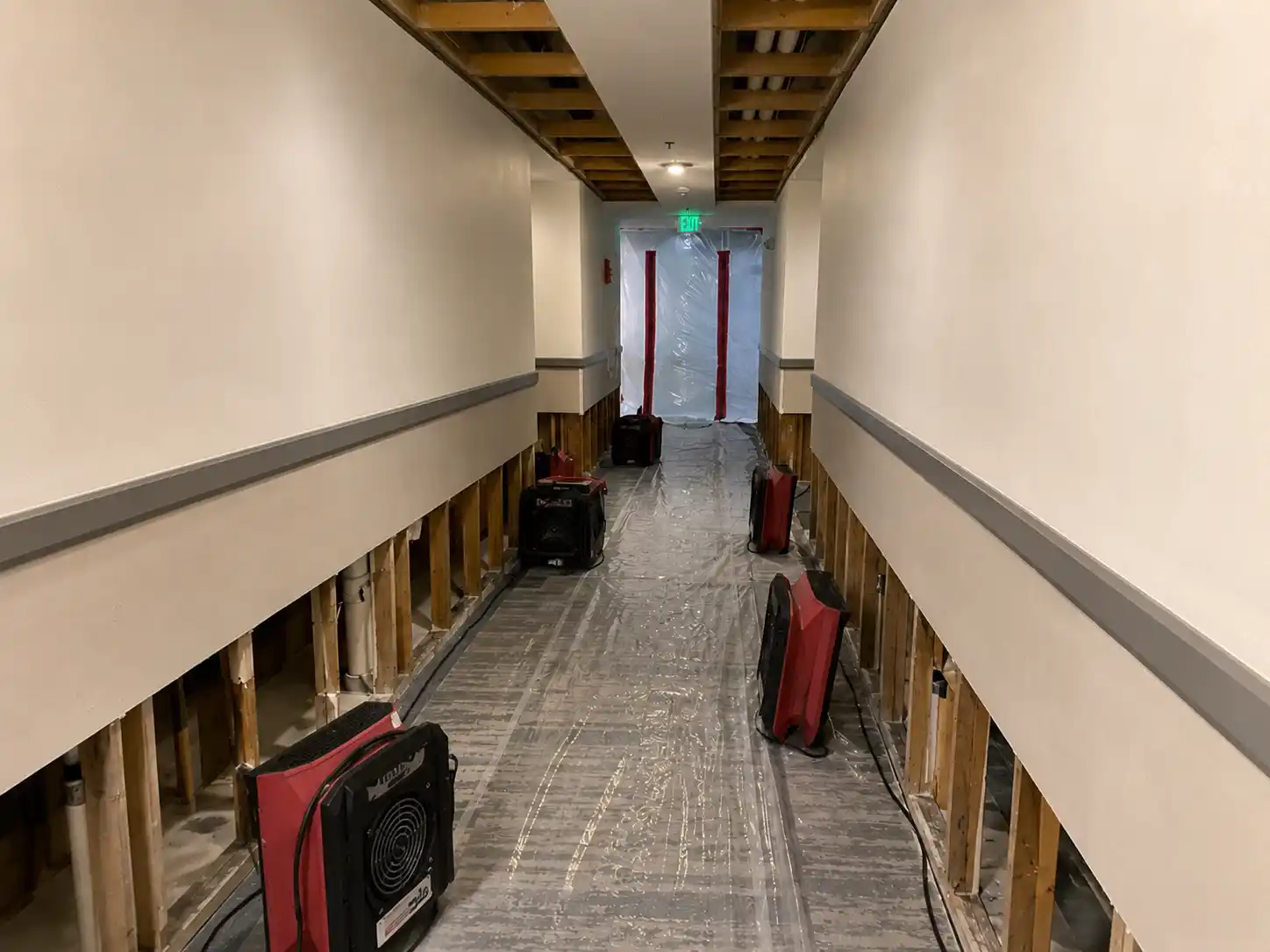
The visible water is often the least useful way to estimate water-damage cost.
A small amount of water on the floor can sometimes be cleaned up quickly.
A slow leak hidden behind a cabinet can wet drywall, insulation, subfloor, framing, and adjacent rooms without creating a dramatic puddle.
That is why restoration cost is driven by where the water went, what materials it affected, how long they stayed wet, whether contamination is involved, and how much finished construction must be removed and rebuilt.
The final bill usually has two distinct parts:
1. mitigation — stopping the damage, extracting water, opening affected assemblies when necessary, drying, cleaning, and monitoring; and
2. reconstruction — rebuilding the materials and finishes that could not be saved.
United Signature provides both the construction context through Water Damage Restoration Seattle and reconstruction coordination for mitigation partners through its Mitigation Reconstruction Partner program.
How Fast the Response Happens
Time matters.
The U.S. Environmental Protection Agency recommends drying wet or damp areas and materials within roughly 24 to 48 hours after a leak or spill when possible to reduce the likelihood of mold growth.
That does not mean every property automatically develops mold after 48 hours.
It means rapid drying is an important target.
A fast response may allow more materials to remain.
A delayed response can increase the amount of drywall, insulation, flooring, cabinetry, or other porous material that needs removal.
The cost of waiting is therefore not just additional drying time.
It may change the reconstruction scope.
Where the Water Came From
The source affects both repair and cleanup strategy.
A clean supply-line leak is different from wastewater or contaminated flooding.
Water that passes through dirty building cavities can also pick up contaminants.
The restoration plan should reflect the source and the materials affected.
The homeowner should not assume that all wet drywall, carpet, or cabinets can simply be dried with household fans.
The Extent of Moisture Migration
Water moves beyond the visible stain.
It can wick upward through drywall, travel under flooring, enter wall cavities, spread below cabinets, saturate insulation, or reach adjacent rooms.
Professional moisture mapping is useful because restoration scope should follow the moisture, not only the puddle.
A kitchen leak may therefore become a kitchen-and-basement project if water passes through the floor assembly.
A second-floor bathroom leak may affect ceilings and walls below.
The more assemblies involved, the higher both mitigation and reconstruction costs become.
Material Type
Materials respond to water differently.
Some nonporous surfaces can be cleaned and dried relatively easily.
Porous materials may lose structural integrity, delaminate, swell, stain, trap contamination, or become impractical to dry.
Examples that can increase reconstruction cost include:
– hardwood flooring;
– engineered wood;
– drywall;
– insulation;
– carpet and pad;
– particleboard cabinetry;
– custom millwork;
– subfloor;
– tile assemblies;
– and specialty finishes.
A water event in a utility room with concrete floors is not financially comparable to the same quantity of water in a custom kitchen.
Cabinetry Can Be a Major Cost Driver
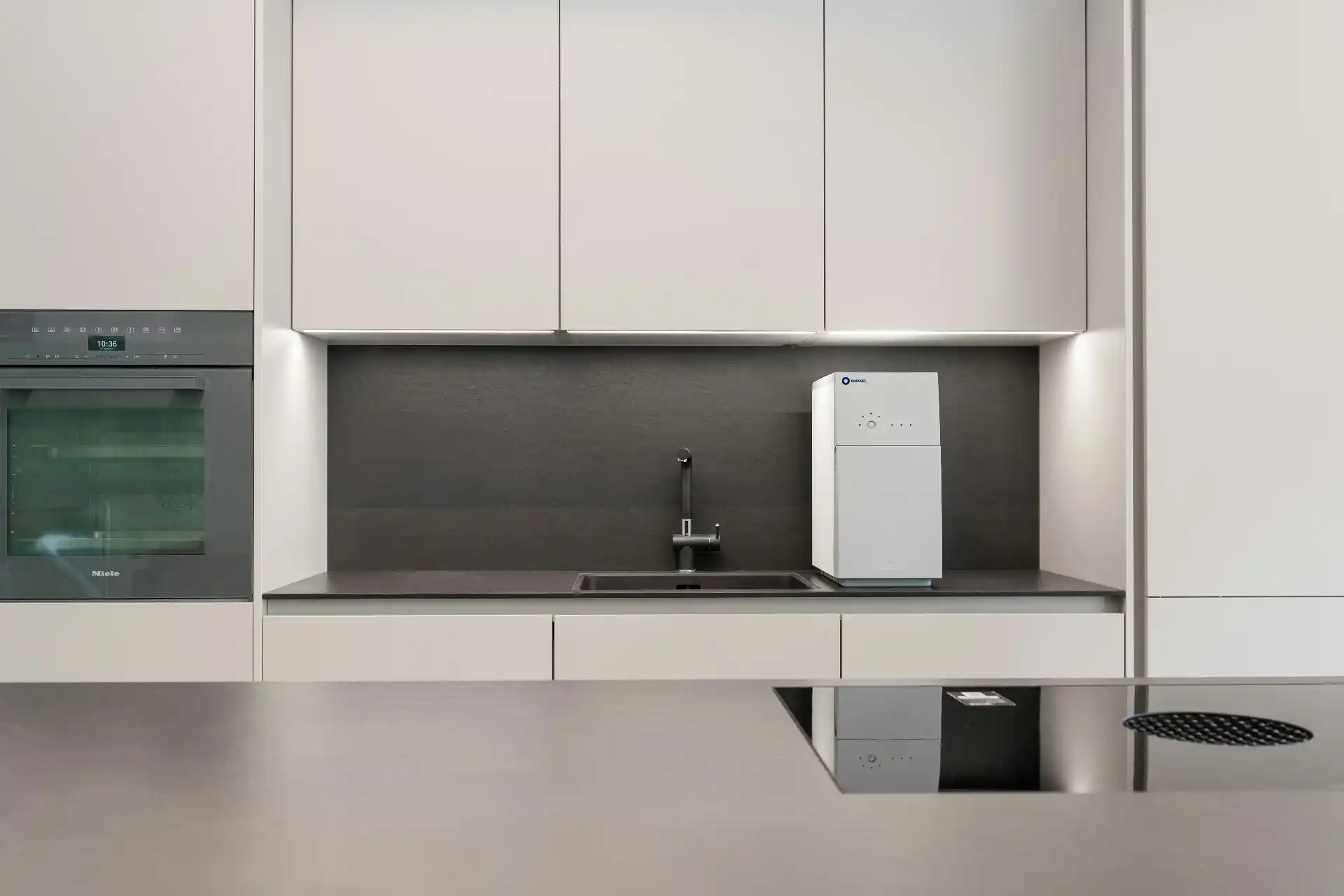
Water frequently reaches the toe-kick and base area of cabinets.
Whether cabinets can be saved depends on material, duration, contamination, swelling, finish damage, and access for drying.
Custom cabinetry can be especially expensive because replacing only one section may not produce a visual match.
If counters must be removed to replace base cabinets, countertop breakage or reinstallation risk also needs to be considered.
That is how a seemingly small plumbing leak can become a significant kitchen reconstruction project.
Flooring Can Spread the Scope Across Rooms
Continuous flooring creates another challenge.
If water damages one section of hardwood but the floor runs through several connected rooms, the repair may require a larger refinishing or replacement area to produce a consistent result.
Floating floors may need to be removed to access wet underlayment.
Tile can sometimes remain if the assembly below is dry and sound, but water beneath tile or within the substrate can create a different problem.
The repair scope should be based on the assembly, not simply the visible finish.
Subfloor and Structural Damage
Long-term leaks can damage subfloor and framing.
This is where the project moves beyond finish replacement.
Soft, delaminated, or deteriorated subfloor may need to be removed.
Damaged joists, beams, wall plates, or other framing may require structural evaluation.
The hidden-condition discussion in Hidden Problems in Older Seattle Homes That Can Change a Remodel Budget applies strongly to water-damage reconstruction.
If structural members are affected, When Does a Home Remodel Need a Structural Engineer? becomes relevant as well.
Mold or Microbial Growth
Mold changes the project because drying alone may no longer be the entire scope.
The moisture source still needs to be corrected.
Affected materials may need controlled removal or cleaning depending on conditions.
Containment and specialized remediation may be appropriate.
The biggest budgeting mistake is rebuilding before the moisture and microbial issue is actually resolved.
New drywall and paint do not correct a wet wall cavity.

Plumbing or Roofing Repair Is Separate From Restoration
Restoration does not eliminate the original source.
If the water came from a failed pipe, shower, roof, appliance, side sewer, window, or exterior-envelope defect, that source must be repaired.
The cost of source repair may be separate from mitigation and reconstruction.
For example:
– a burst supply line may be inexpensive to repair but create extensive water damage;
– a failed shower waterproofing system may require a complete shower rebuild;
– a roof leak may require exterior roofing work before interior reconstruction starts.
The final project budget therefore needs all three components: source correction, mitigation, and reconstruction.
Insurance Scope vs Construction Scope
Insurance involvement can affect documentation and payment, but the building still needs to be restored correctly.
Homeowners should understand what work the carrier has approved, what deductible applies, and whether upgrades or remodeling beyond restoration are owner-funded.
If the homeowner chooses to upgrade the kitchen while cabinets are already being replaced, that can be a practical decision.
But restoration and elective remodeling should remain clearly separated in the budget.
How Much Does Water Damage Restoration Cost?
A small, localized clean-water event can sometimes remain a relatively limited repair.
A large loss involving multiple rooms, extensive demolition, hardwood, cabinets, structural drying, mold remediation, or complete reconstruction can move into tens of thousands of dollars or substantially more.
There is no useful “average cost” without knowing:
– source;
– affected square footage;
– material types;
– contamination level;
– drying time;
– demolition scope;
– structural damage;
– and finish-replacement level.
For construction planning, request a scope broken into mitigation, source repair, and reconstruction rather than one unexplained lump sum.
What Should Homeowners Do First?
1. Stop the water source if it is safe to do so.
2. Address immediate electrical or safety hazards.
3. Document visible damage.
4. Contact qualified mitigation/restoration professionals promptly.
5. Determine where moisture traveled.
6. Remove or dry affected materials according to the restoration plan.
7. Confirm the structure is dry before reconstruction.
8. Repair the source.
9. Rebuild only after the damaged assemblies are ready.
The order matters.
Reconstruction should not hide unresolved moisture.
FAQ
How soon should water damage be dried?
EPA guidance recommends acting quickly and drying wet materials within roughly 24 to 48 hours when possible to help reduce mold risk.
Does all wet drywall need to be replaced?
Not necessarily. The decision depends on moisture level, duration, contamination, material condition, and whether the wall cavity can be dried properly.
Why is water damage so expensive?
The water may affect several hidden layers at once: finish flooring, subfloor, drywall, insulation, cabinetry, wiring areas, framing, and rooms below.
Can I remodel during water-damage reconstruction?
Yes. Many homeowners choose upgrades when finishes already need replacement, but insurance-covered restoration work and owner-selected improvements should be documented separately.
Does insurance cover water damage?
Coverage depends on the policy and the cause of loss. Homeowners should discuss coverage with their insurer or licensed insurance professional.