

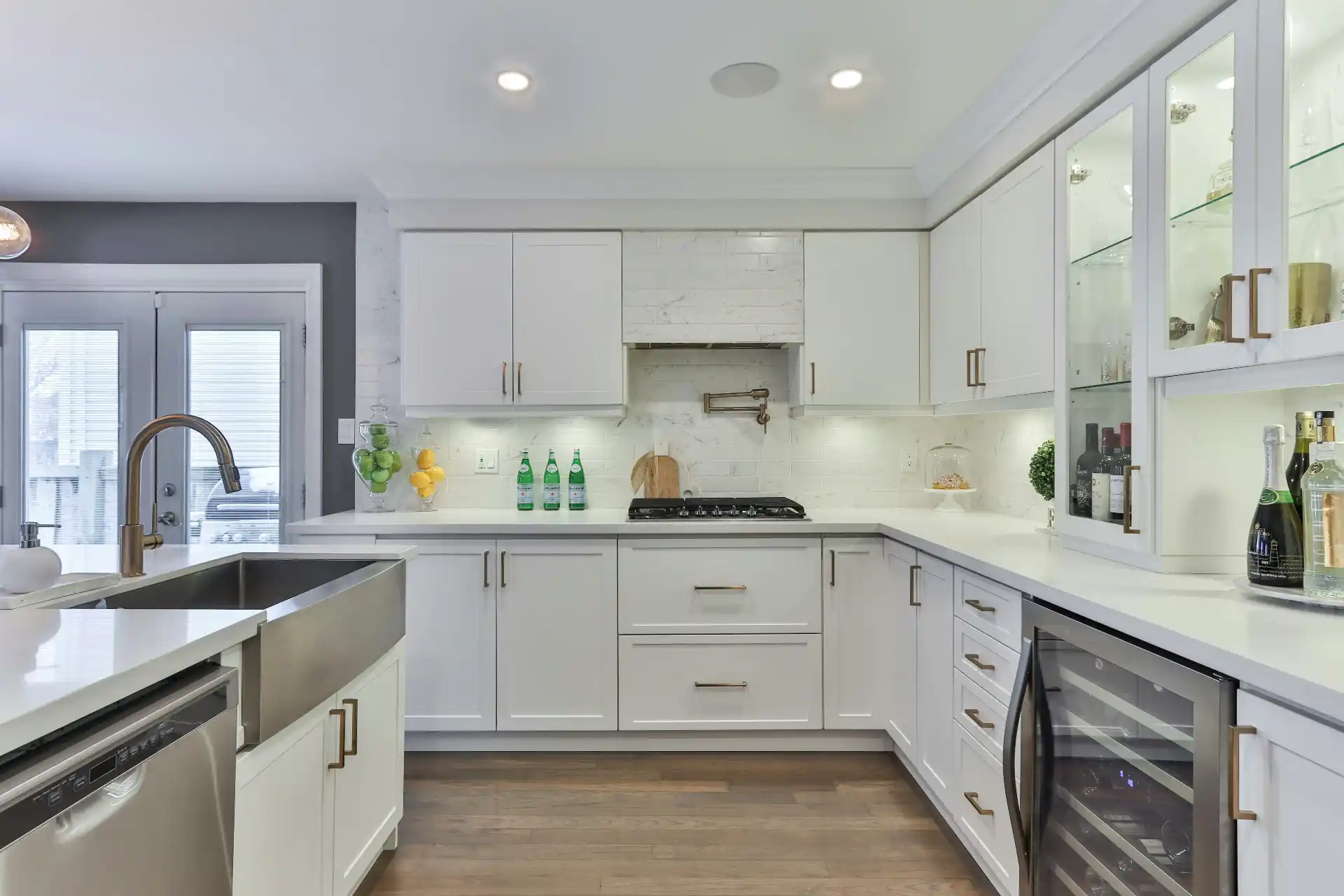
Cabinet refacing and cabinet replacement solve different problems.
Refacing keeps most existing cabinet boxes and changes the visible surfaces, typically doors, drawer fronts, exposed face frames, side panels, hardware, and finishes.
Replacement removes the existing cabinetry and installs a new cabinet system.
If the kitchen layout already works and the cabinet boxes are in good condition, refacing can be a practical way to update appearance with less demolition.
If the layout is poor, storage is inadequate, cabinet boxes are damaged, or the remodel changes appliances and walls, replacement usually makes more sense.
The key question is not which method is cheaper.
It is whether the existing cabinet system deserves to be preserved.
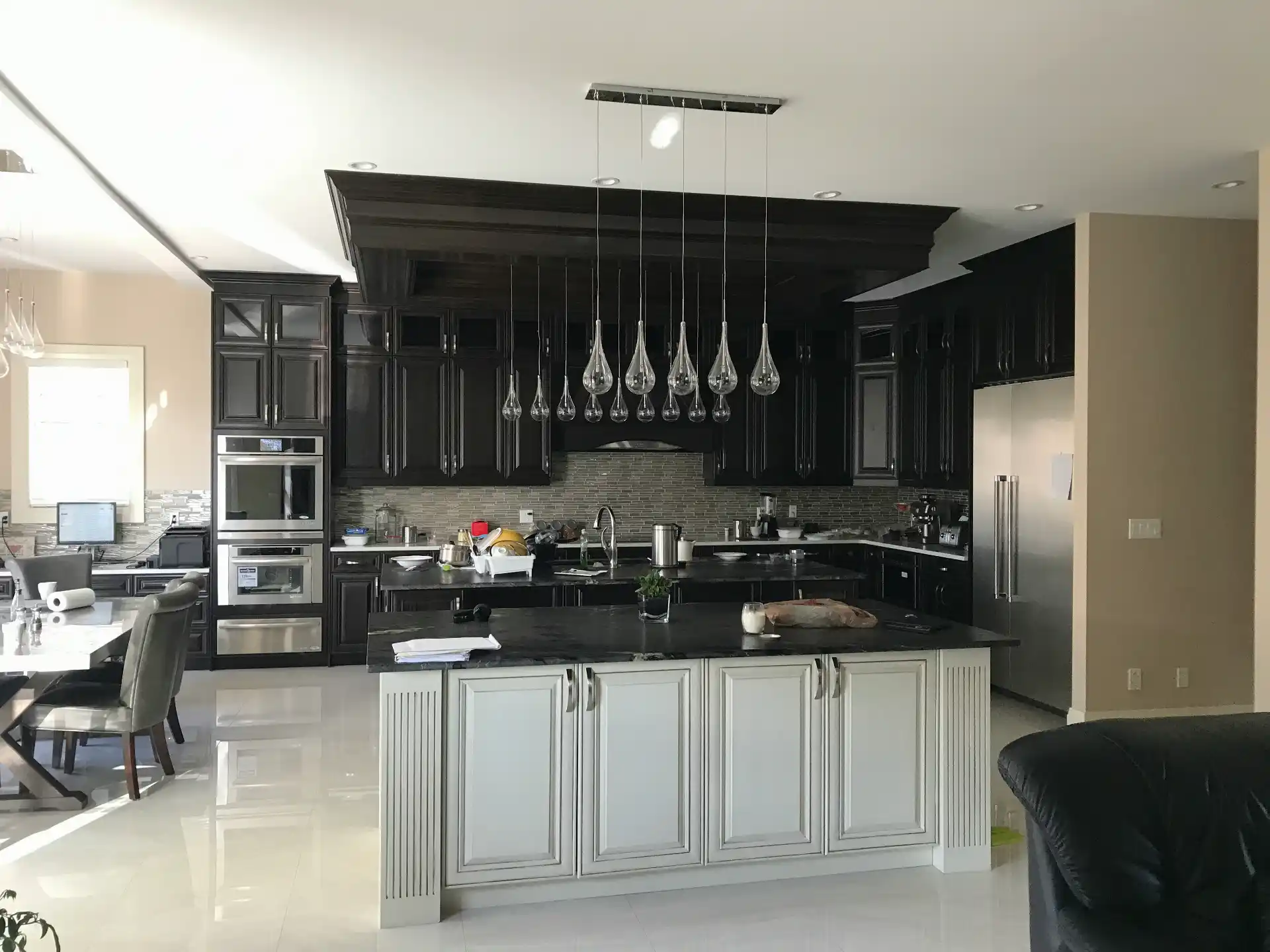
When Refacing Is a Strong Option
Refacing can work well when:
– cabinet boxes are structurally sound;
– cabinet layout is functional;
– countertop can remain;
– appliances stay in the same locations;
– storage capacity is acceptable;
– cabinet interiors are in good condition;
– and the homeowner primarily wants a visual update.
This can reduce demolition and construction time.
The project may also create less disruption than full replacement.
However, refacing should not be used to disguise cabinets with water damage, failing boxes, poor layout, or significant installation problems.
Start with condition.
What Refacing Usually Changes
A refacing project can include:
– new doors;
– new drawer fronts;
– veneer or finish on exposed cabinet faces;
– new side panels;
– new hardware;
– soft-close hinges;
– selected drawer hardware upgrades;
– and sometimes interior accessories.
The cabinet boxes remain.
That is both the advantage and the limitation.
If the old boxes are shallow, poorly configured, or missing modern storage features, refacing cannot turn them into a completely different cabinet system.
What Replacement Allows
Full replacement allows the kitchen to change structurally at the cabinet level.
New cabinets can:
– change layout;
– improve corner storage;
– create deeper drawers;
– add pantry towers;
– integrate appliances;
– support new island dimensions;
– change wall-cabinet heights;
– improve accessibility;
– and create custom or semi-custom dimensions.
Replacement is therefore not only a finish choice.
It is a functional redesign.
The Kitchen Layout Guide should be completed before deciding whether the existing cabinet footprint deserves to stay.
Refacing Is Less Useful When the Layout Is Wrong
Suppose the refrigerator blocks a doorway.
The sink is trapped in a corner.
The island is too small.
The pantry is inadequate.
Refacing can make the cabinetry look new.
It cannot solve those layout problems.
If the kitchen already needs reconfiguration, paying to preserve the old boxes often creates a compromise.
The remodel should fix the room first.
Then choose cabinet strategy.
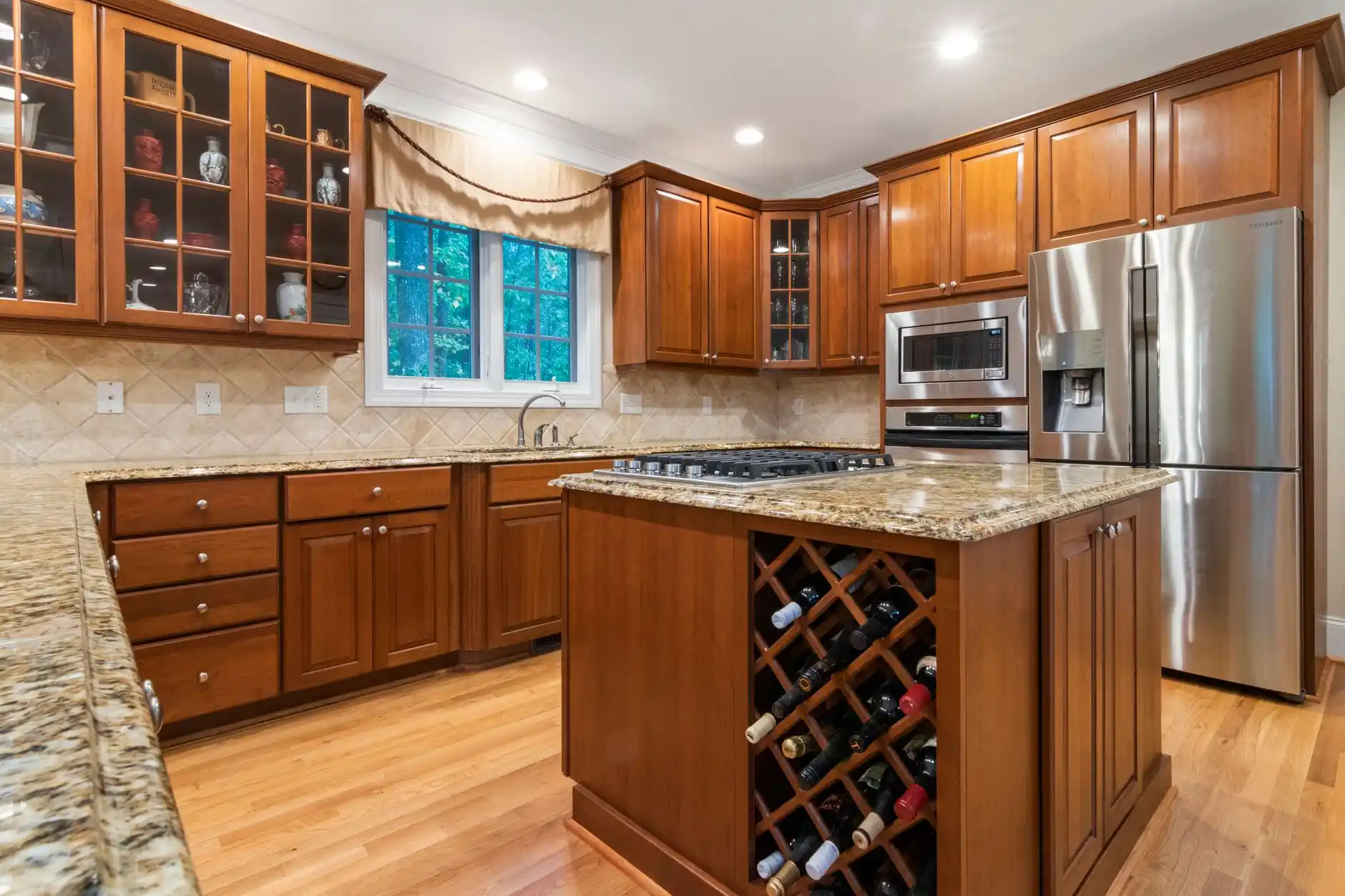
Countertops Can Determine Whether Refacing Works
If the existing countertop is in good condition and will remain, refacing becomes more attractive.
If the countertop will be removed anyway, the project loses one of the major reasons to preserve existing cabinets.
Countertop removal also carries risk.
Stone tops may not always be removable and reinstallable without damage.
If the project already plans new countertops, backsplash, sink, and appliances, compare the incremental cost of new cabinetry rather than evaluating refacing in isolation.
Water Damage Can Rule Out Refacing
Cabinet boxes near sinks and dishwashers can be damaged by leaks.
Particleboard can swell.
Plywood can delaminate.
Cabinet floors can stain or lose integrity.
Do not put new doors on damaged boxes simply because the visible faces look repairable.
If demolition reveals water damage, follow the process in What Happens When Contractors Open the Walls and Find Hidden Damage? before deciding what can remain.
How Much Does Refacing Save?
Refacing usually costs less than full custom cabinet replacement because much of the box construction and installation remains.
But the percentage savings varies widely.
A simple door-and-veneer project may be substantially less expensive than new cabinets.
A premium refacing package with custom doors, drawer upgrades, hardware, side panels, and modifications can approach the cost of some stock or semi-custom replacement options.
Compare complete scopes.
Do not compare a refacing quote to only the cabinet-box line in a full remodel estimate.
The Kitchen Remodel Cost Guide can help place cabinetry inside the full project budget.
Refacing and Resale
A high-quality refacing project can look excellent.
Buyers are unlikely to care that cabinet boxes were retained if the kitchen functions well and workmanship is good.
But refacing does not improve an awkward kitchen.
For resale, function still matters.
A fresh cabinet door on a poorly planned room is not equivalent to a well-designed replacement kitchen.
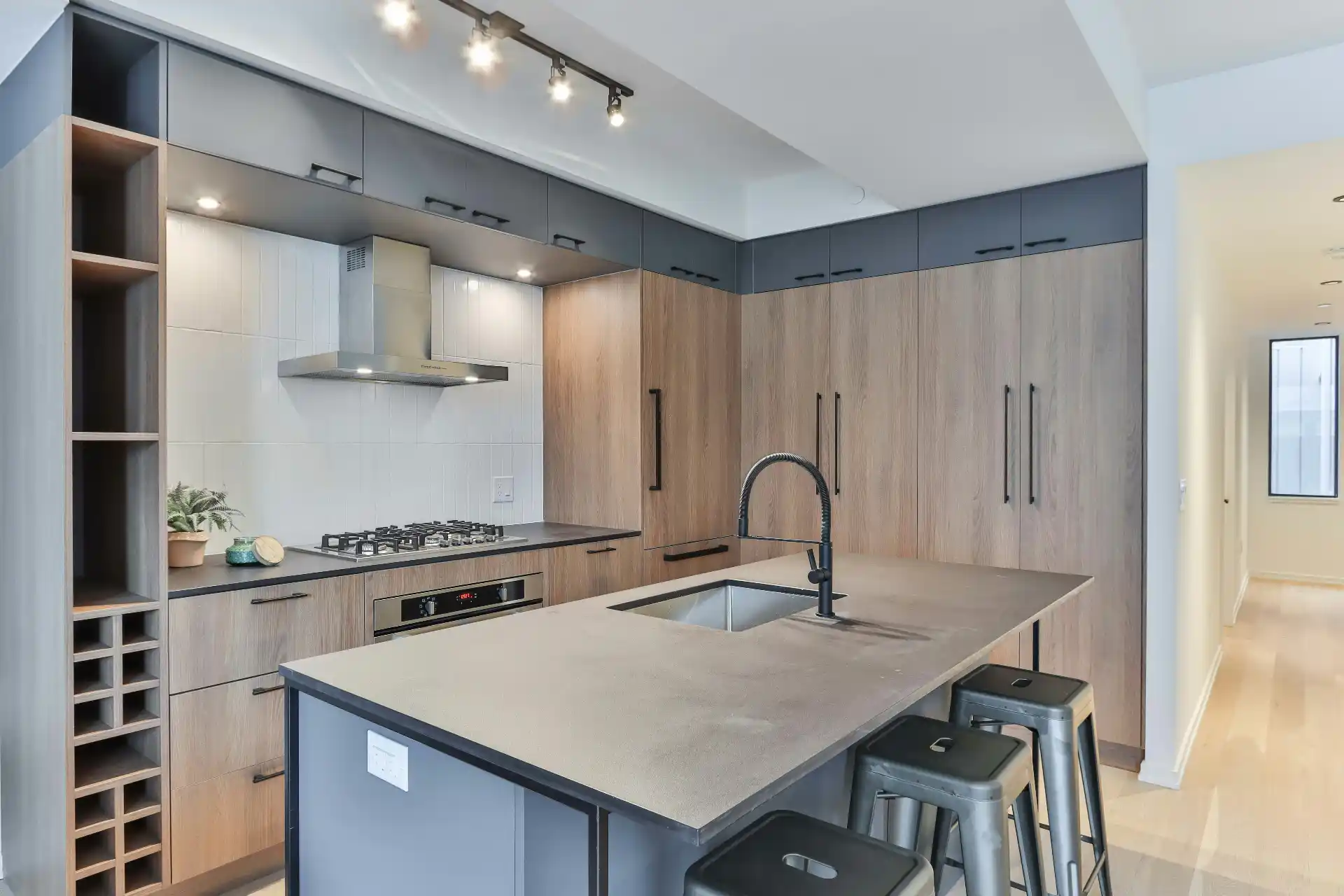
Refacing and Sustainability
Keeping usable cabinet boxes reduces demolition waste and preserves materials already in the home.
That can be a meaningful benefit.
The best sustainability strategy is often extending the useful life of good construction rather than replacing it solely because it is older.
But damaged or low-function cabinets should not be preserved for sustainability optics if they will need replacement shortly afterward.
Can You Add Pullouts During Refacing?
Often, selected accessories can be added.
Examples may include:
– rollout shelves;
– tray dividers;
– waste pullouts;
– drawer organizers;
– and upgraded hinges.
The existing cabinet dimensions limit what fits.
If storage performance is the main problem, compare accessory upgrades with a full cabinet redesign.
Sometimes a modest investment in interior hardware makes existing boxes much more useful.
Sometimes the box geometry simply does not support the desired storage.
Refacing During a Whole-House Remodel
Refacing is less common when the entire kitchen is already part of major structural work.
If walls are moving, flooring is being replaced, plumbing changes, and the island is redesigned, cabinet replacement generally integrates better with the new room.
The project may already have paid for demolition and finish restoration.
Preserving the old boxes can then create more constraints than savings.
The Cosmetic vs Structural Remodel distinction is useful: refacing is most aligned with cosmetic improvement, while full structural kitchen reconfiguration usually points toward new cabinetry.
A Decision Checklist
Choose refacing when:
– layout works;
– boxes are strong;
– countertop stays;
– storage is adequate;
– appliance sizes remain;
– and visual update is the main goal.
Choose replacement when:
– layout changes;
– boxes are damaged;
– storage is poor;
– appliance sizes change;
– island changes;
– cabinet heights change;
– or the remodel is already opening the room substantially.
When uncertain, price both.
The least expensive option on day one is not always the lowest-cost option over the next fifteen years.
FAQ
Is cabinet refacing worth it?
Yes when the cabinet boxes and layout are good and the main goal is a visual update.
How long does cabinet refacing last?
Durability depends on the existing boxes, new finish materials, workmanship, hardware, and use. A high-quality refacing project can provide many years of service.
Can you reface laminate cabinets?
Some cabinet systems can be refaced, but suitability depends on the existing box surfaces and the refacing method.
Is refacing cheaper than painting cabinets?
Usually more expensive, because refacing commonly replaces doors and drawer fronts and applies new exposed surfaces. Painting retains more existing components.
Should I reface cabinets if I am replacing countertops?
You can, but compare the full cost against replacement because countertop removal reduces the advantage of leaving the cabinets untouched.