

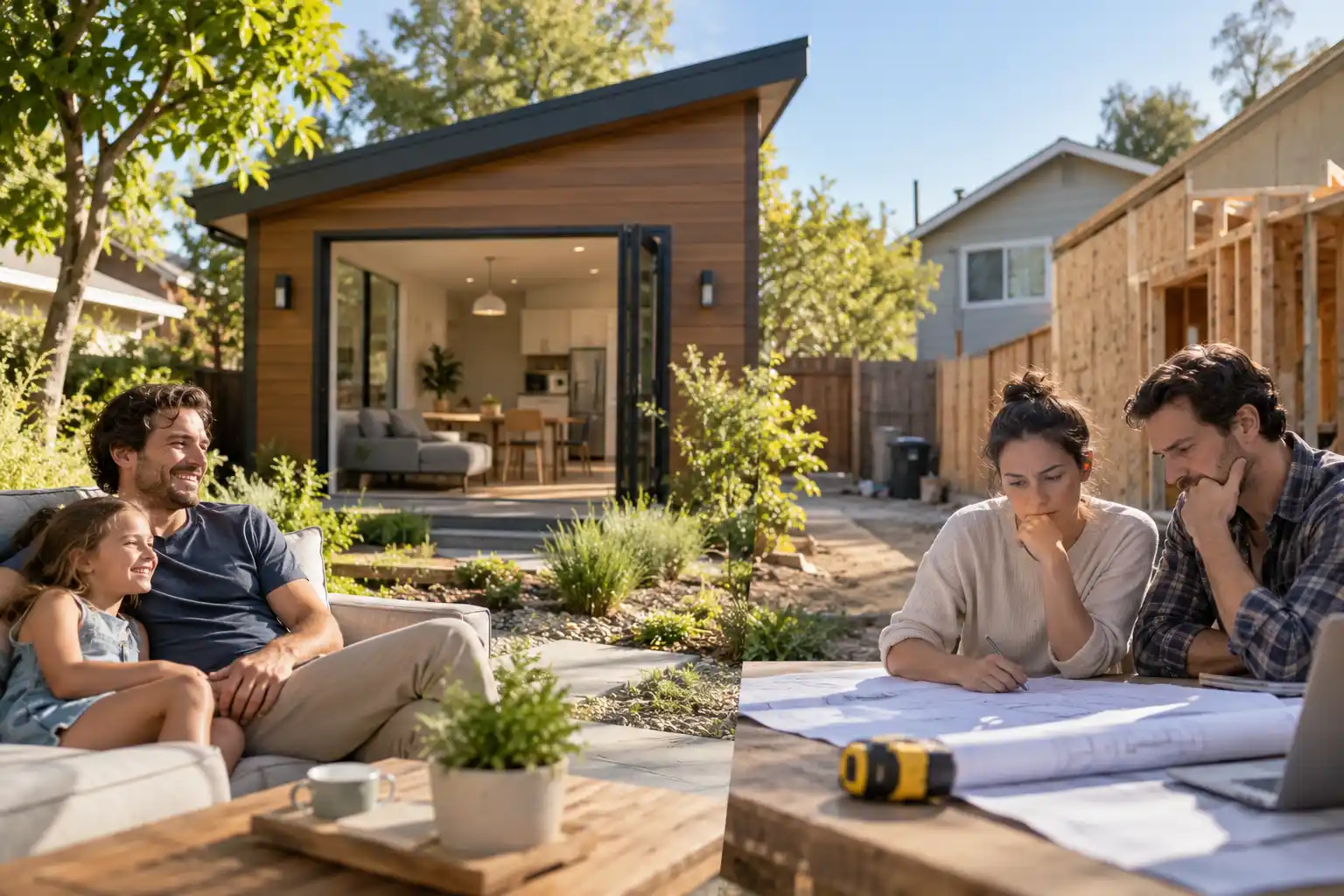
An ADU is worth building when you have a clear use for it over the next several years and a lot that cooperates. The main advantages are rental income, room for family, flexibility and added property value. The main drawbacks are a substantial upfront investment, most of a year from design to move-in, a smaller yard and new responsibilities.
United Signature builds ADUs and backyard cottages across the Puget Sound region, and part of that work is telling homeowners when a project does not make sense for them. This list reflects what we see on real projects, in both directions. Nothing here is universal; the weight of each point depends on your household, your finances and your property.
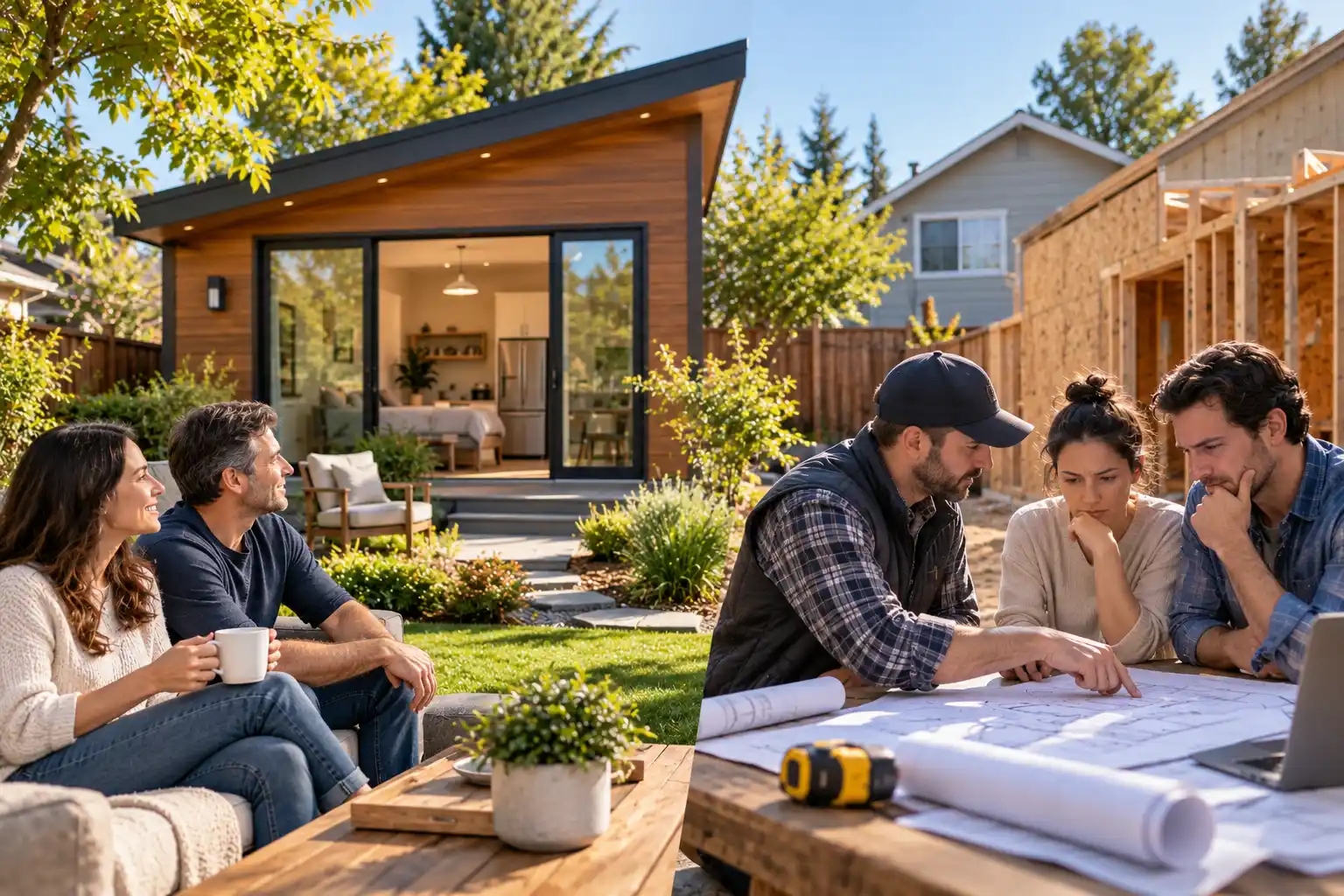
The Advantages We See Most Often on Finished Projects
Income From Land You Already Own
A rented ADU turns unused backyard or basement space into monthly income without buying a second property. For many owners that income helps cover the financing on the project itself and, once the loan is paid down, becomes a lasting part of household cash flow. Our guide to setting the rent for a Seattle ADU explains how owners arrive at a realistic figure.
Housing for Family Without a Move
An aging parent, an adult child saving for a down payment or a relative who needs care can live close by while keeping a door of their own. Families often tell us the independence on both sides matters as much as the proximity. Clear agreements about rent, shared costs and privacy keep that arrangement comfortable for everyone.
A Plan for Later in Life
Some owners build a single-level cottage now, rent it for a while, and later move into it themselves while renting or passing on the main house. That option is hard to create any other way without leaving the neighborhood.
One Building, Several Possible Uses
Over the life of the property, the same unit can serve as a rental, a guest suite, a home office, a studio or a caregiver’s quarters. Few home improvements adapt to changing circumstances as well.
More Home on the Same Parcel
A permitted, well-built ADU adds living space and a second dwelling to the property, which many buyers and appraisers recognize. How much value it adds depends on the market, the quality of the work and whether the unit is legal and documented, so treat it as a likely benefit rather than a guarantee.
The Drawbacks Worth Weighing Before You Commit
A Significant Upfront Investment
An ADU is a complete small house: foundation, roof, kitchen, bathroom, heating and its own utility connections. Even a compact unit is one of the larger investments most households make in their property. Our overview of how homeowners pay for an ADU covers the ways to fund one, and the budget deserves the same attention as the design.
Most of a Year Before Anyone Moves In
Lot review, design, engineering, permits and construction add up. Owners counting on rental income or on a parent’s move date should plan around the full project timeline, not just the construction months.
Less Open Yard
A detached unit takes space that used to be lawn, garden or play area, and the path to its door takes a little more. On a small lot, the loss can change how the main house feels. An attached or basement unit avoids this but brings trade-offs of its own.
New Responsibilities After Move-In
A rented unit makes you a landlord, with leases, repairs, registrations and tenant rules to follow. A family unit brings its own conversations about privacy, shared costs and expectations. Neither is a reason to skip the project, but both deserve a realistic look before you commit.
Changes to Taxes and Insurance
A new dwelling is usually picked up by the county assessor, so expect your property’s assessed value to change. Your homeowner’s insurance needs to reflect the new structure and how it is used, and rental income has its own tax reporting. Talk with your insurer and a tax professional early so these changes are part of the plan rather than a surprise.
Living Next to a Construction Site
For several months there will be excavation, deliveries, trucks, noise and occasional utility shutoffs. Side yards become access routes and parts of the yard become staging areas. Most families stay in the main house throughout, but daily routines shift.
Neighbors Will Notice
A new building near the property line changes the view from next door. Most neighbors adjust, especially when the owner explains the project early and the crew keeps the site tidy, but the relationship deserves attention from the start.
How Your Lot Tips the Balance
The same ADU can be straightforward on one lot and complicated on the next. Alley access, a level rear yard and a nearby sewer line make construction simpler. Steep grades, large protected trees, a sewer line that runs the wrong way or a tight side yard with no equipment access all add complexity and time. In Seattle, the city’s current ADU and DADU rules set the outer limits, and the site itself decides what is practical within them.
Attached Units and Backyard Cottages Weigh Differently
An attached or basement ADU usually keeps the yard, reuses existing structure and can be quicker to build, but it shares walls, sound and sometimes an entry area with the main house. A detached cottage gives both households more privacy and usually rents more easily, at the cost of yard space and new foundation and utility work. The trade-offs are covered in detail in our comparison of attached ADUs and DADUs.
Questions That Usually Settle the Decision
Who will live in the unit during the first five years, and who after that?
Can your household carry the project’s financing before any rent or family contribution arrives?
How much of the yard do you use today, and how much would you miss?
Are you prepared to manage a tenant, or to pay someone to do it?
Do you expect to stay in the home long enough for the investment to pay back in income, use or value?
If most answers are clear and positive, the project usually makes sense. If several are uncertain, it is worth waiting until they are not.
When We Suggest Something Other Than an ADU
There are cases where we advise homeowners to pause or choose another route. If you are likely to sell within a year or two, the time and cost of the project may not come back to you. If the only goal is extra space for your own household, a well-planned addition can be simpler; our article comparing an ADU with a home addition walks through that choice. If the budget only works with optimistic rent assumptions, rework the plan before going further.
Getting an Objective Read on Your Property
Most of the drawbacks above depend on facts about your lot that are easy to check before spending anything. Request a free feasibility report for your lot to see what zoning, setbacks, slope and utilities suggest for your address, then decide whether the advantages outweigh the trade-offs in your case.
FAQ
What do homeowners most often underestimate about an ADU project?
Time and site work. Many owners picture only the construction months and the building itself, while design, permitting, utility connections and preparing the ground often take as much attention as the visible structure.
Can I build an ADU now and decide later whether to rent it?
Yes, and many owners do. Designing for flexibility, with a full kitchen, its own laundry, a private entrance and a separate meter where practical, keeps the rental option open even if family or guests use the unit first.
Is a smaller ADU a safer choice if I am unsure how I will use it?
Often it is. A compact unit takes less of the yard, is easier to finance and still works as a rental, a guest suite or a home for one person. A larger unit makes most sense when you already know you need the second bedroom.
Does an ADU make sense if I might sell the house in a few years?
It can, but the case is weaker. You carry the full cost and disruption while collecting only a few years of income or use, and the sale price depends on how buyers in your area value a second unit at that time.
How much yard should I keep after building a backyard cottage?
Enough for the way you actually live. Think about where children play, where you sit outside, where the garden or dog run goes and how tenants or family will reach their door, and lay out the unit around those needs rather than simply maximizing its size.