

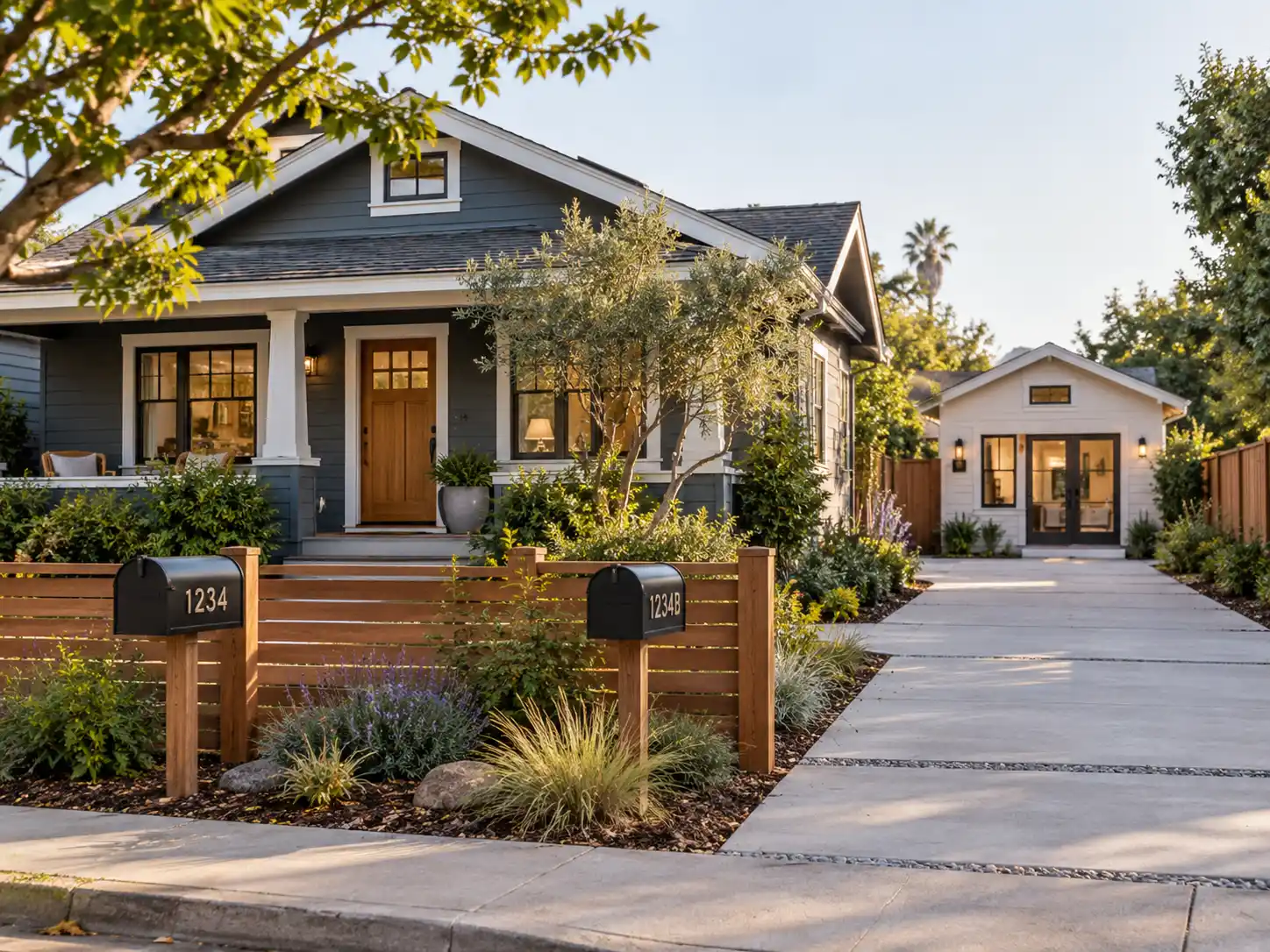
Yes. In most Washington cities an ADU can have its own address, and some require one. It is assigned by the city, or by the county outside city limits, usually during the building permit. Depending on local practice, it may be a separate number, a letter added to the house number, or a unit designation.
An address is easy to treat as a detail, but it controls how emergency crews, mail carriers, utilities and tenants find the unit. This quick guide covers who assigns ADU addresses, the forms they take, how Seattle and one suburban city handle them, and when to sort it out.
Who Decides an ADU’s Address
Homeowners do not choose street numbers, and the Postal Service does not create them. In Seattle, the Seattle Department of Construction and Inspections (SDCI) is responsible for assigning all addresses in the city and adding them to the city’s geographic information system. In unincorporated King County, the county’s Permitting Division assigns building numbers as part of the building permit. Most other cities route address requests through their permit or GIS staff.
Once an address exists in the local system, mail, utilities and emergency dispatch can use it.
A New Number, a Letter or a Unit Designation
Addresses for ADUs generally take one of three forms.
A separate street number, used when the unit can be numbered on the street grid on its own.
The house number with a letter, which Seattle’s addressing guidance uses for several buildings sharing one driveway, for example 10501A and 10501B.
The house number plus a secondary unit designator. The Postal Service recognizes designators such as APT, UNIT, REAR, LOWR (lower), UPPR (upper) and BSMT (basement), and the pound sign when no other designator fits.
Seattle’s guidance also notes that unit numbers inside a building are set by the owner or manager in coordination with the post office, while SDCI assigns addresses to ground-floor spaces whose front doors open directly to the street. The form your ADU gets therefore depends partly on where its entrance is.
How Seattle Addresses Backyard Cottages
Since October 1, 2021, SDCI has established separate, regular addresses and building IDs for detached accessory dwelling units. The address is created as part of permit intake and review, so a new backyard cottage receives it during the normal permit process rather than through a separate application. Owners whose DADU was already in review at that time could request one through SDCI’s addressing review form.
Attached ADUs are also eligible for address assignment under SDCI’s addressing guidance. Whether a basement or upper-floor unit gets its own number or a unit designation depends on its entrance and layout. For the broader permit picture, see our guide to Seattle ADU and DADU rules.
A City Where a Separate Address Is Required
Issaquah makes a separate address part of its ADU standards. Its land use code states that an ADU must have a separate address from the principal unit, and it requires a four-foot-wide walkway from the address side of the street or driveway to the ADU’s main entrance. Other cities may not spell this out in code but still assign an address at permit, so ask the permit desk early.
Why a Separate Address Is Worth Having
Emergency response. Seattle’s addressing guidance lists how 911 dispatches responders as a core reason addresses exist. A cottage behind the house is hard to find at night without its own clearly posted number.
Mail and deliveries. A distinct address or unit designation keeps a tenant’s mail and packages separate from yours.
Utilities and billing. Addresses decide where utility and other bills are sent, which matters if the unit has its own accounts.
Renting. Leases, tenant screening and any city rental registration all refer to the unit’s address. If you plan to rent, our article on owner-occupancy rules for ADUs explains why you can rent both units in Washington.
Selling. An ADU sold as a condominium needs to be identified as its own unit. An address alone does not create a separate parcel, though; Seattle’s Neighborhood Residential summary notes that an ADU may not be separated from the principal unit through subdivision.
When to Request the Address and Post It
Sort out the address during design and permitting, not after move-in. In Seattle it is set during permit review, and in unincorporated King County residential addresses are generally assigned early in the building permit process. Once assigned, post the number where it can be read from the street. King County’s guidance asks for numbers near the principal entrance that are illuminated or reflective, and Seattle’s guidance asks for the address to be posted at the front of a shared driveway when several buildings use it.
After the unit is finished, give the new address to the utilities, your insurer and the post office. If you are still checking how many units your lot can hold, our overview of how many ADUs Washington allows on one lot is a good place to start, and a free report on your lot shows access and frontage before you design the entrance path.
FAQ
Can I pick the number for my ADU?
Generally not. Street numbers follow the local grid and are assigned by the addressing authority. In Seattle, unit numbers inside a building are the exception: the owner or manager sets them with the post office.
Does a basement apartment get its own address too?
It can. Seattle’s addressing guidance covers attached ADUs as well as detached ones. A basement unit often receives a unit designation rather than a separate street number, depending on how its entrance is reached.
Does a separate address mean the ADU is a separate lot?
No. An address identifies where a unit is; it does not change property lines or ownership. Selling an ADU separately requires a condominium or another legal structure the city allows.
What should a tenant use as their address on a lease?
The address or unit designation assigned to the ADU, written exactly as the city and post office record it. That keeps mail, utility accounts and emergency records consistent.
Do I need the address before I set up utilities for the unit?
It helps. Utilities open accounts and route bills by address, so having the ADU’s address in place during permitting makes connections and account setup smoother. Our guide to water, sewer and electrical connections for ADUs covers the connection side.