

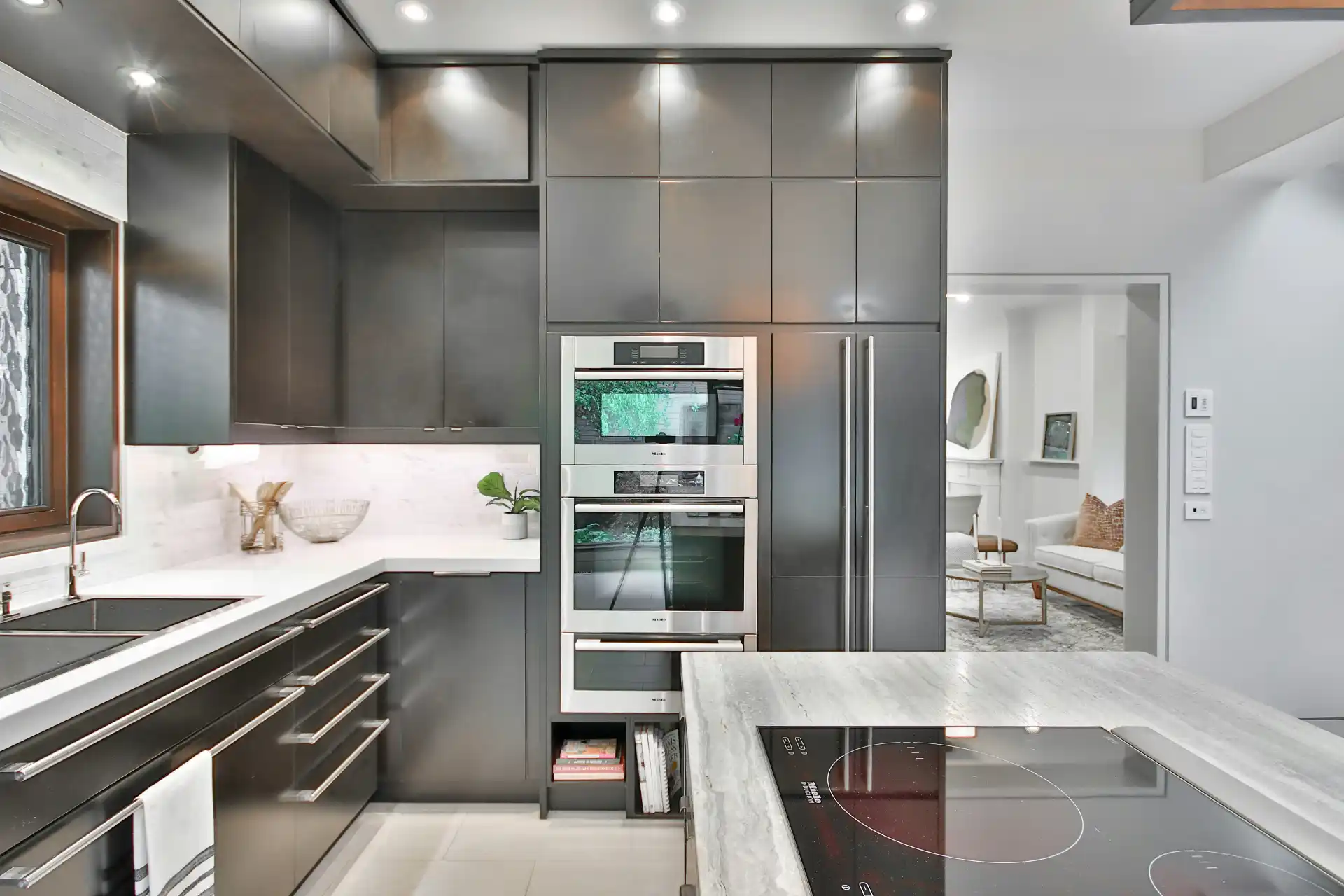
Many Seattle kitchen remodels require at least one permit.
The important point is that “kitchen remodel” is not one permit category.
A project that only replaces finishes is different from a project that removes a structural wall, moves the sink, adds circuits, changes gas piping, and installs a new exterior-vented hood.
Seattle separates those scopes across construction and trade permits.
That means the correct permit answer comes from the work being performed, not the room name.
Seattle SDCI states that most projects require permits, while certain minor repairs or alterations can be exempt under specific conditions.

Construction Permit
A construction permit may be required when the kitchen project changes the building itself.
Examples can include:
– removing or changing load-bearing supports;
– enlarging structural openings;
– changing significant wall configurations;
– altering stairs;
– making additions;
– or other building alterations outside permit-exempt work.
If the kitchen wall between living and dining space is being removed, determine whether it is structural before demolition.
Use Removing a Load-Bearing Wall for the full engineering and permit sequence.
Electrical Permit
Seattle requires an electrical permit when electrical wiring is installed, altered, extended, or connected to electrical equipment.
Most substantial kitchen remodels involve new electrical work.
Possible examples:
– new countertop receptacles;
– dishwasher circuit;
– disposal;
– microwave;
– oven;
– cooktop;
– induction range;
– under-cabinet lighting;
– recessed lights;
– new switches;
– and panel changes.
Even if no wall is structural, the electrical scope may still require permitting.
The Kitchen Lighting Guide and Induction vs Gas Cooktop both depend on early electrical planning.
Plumbing Permit
Seattle plumbing and gas piping permits are administered by Public Health – Seattle & King County.
Installing, relocating, or changing plumbing systems can require a plumbing permit.
Examples:
– moving the sink;
– adding a prep sink;
– moving dishwasher plumbing;
– relocating a refrigerator water connection as part of broader plumbing work;
– changing drains or vents;
– and other system alterations.
Keeping the sink near its existing location can reduce construction cost, but it does not automatically eliminate every plumbing-permit question.
The exact scope should be reviewed.
Use How Much Does It Cost to Move Plumbing During a Remodel? for the construction side.

Gas Piping
If the remodel installs, relocates, or changes gas piping, a gas-piping permit may be required through Public Health – Seattle & King County.
This can become relevant when:
– gas range moves;
– gas line is extended;
– appliance changes;
– or kitchen relocation affects gas routing.
If the project switches from gas to induction, the gas system and new electrical requirements need to be coordinated.
Do not leave an abandoned gas line without an appropriate professional plan.
Mechanical Permit
Kitchen hood exhaust systems can fall within Seattle mechanical permitting.
A remodel that installs or significantly changes a range hood, ductwork, or other mechanical equipment may require a mechanical permit.
The Kitchen Range Hood Guide explains why ventilation is a system rather than a decorative appliance.
The duct route and make-up-air requirements where applicable should be resolved before cabinets close the walls and ceiling.
What About Cabinets and Countertops Only?
Purely cosmetic work may not require a construction permit when it falls within Seattle’s permit exemptions and does not involve regulated trade work.
Examples can include certain:
– cabinet replacement;
– countertop replacement;
– painting;
– flooring;
– and similar finish work.
But do not use the dollar threshold alone without reading the full SDCI exemption conditions.
Seattle’s “Do You Need a Permit?” page currently states that minor repairs or alterations costing $6,000 or less in any six-month period may be exempt under specified conditions, with important exceptions.
That threshold and rules can change.
Always verify the current SDCI page immediately before publication or construction.
Does Replacing a Sink Require a Permit?
Simple fixture replacement and plumbing-system alteration are not always treated identically.
The correct answer depends on whether the work changes the plumbing system and how Public Health classifies the scope.
If the sink location moves or drain/vent piping changes, plan for plumbing permitting.
For like-for-like replacement, verify the current Public Health rules rather than relying on a generic internet answer.
Does Moving a Kitchen Require More Permits?
Usually the project becomes more permit-intensive because relocation affects more systems.
A moved kitchen can involve:
– plumbing;
– electrical;
– mechanical;
– structural alterations;
– and construction work in the old kitchen.
Review How Much Does It Cost to Move a Kitchen to Another Room? before treating relocation as a cabinet-only project.
The permit path and construction cost rise for the same reason: more building systems change.
What If the House Has Existing Unpermitted Work?
A kitchen remodel can expose old work that does not match available records.
Do not conceal the condition.
Document it and determine how it affects the current project.
Use What Happens If Unpermitted Work Is Discovered During a Remodel? for the next steps.
Current permitted work should not be designed around unsafe or undocumented conditions without evaluation.
Who Pulls the Permit?
Responsibility depends on permit type and contract structure.
Licensed contractors commonly handle permits for work within their scope.
Design professionals may prepare construction documents.
Homeowners can have responsibilities in owner-builder situations.
The important point is that the contract should identify:
– who prepares documents;
– who applies;
– who pays fees;
– who schedules inspections;
– and who obtains final approval.
Do not assume “the contractor handles everything” unless the agreement says so.
Inspections
Permits generally require inspections at appropriate stages.
Electrical work may require rough/cover and final inspections.
Plumbing work has its own inspection process.
Structural framing may need inspection before drywall.
Mechanical work can require inspection.
Do not cover work that still needs inspection.
The broader Seattle Remodel Permit Checklist should remain the parent article for permit planning across the house.
FAQ
Do I need a permit to replace kitchen cabinets in Seattle?
Certain minor nonstructural finish work may be permit-exempt, but the actual scope and current SDCI exemption rules should be checked.
Do I need a permit to move a kitchen sink?
Plumbing-system relocation can require a plumbing permit through Public Health – Seattle & King County.
Do I need a permit to add kitchen outlets?
Seattle requires electrical permits for installed, altered, or extended wiring.
Do I need a permit to install a range hood?
Kitchen hood exhaust systems can require a Seattle mechanical permit depending on the work.
Does removing a kitchen wall require a permit?
If the wall affects load-bearing structure or other regulated building work, construction permitting and possibly engineering are required.