

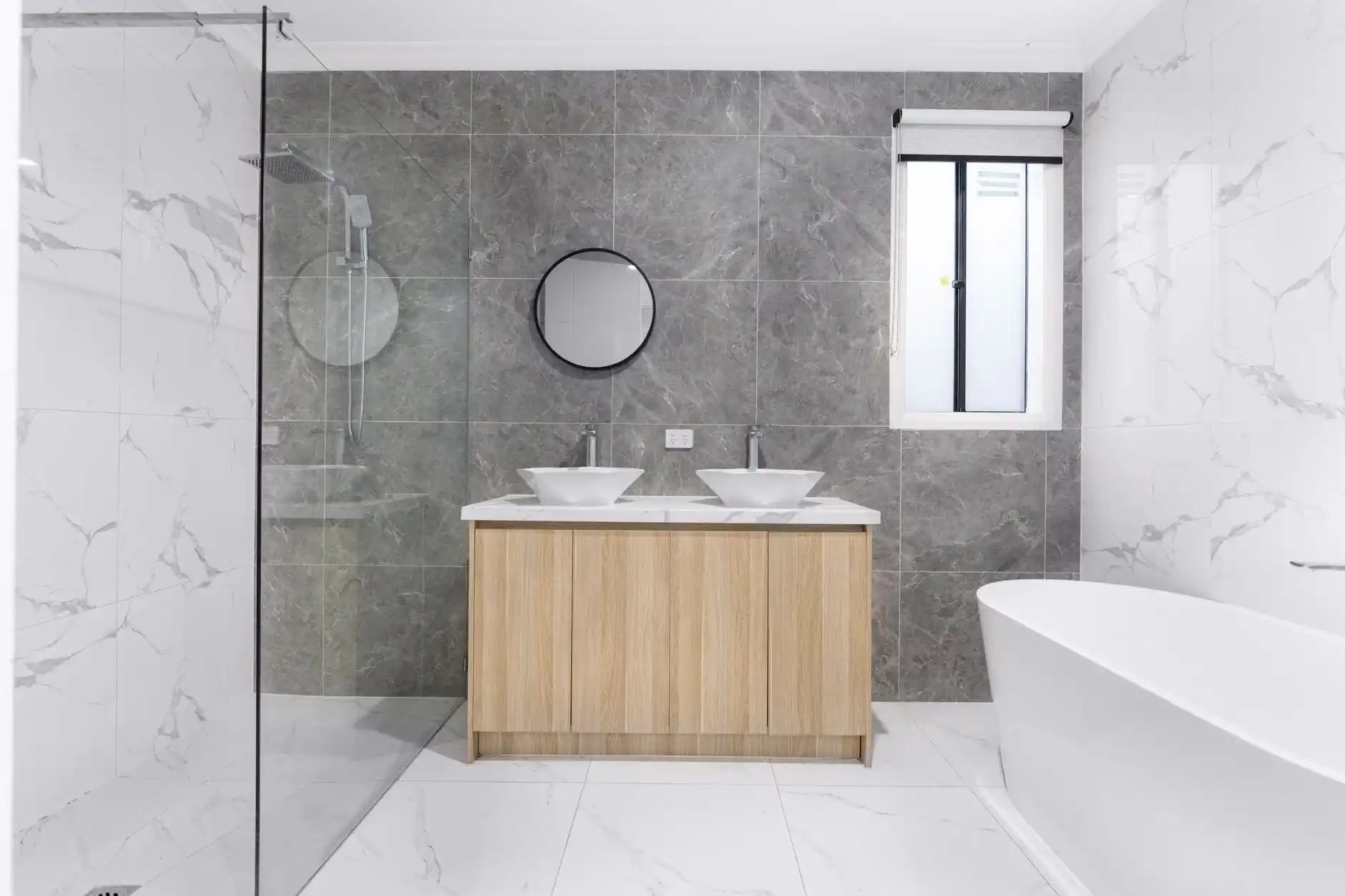
Moving bathroom fixtures can transform a poor layout.
It can also consume a surprising portion of the remodel budget.
A vanity is generally easier to relocate than a toilet.
A shower can be simple or complex depending on drain and floor conditions.
A bathtub can add weight, plumbing, and structural considerations.
The cost is controlled less by how far the fixture moves on the drawing and more by what the new pipes must cross.
For early planning, a modest vanity relocation may add a few thousand dollars, while moving a toilet or rebuilding several plumbing locations can add substantially more. Slab cutting, structural framing conflicts, and major drain/vent changes can push the added cost into the tens of thousands across a full bathroom.
Exact pricing requires the actual floor and plumbing plan.
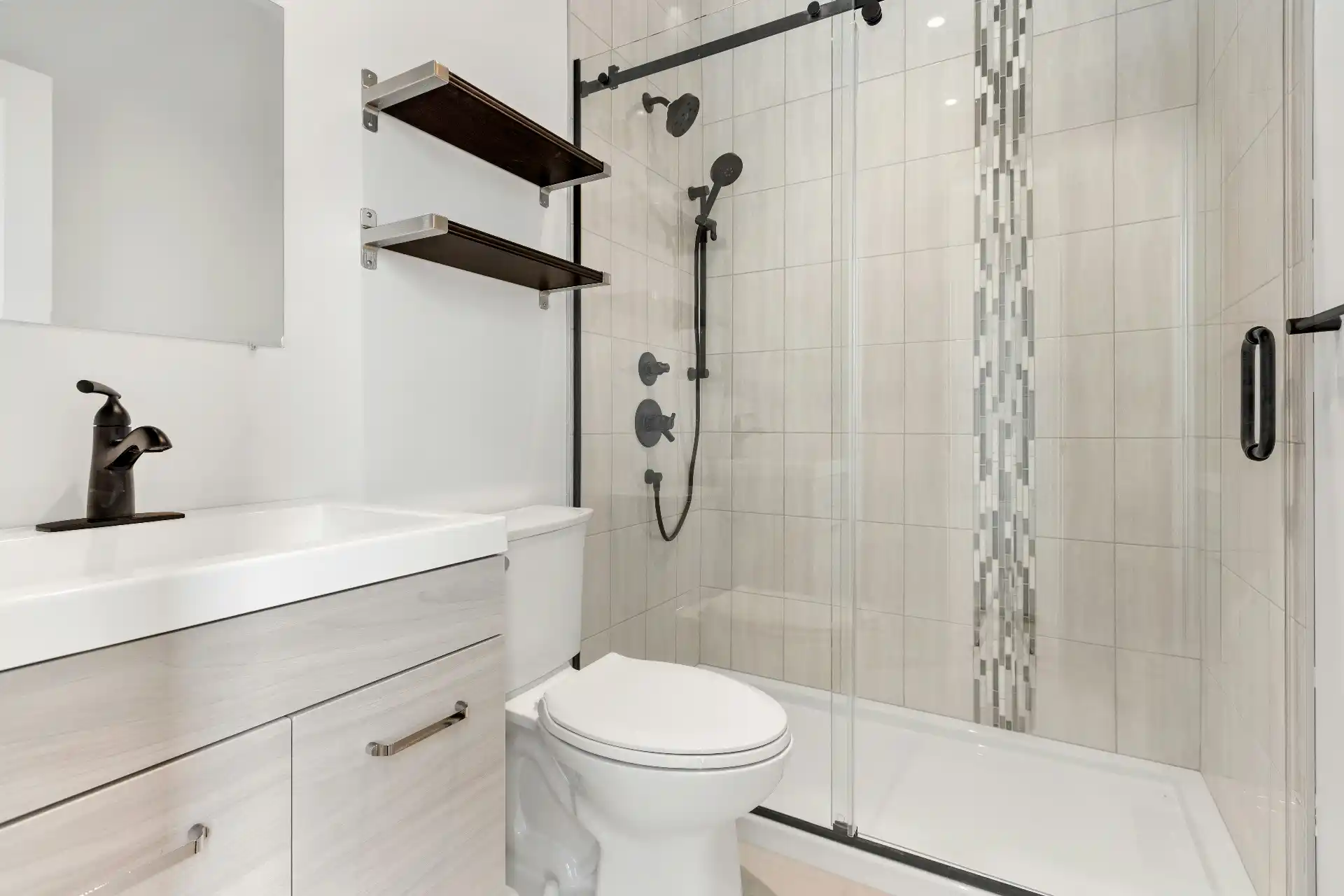
Why the Toilet Is Usually the Most Constrained
A toilet uses a relatively large drain.
That drain needs:
– proper slope;
– venting;
– structural clearance;
– and a workable path to the existing drainage system.
Moving a toilet parallel to favorable joist bays may be much easier than moving it across joists.
Moving a toilet on a concrete slab can require cutting and rebuilding the slab.
That is why a toilet that moves three feet can sometimes create more work than a vanity that moves ten feet.
The broader principles in How Much Does It Cost to Move Plumbing During a Remodel? apply here, but bathrooms have tighter fixture clearances and more wet-area coordination.
Vanity Relocation
A vanity needs:
– hot and cold water;
– drain;
– venting;
– and electrical coordination for nearby receptacles and lighting.
Because the drain is smaller than a toilet line, routing can be easier.
A vanity can sometimes shift along the same wall with relatively modest plumbing changes.
Moving it to an opposite wall is more involved.
If the wall is exterior, insulation and pipe routing also need careful planning for Seattle winter conditions.
Do not place plumbing in vulnerable exterior-wall locations casually.
Shower Relocation
Moving a shower requires both plumbing and waterproofing coordination.
The project may move:
– drain;
– shower valve;
– showerhead;
– handheld outlet;
– and body sprays.
Drain location affects floor slope.
A curbless shower may require additional floor modification.
Review Curbless Shower vs Low-Threshold Shower if the new layout also changes entry geometry.
The shower should be designed from structure upward.
Not from tile inward.
Bathtub Relocation
A bathtub may require:
– water supply;
– drain;
– overflow;
– structural support;
– and clearances.
Large freestanding tubs can be heavy when filled.
If the new location changes load or sits over questionable framing, structural evaluation may be appropriate.
The Floor Joist Damage article should be reviewed when framing is already compromised.
A beautiful tub location is not useful if the floor assembly cannot support the design economically.
Concrete Slab Bathrooms
Slab conditions increase labor.
Moving drains can involve:
– saw cutting;
– concrete demolition;
– excavation;
– plumbing;
– inspection;
– backfill;
– slab repair;
– and new finish floor.
If several fixtures are moving, the entire bathroom slab may be heavily disturbed.
At that point, compare whether a different layout could preserve more of the existing plumbing.
Small bathroom plans often have more than one workable configuration.
Do not assume the first design is worth the infrastructure premium.
Second-Floor Bathrooms
Second-floor plumbing can be easier to access from a ceiling below.
But that means the ceiling becomes part of the project.
A bathroom remodel may therefore affect:
– kitchen below;
– hallway;
– living room;
– or another finished space.
The cost should include protection, demolition, drywall, and painting outside the bathroom if those areas need access.
This is another reason plumbing relocation should be priced as a complete scope.
Structural Framing Conflicts
Large drains cannot pass through joists wherever the plumber wants.
If the new toilet or shower drain conflicts with structural framing, options include:
– move the fixture;
– reroute the drain;
– change framing under an engineered solution;
– or redesign the room.
Do not solve a plumbing problem by creating a structural problem.
The When Does a Home Remodel Need a Structural Engineer? article applies when the framing change exceeds straightforward permitted work.
Can You Move the Toilet Without Moving the Stack?
Often, yes, within the limits of slope, distance, venting, and structure.
The plumber needs to identify the existing stack and horizontal branch route.
Sometimes a modest shift is easy.
Sometimes the stack location makes the desired move impractical.
Early investigation can prevent redesign after demolition.
Permit Requirements
Seattle plumbing and gas piping permits are administered by Public Health – Seattle & King County.
Relocating fixtures and changing plumbing systems can require permits and inspections.
Electrical work for vanity lighting, heated floors, and other bathroom changes can require separate electrical permitting.
Mechanical ventilation can require mechanical permitting.
Use Seattle Remodel Permit Checklist to coordinate the complete project.
Do not view the plumbing permit as the only approval simply because fixtures are moving.
How Much Can You Save by Keeping Fixtures in Place?
Potentially several thousand dollars or more.
Keeping the toilet, main shower drain, and vanity near existing plumbing can reduce:
– floor demolition;
– drain routing;
– vent changes;
– structural conflicts;
– ceiling repair below;
– and inspection complexity.
That can leave more budget for:
– better waterproofing;
– tile;
– cabinetry;
– heated floor;
– glass;
– and fixtures.
But cost control should not preserve a genuinely bad layout.
When Is Relocation Worth It?
Move fixtures when the existing room has a functional problem.
Examples:
– door hits toilet;
– shower is too small;
– vanity blocks circulation;
– tub is unused and consumes most of room;
– accessible clearances are impossible;
– or primary suite layout improves substantially.
The existing Bathroom Remodel Planning guide should be used to compare functional gain with construction cost.
If aging in place is a priority, fixture location may be worth more than cosmetic finish upgrades.
How to Compare Bathroom Layouts
Create two plans.
Plan A:
Keep major drains near existing locations.
Plan B:
Optimize the room without plumbing constraints.
Then compare:
– circulation;
– shower size;
– vanity storage;
– toilet privacy;
– accessibility;
– plumbing cost;
– structural work;
– and finish impact.
If Plan B is dramatically better, relocation may be worth the cost.
If the difference is small, keep the infrastructure.
FAQ
Is moving a toilet more expensive than moving a vanity?
Usually, because the toilet requires a larger drain and is more constrained by slope and framing.
Can I move a shower drain?
Yes, but floor structure, slab conditions, waterproofing, and drain slope affect cost.
How much does it cost to move bathroom plumbing?
A simple move can add a few thousand dollars. Multiple fixture relocations, slab cutting, and structural conflicts can add much more.
Do I need a permit to move bathroom plumbing in Seattle?
Plumbing system alterations can require a permit through Public Health – Seattle & King County.
Should I move fixtures during a full bathroom remodel?
Only when the functional improvement is worth the additional plumbing and construction cost.