

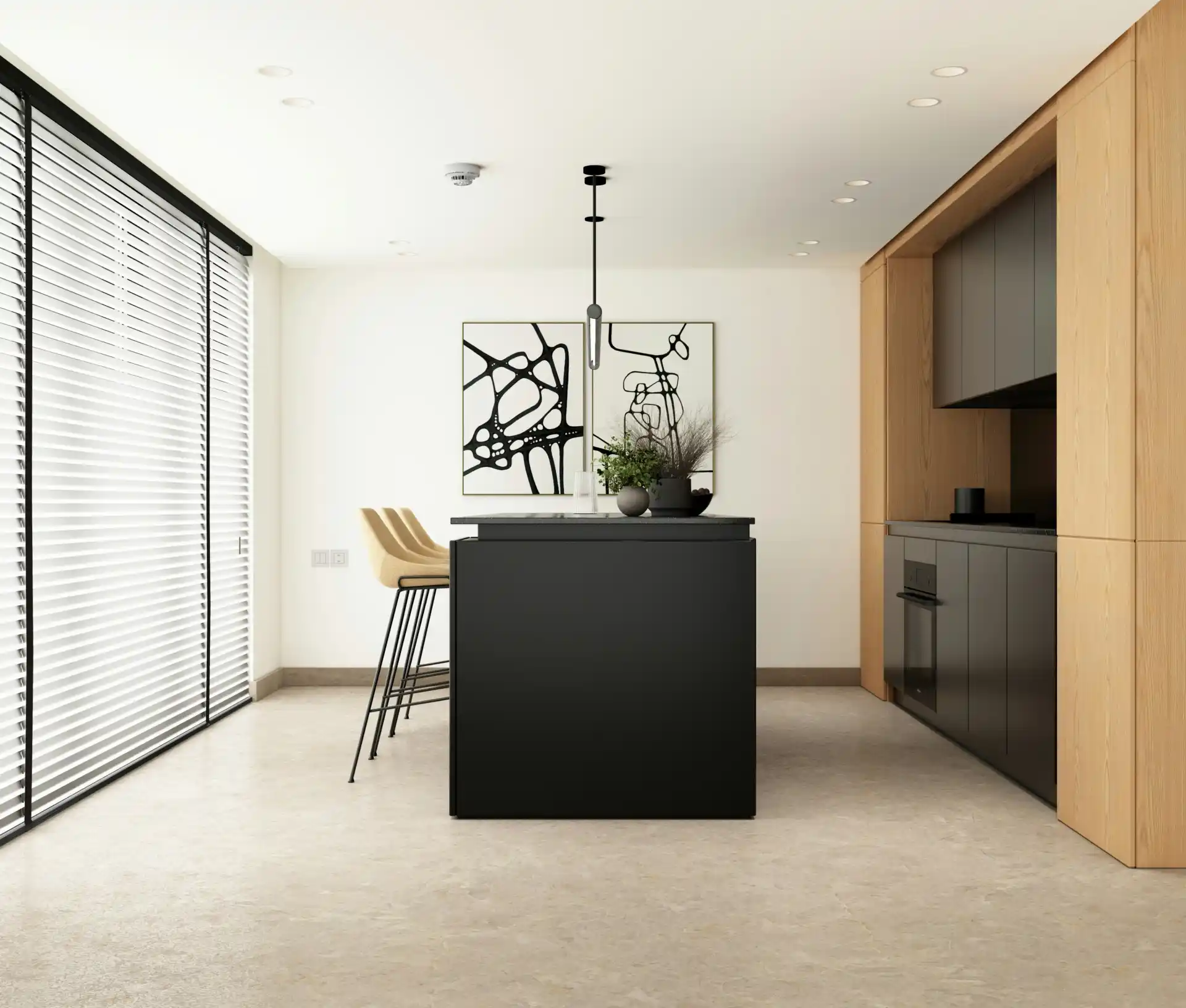
Kitchen flooring has to do several jobs at once.
It needs to handle:
– foot traffic;
– dropped objects;
– spills;
– cleaning;
– chairs;
– pets;
– appliance weight;
– and visual connection to adjacent rooms.
Hardwood, luxury vinyl plank, and tile can all work in kitchens.
They create different tradeoffs.
Hardwood offers warmth, continuity, and repairability.
LVP offers water resistance and relatively forgiving installation.
Tile offers durability and excellent water tolerance but creates a harder, colder walking surface.
The best choice depends on the house, subfloor, adjacent rooms, and how the kitchen is used.
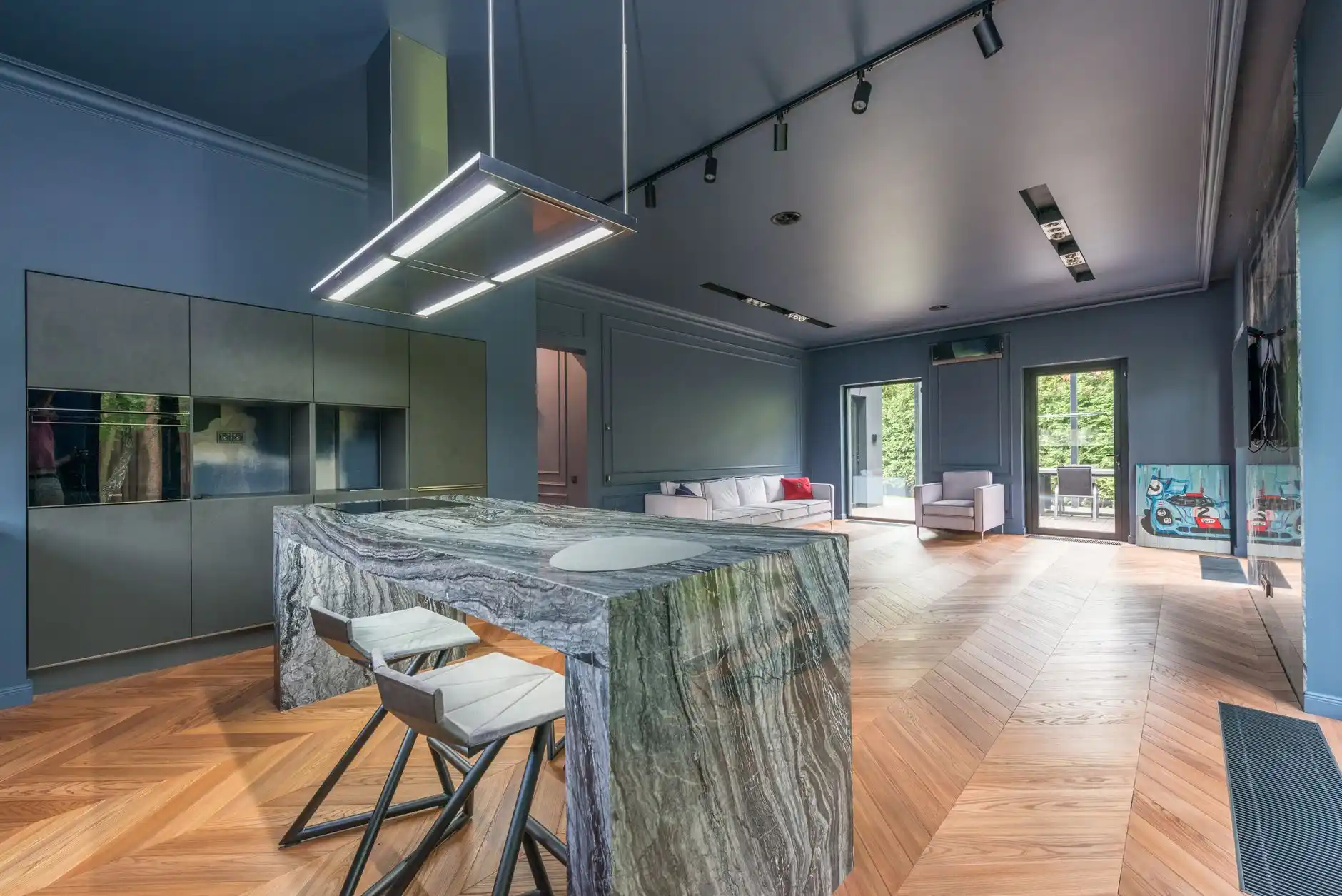
Start With the Whole Floor, Not the Kitchen Boundary
In many modern remodels, kitchen, dining, and living rooms connect directly.
Using one continuous floor can make the main level feel larger and calmer.
That often favors hardwood or LVP when adjacent rooms already use similar material.
Tile can define the kitchen as a separate zone, but transitions need to be intentional.
Before selecting flooring, review whether walls are moving.
The Open-Concept Remodel and Should You Remove the Wall Between the Kitchen and Living Room? can change the flooring scope substantially.
Hardwood: Strengths
Hardwood works well in kitchens when homeowners value:
– natural material;
– visual warmth;
– continuity through living spaces;
– refinishing potential;
– and long-term character.
Older Seattle homes often already contain hardwood in dining and living rooms.
Extending or patching matching wood into the kitchen can create a cohesive main floor.
Real wood also develops wear over time rather than remaining visually unchanged.
Some homeowners see that as character.
Others prefer a more uniform surface.
Hardwood: Water Considerations
Wood and prolonged moisture are not friends.
A normal wiped-up kitchen spill is very different from an unnoticed dishwasher or refrigerator leak.
Standing water can cause:
– swelling;
– cupping;
– staining;
– or finish damage.
That does not make hardwood unsuitable for kitchens.
It means leak prevention and prompt cleanup matter.
If the house has a history of water damage, correct the source before installing new wood.
The hidden-condition guidance in What Happens When Contractors Open the Walls and Find Hidden Damage? should be followed when old flooring is removed.
Hardwood Repairability
One major advantage is repair and refinishing potential.
Depending on product and thickness, damaged areas may be sanded, refinished, or locally repaired.
Matching old hardwood can be challenging because species, grade, width, finish, and aging affect color.
In an older home, a skilled flooring contractor may be able to lace new boards into existing flooring.
That can preserve architectural continuity.
The existing Old House Renovation article is relevant when deciding whether to preserve original wood floors.
LVP: Strengths
Luxury vinyl plank is popular because it can provide:
– strong water resistance;
– relatively easy maintenance;
– softer feel than tile;
– broad visual options;
– and installation over several subfloor conditions when properly prepared.
It can be a practical choice for:
– active families;
– pets;
– basements;
– rental units;
– or projects where water resistance is a major priority.
LVP can also create continuous flooring across kitchens and living spaces.
Product quality varies substantially.
Wear layer, core construction, locking system, warranty, dimensional stability, and subfloor preparation should be reviewed.
LVP: Limitations
LVP is not indestructible.
Heavy appliances, sharp impacts, poor subfloor preparation, excessive movement, or installation errors can create problems.
Some products can telegraph subfloor irregularities.
Floating floors also need appropriate expansion and cabinet/appliance installation strategy according to manufacturer requirements.
Do not trap a floating floor beneath fixed cabinetry if the product instructions prohibit it.
The flooring system must be coordinated with cabinet installation.
Tile: Strengths
Tile offers excellent durability and water tolerance.
It works especially well when:
– kitchen has direct exterior traffic;
– radiant floor heating is planned;
– design calls for stone or ceramic appearance;
– or homeowner wants a very durable hard surface.
Tile can also be a strong choice in mudroom/kitchen combinations.
The surface itself handles water well.
The assembly below still matters.
Tile: Subfloor and Deflection
Tile needs a stable substrate.
Wood-framed floors need adequate stiffness.
Damaged joists or excessive deflection can cause cracked grout or tile.
If demolition reveals structural concerns, address them before tile installation.
The article Floor Joist Damage: When Does a Remodel Require Structural Repair? is especially important for heavy or brittle floor finishes.
Tile installation is an assembly.
Subfloor, underlayment or membrane, mortar, tile, grout, and movement joints all contribute to performance.
Tile: Comfort
Tile is hard.
Standing for long periods can be less comfortable than wood or resilient flooring.
It can also feel cold without radiant heating.
Some homeowners love the solidity.
Others dislike it after living with it.
This is a lifestyle question as much as a durability question.
Heated tile can improve comfort but adds electrical and installation scope.
Which Is Best for Water?
Tile generally tolerates surface water very well.
LVP products marketed for wet exposure can also perform well at the surface.
Hardwood is more sensitive to prolonged water.
But no finish should be used as a substitute for leak prevention.
Water can travel beneath LVP or tile too.
A leaking dishwasher can damage subfloor even when the visible finish survives.
The source needs to be repaired.

Which Is Best for Pets?
LVP can be attractive for pets because of water resistance and scratch-tolerant product options.
Hardwood can scratch, but it may also be refinished.
Tile resists scratching well but can be hard and slippery depending on finish.
Choose texture and slip resistance appropriately.
No material is universally “pet-proof.”
Which Is Best for Resale?
There is no single resale winner.
Hardwood often has strong appeal in living areas and older homes.
High-quality tile can feel durable and premium.
Good LVP can be practical and visually convincing.
Installation quality and continuity matter more than simply choosing the material with the highest price.
A cheap-looking transition between rooms can undermine an expensive floor.
Flooring and Cabinet Sequence
Flooring should be coordinated with cabinets and appliances.
Some floors run under cabinets.
Some floating products should not.
Tile thickness can affect dishwasher clearance.
Hardwood finishing can affect cabinet protection.
Appliance openings need correct finished-floor height.
This is why the construction sequence should be defined before installation.
The Kitchen Cabinet Refacing vs Replacement decision can also influence flooring scope.
Refacing may leave cabinet footprints unchanged.
Replacement can expose areas with no finished floor.
Floor Height Transitions
Different materials have different assembly thicknesses.
Tile may require underlayment or membrane.
Wood thickness varies.
LVP can be relatively thin.
A poorly planned transition can create:
– trip edges;
– awkward thresholds;
– appliance height problems;
– and doors that need modification.
The floor assembly should be planned from structure to finish.
Do not choose tile thickness after cabinets and exterior doors are already fixed.
Cost Comparison
Hardwood:
Material and installation can range widely depending on species, width, finish, and site-finishing requirements.
LVP:
Often lower-to-moderate cost, but premium products and extensive subfloor preparation can increase total price.
Tile:
Material prices range from inexpensive ceramic to premium stone, while labor can be significant because installation is slower and substrate preparation matters.
Compare installed systems.
Not material price per square foot.
The Kitchen Remodel Cost Guide should include flooring labor, demolition, subfloor repair, transitions, and baseboard work.
A Decision Framework
Choose hardwood when:
– continuity with adjacent rooms matters;
– natural material is preferred;
– refinishing potential is valuable;
– and household accepts moisture sensitivity.
Choose LVP when:
– water resistance and easy maintenance are priorities;
– budget is controlled;
– and resilient feel is preferred.
Choose tile when:
– maximum hard-surface durability is desired;
– subfloor can support it;
– and homeowner likes the feel and design.
The best floor is the one that fits both the house and the household.
FAQ
Is hardwood okay in a kitchen?
Yes. Many kitchens use hardwood successfully. Prompt spill cleanup and leak prevention are important.
Is LVP waterproof?
Many products are marketed as waterproof at the plank level, but water can still affect the subfloor or surrounding construction. Follow the specific product’s warranty and installation instructions.
Does tile crack easily?
Properly installed tile over a stable substrate can be very durable. Structural movement and inadequate preparation can lead to cracking.
Which kitchen flooring is easiest to clean?
LVP and tile are generally straightforward to clean. Hardwood also cleans easily but should not be exposed to excessive water.
Should kitchen flooring match the living room?
In open layouts, continuous flooring often creates a cleaner visual result, but separate materials can work when transitions are intentional.