

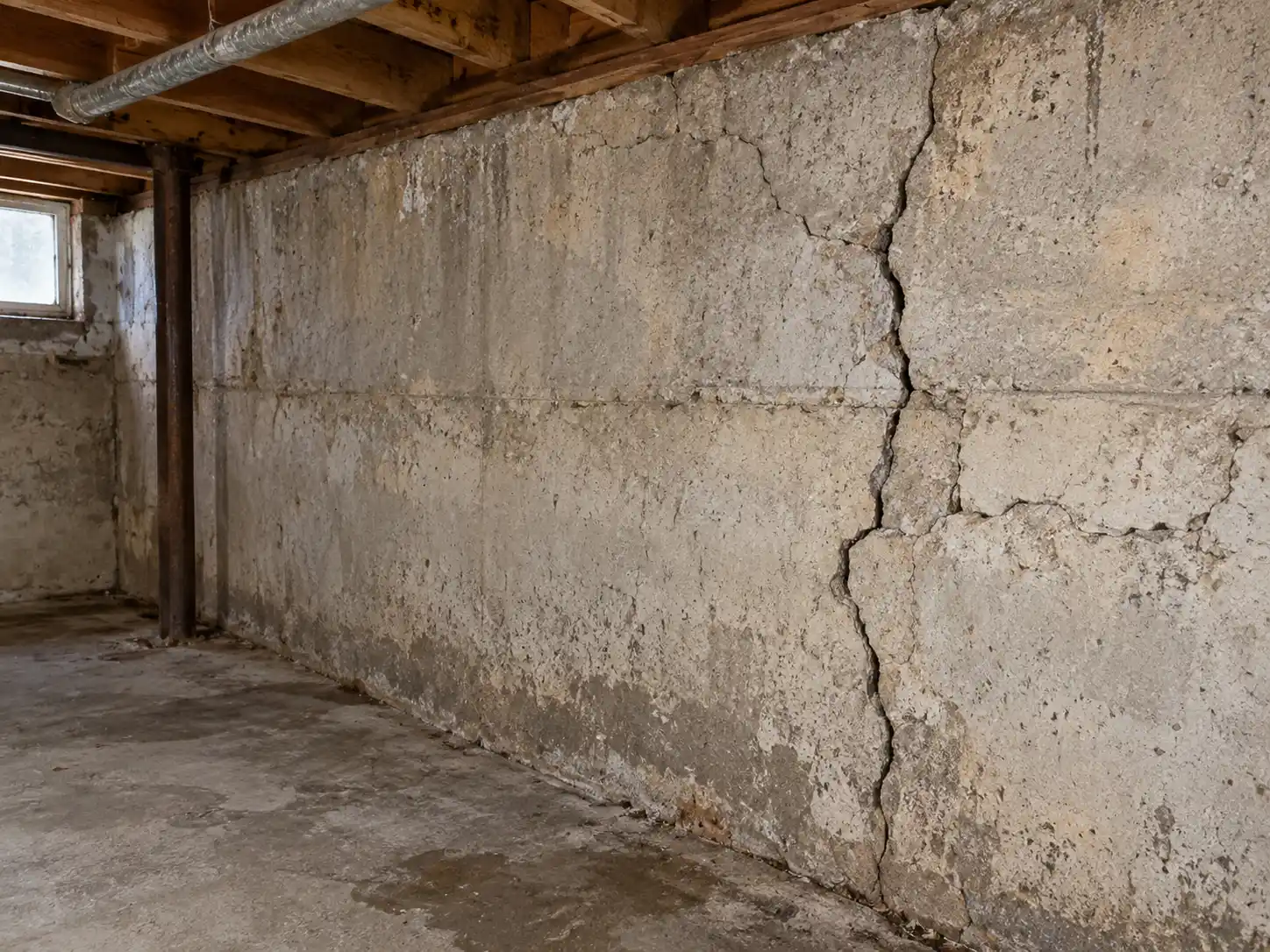
A crack in a foundation is evidence.
It is not a diagnosis.
Concrete cracks for many reasons.
Some cracks are old, stable, and relatively minor.
Others are related to settlement, soil movement, water, lateral pressure, structural loading, or deterioration.
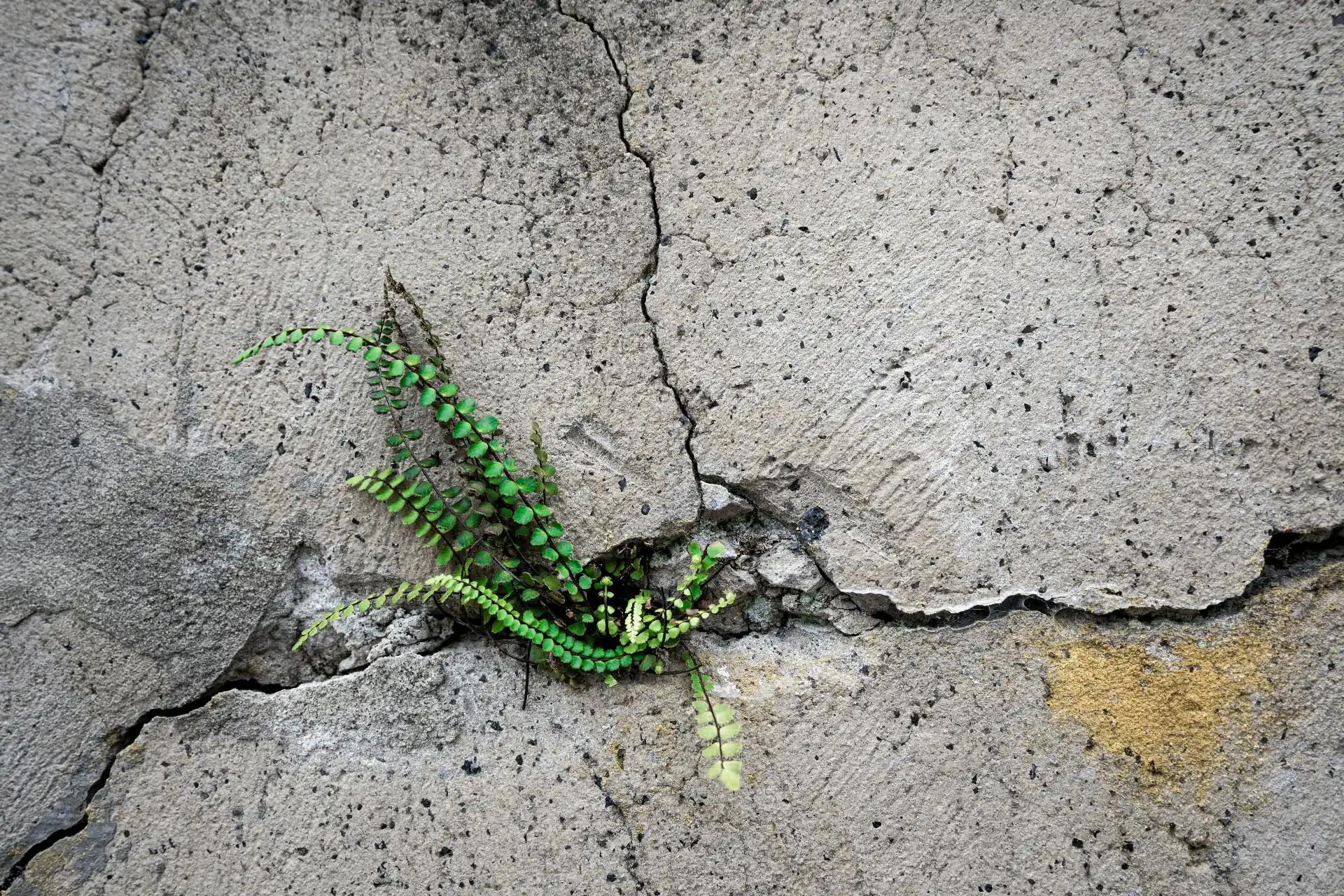
Before a major remodel, the important question is not simply “Is there a crack?”
It is:
Is the foundation stable enough for the project we are about to build on top of it?
That question becomes especially important when the remodel adds structural loads, removes walls, adds a story, expands openings, or finishes a basement around the foundation.
Start With Crack Pattern, Not Panic
Useful observations include:
– location;
– width;
– direction;
– length;
– whether one side is displaced;
– whether the crack is changing;
– whether water enters;
– and what is happening elsewhere in the house.
A narrow vertical crack in one location may have a very different meaning from a stair-step masonry crack accompanied by sloping floors and sticking doors.
No single online crack-width rule can replace a site evaluation.
The house needs context.
Look for Other Signs of Movement
Foundation concerns become more significant when several symptoms appear together.
Possible warning signs include:
– doors or windows suddenly binding;
– floors changing slope;
– walls separating from ceilings;
– new drywall cracks;
– exterior wall movement;
– visible foundation displacement;
– leaning retaining walls;
– or cracks that continue changing.
Some of these symptoms can also come from normal building movement.
The pattern and history matter.
If the remodel is significant, a structural professional may be needed to distinguish cosmetic irregularity from structural concern.
Use When Does a Home Remodel Need a Structural Engineer? as the decision framework.
Water Can Be Part of the Foundation Problem
A foundation crack may also be a water path.
Even when the crack is structurally minor, repeated water entry can damage:
– insulation;
– framing;
– drywall;
– flooring;
– and stored materials.
Do not finish a basement wall simply because the crack was filled cosmetically.
Determine how exterior drainage, grading, groundwater, downspouts, and foundation conditions interact.
The basement planning guide How to Finish a Basement in Seattle: Moisture, Insulation, Egress and Permits puts water investigation before finish work for this reason.
Foundation Cracks and Older Seattle Homes
Older homes can show decades of movement.
A foundation may have settled long ago and remained stable.
The house may also have undergone:
– additions;
– excavation;
– retaining-wall changes;
– drainage changes;
– seismic work;
– or previous foundation repair.
Research the history where possible.
The broader article Hidden Problems in Older Seattle Homes That Can Change a Remodel Budget explains why the current appearance of an old house does not reveal all previous construction.
A stable old crack and a recently moving crack should not be treated the same.
New Remodel Loads Matter
A foundation that has carried the existing house for decades may be asked to do more.
Examples:
– second-story addition;
– new beam posts;
– larger roof loads;
– major floor-plan changes;
– addition tie-in;
– or concentrated loads from structural openings.
If the remodel creates new load paths, the engineer needs to know whether the existing foundation can carry them.
This is especially relevant when Removing a Load-Bearing Wall creates new post loads at the ends of a beam.
The opening may look like a main-floor project while the real structural question is several feet below.
Cracks Near New Post Locations Need Attention
Suppose an open-concept remodel places a new structural post on the foundation wall or footing near an existing crack.
The engineer may need to determine whether the foundation can accept that concentrated load.
This can lead to:
– new footing;
– enlarged footing;
– pier;
– local foundation repair;
– or another structural solution.
Do not assume the beam design ends at the floor.
Loads continue to the ground.
Sloped Lots Deserve More Context
Seattle has many sloped properties.
Slope, retaining systems, drainage, and soil conditions can affect foundation behavior.
A crack on a steep site may deserve geotechnical or structural review if other signs indicate movement.
That does not mean every sloped-lot crack is a landslide problem.
It means site conditions should be included in the evaluation rather than looking only at the concrete surface.
When the issue extends beyond the building into soil or slope behavior, a geotechnical professional may become part of the team.
What About Horizontal Foundation Cracks?
Horizontal or diagonal cracks can be more concerning in certain foundation configurations because they may relate to lateral pressure or wall movement.
Again, pattern matters.
A blog should not declare a foundation structurally unsafe from crack direction alone.
If a crack is accompanied by bowing, displacement, active movement, or other structural symptoms, seek professional evaluation before remodeling around it.
Do Not Hide a Crack Behind Finished Basement Walls Without a Record
Before framing new basement walls, document foundation conditions.
Photograph cracks.
Record repairs.
Address water.
Obtain structural evaluation where appropriate.
This creates a baseline.
If the crack becomes inaccessible behind a finished wall, future homeowners and contractors lose useful information.
Access panels or monitoring details may be appropriate in selected conditions.
The project team should decide based on the actual repair strategy.
What Kind of Repair Is Appropriate?
Repair method depends on the cause.
Possible categories include:
– crack sealing for water control;
– structural epoxy repair;
– reinforcement;
– underpinning;
– footing repair;
– drainage correction;
– retaining-wall work;
– or no structural intervention when the crack is stable and noncritical.
Do not choose a repair product before identifying what the crack represents.
A waterproofing product and a structural repair solve different problems.
Can Remodeling Make Foundation Problems Worse?
Poorly planned remodeling can.
Examples:
– adding loads without checking support;
– removing structural walls without proper new load paths;
– cutting foundation openings;
– excavating beside footings;
– changing drainage;
– or adding retaining walls without appropriate design.
A major remodel should therefore treat the foundation as part of the structural system.
The Cosmetic vs Structural Remodel distinction becomes critical when the work touches foundations or load-bearing systems.
How Foundation Problems Affect the Budget
A minor documented crack may add little to the project.
A structural foundation repair can add substantial cost.
Expenses may include:
– engineering;
– geotechnical work;
– excavation;
– shoring;
– concrete;
– reinforcing;
– drainage;
– waterproofing;
– finish demolition;
– and restoration.
This is why uncertainty should be investigated before the project spends the budget on finish upgrades.
Use How Much Contingency Should You Budget for a Home Remodel? to plan an appropriate reserve when foundation history is unclear.
When to Investigate Before Design
Do not wait for demolition if:
– cracks appear active;
– floors are significantly uneven;
– a major addition is planned;
– a second story is planned;
– posts will create new concentrated loads;
– retaining walls show movement;
– the lot has significant slope concerns;
– or water is repeatedly entering through the foundation.
Early investigation can change the design.
That is better than changing the foundation after the rest of the remodel is fully detailed.
FAQ
Are all foundation cracks structural?
No. Many cracks are related to shrinkage or long-term stable movement. The crack pattern, displacement, history, and surrounding conditions matter.
How do I know if a foundation crack is active?
Monitoring over time and professional evaluation can help determine whether movement is continuing.
Should foundation cracks be repaired before basement remodeling?
Water and structural concerns should be addressed before covering the foundation with finished walls.
Can I add a second story if the foundation has cracks?
Possibly, but the foundation and overall load path need structural evaluation before new loads are added.
Does sealing a crack fix a structural problem?
Not necessarily. A waterproofing or sealant repair can control water while leaving the underlying structural cause unchanged.